Kasbah of Taourirt
Kasbah of Taourirt
Just 1 km from Ouarzazate, the Kasbah of Taourirt bears witness to the history of the Glaoui and the rammed earth architecture of southern Maroc. Visitor's guide.
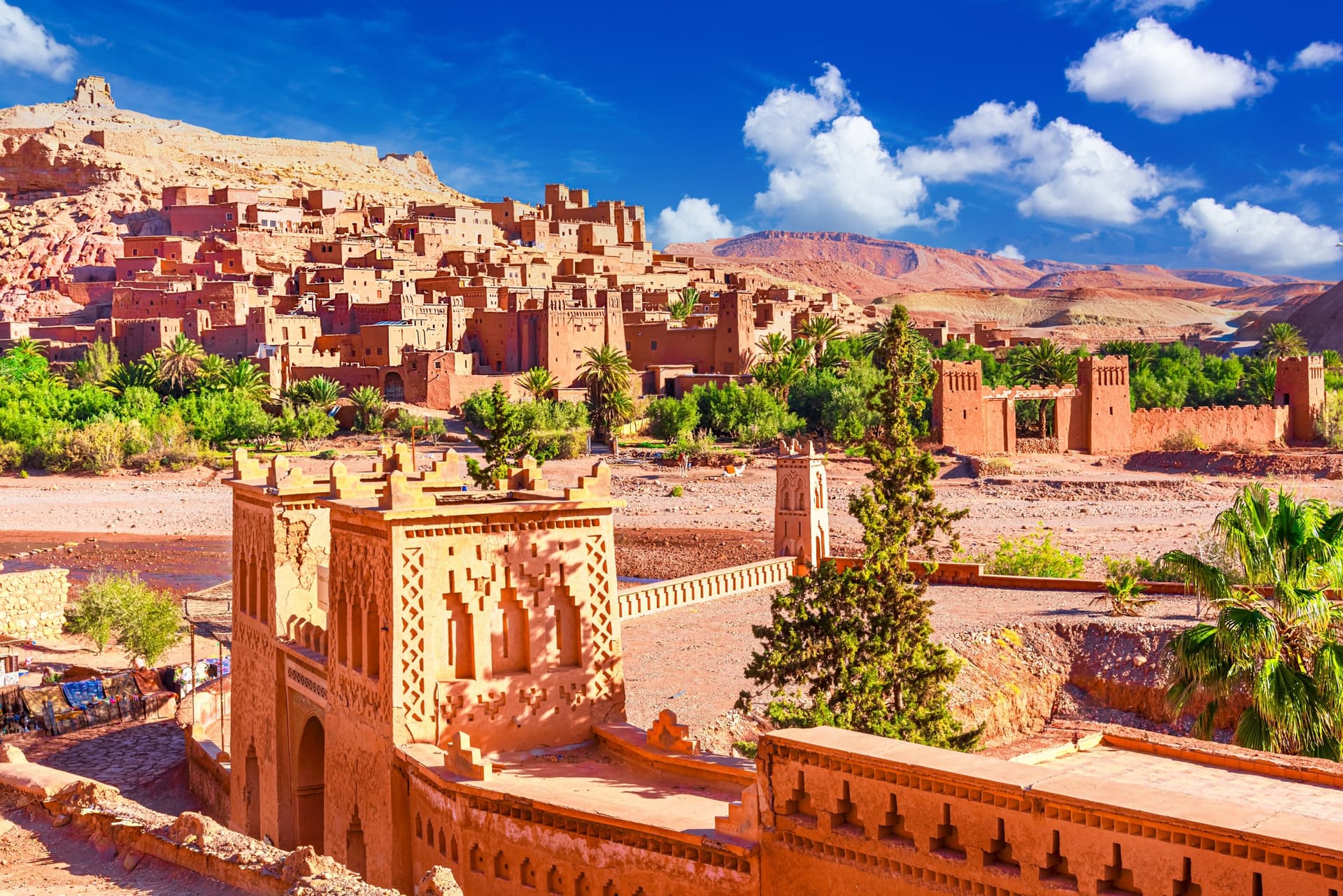
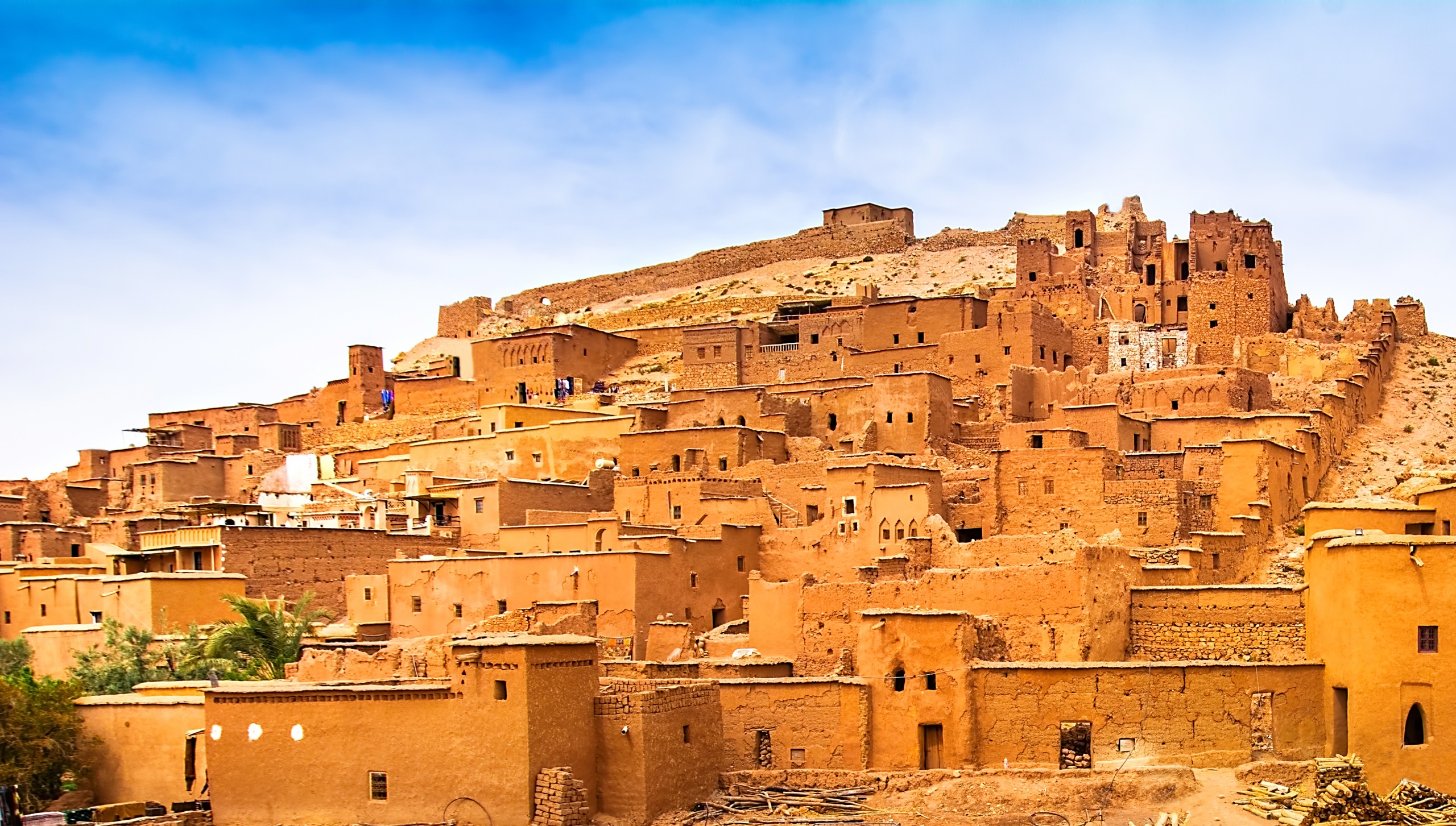
One kilometre from the centre of Ouarzazate, the Kasbah of Taourirt stands out with its ochre rammed earth silhouette, lined with square towers and projecting balconies. Built in the 17th century and enlarged in the 19th by the Glaoui, it once contained nearly 300 rooms and remains one of the best-preserved kasbahs in southern Maroc. Classified as national heritage in 1954, it ranks among the major sites on the circuit of Moroccan kasbahs.
Why visit the Kasbah of Taourirt
The Kasbah occupied a strategic position on trade routes connecting the Draa and Dadès valleys to the north of the country. This location gave it a central political and economic role for more than two centuries, under the authority of the Glaoui family, from which emerged Thami El Glaoui, pasha of Marrakech during the French protectorate period.
Today, the appeal of a visit rests on three elements: the rammed earth architecture typical of southern Maroc, the interior décor (painted stucco, zellige tilework, carved wooden ceilings) that contrasts with the exterior simplicity, and the urban context — the kasbah faces the cinema museum and portions of its buildings remain inhabited.
Important note: contrary to a common misconception, the Kasbah of Taourirt is not inscribed on the UNESCO World Heritage List. Only the ksar of Aït Benhaddou, some thirty kilometres away, holds that distinction. Taourirt instead benefits from classification as Moroccan national heritage since 1954.
History of the Kasbah
Construction dates to the 17th century, initiated by the Imzwarn family. In the 19th century, the Glaoui took control of the site and enlarged it considerably to make it one of their principal residences on the southern trade routes. The kasbah then became a residential and administrative complex comprising nearly 300 rooms, organised around courtyards, reception halls and private apartments.
After Maroc's independence, decline was swift. Classified as national heritage in 1954, the kasbah passed under state control in 1956, returned to the Glaoui tribe in the 1960s, then was sold to the municipality of Ouarzazate in 1972. The building was then largely abandoned and partially occupied.
From the 1980s onwards, CERKAS (Centre for the Conservation and Rehabilitation of Architectural Heritage of the Atlas and Sub-Atlas Zones) undertook progressive restoration. A portion opened to the public, while other unrestored areas remained inhabited.
The September 2023 earthquake damaged several sections of the building and weakened its structure. Consolidation work is underway; it is advisable to verify the site's opening status before any visit.
What to see on site
The visit centres on the restored section, accessible from the main entrance opening onto an interior courtyard. This was the space where Ahwach songs and dances once took place during ceremonies.
Interior spaces
The rooms open to the public give a precise sense of how a great Glaoui kasbah was organised:
- The reception hall, treated in an urban style reminiscent of Marrakech or Fès
- The dining room and private apartments
- Painted and carved wooden ceilings
- Wall décor combining painted stucco, zellige tilework and ornamental oleander stems worked in tataoui style (a technique typical of Berber ceilings)
The whole offers a striking contrast with the exterior's sobriety.
Exterior architecture
The building is constructed from blocks of dried earth mixed with straw — the pisé technique, typical of southern Maroc. Square towers bear geometric reliefs and carved windows. Several projecting balconies punctuate the façades, some opening onto the courtyard, others facing outward and protected by iron bars.
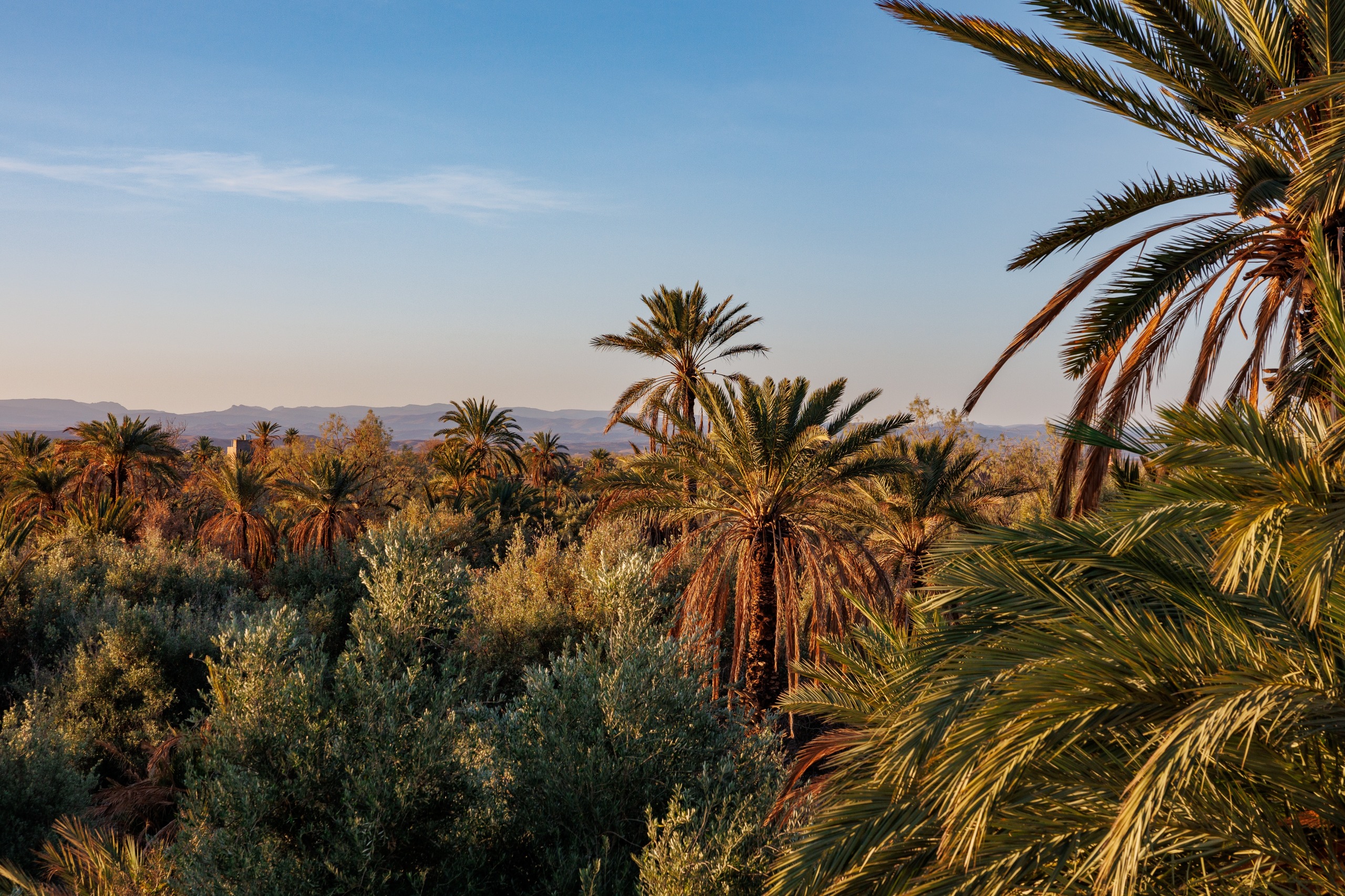
From the roof, views extend over Ouarzazate's palm grove, the wadi valley, and the foothills of the High Atlas.
Practical information
- Visit duration: allow 1 to 1.5 hours for the restored section, longer if combined with the cinema museum across the way
- Admission: modest entry fee, payable on site
- Guide: not obligatory, but recommended for understanding Glaoui history and decorative details; official guides are available at the entrance
- Accessibility: uneven ground, narrow stairs, poorly suited for people with reduced mobility
- Site condition: check before visiting due to damage from the 2023 earthquake
When to go
Ouarzazate enjoys a semi-arid climate with pronounced thermal contrasts. The best periods to visit the kasbah are:
- March to May: mild temperatures, favourable light for photography
- October to November: similar conditions, after the intense summer heat
Summer (June to August) is very hot, with temperatures regularly exceeding 35°C. Winter remains feasible during the day but nights are cold. Favour morning or late afternoon visits, when low-angle light best highlights the rammed earth façades.
What to see nearby
The Kasbah of Taourirt fits into a cluster of sites accessible from Ouarzazate:
- The cinema museum, located directly across, displays costumes, props and set pieces from film productions in the region
- Atlas Film Studios, approximately 5 km from the city centre, Maroc's largest studio complex, open for guided tours
- Aït Benhaddou, a fortified ksar inscribed on the UNESCO World Heritage List, about thirty kilometres to the north-west
- The Fint oasis, an hour's drive south, accessible by track, with Berber villages and palm groves
- Further afield, the Dadès gorges and the Todgha gorges, classic stops on the kasbah route
To plan a wider stay in the region, consult our guide to Ouarzazate.
How to get there
From Ouarzazate: the kasbah is 1 km from the city centre, accessible on foot in 15 to 20 minutes or by petit taxi for a few dirhams.
From Marrakech: a direct bus links Marrakech to Ouarzazate daily in approximately 5 hours, via the Tichka pass road. Car rental remains the most flexible option for combining the kasbah with nearby sites.
By air: Ouarzazate airport (OZZ) receives domestic flights from Casablanca and some seasonal European connections. It is located approximately 2 km from the kasbah.
Frequently asked questions
Frequently asked questions
No. It has been classified as Moroccan national heritage since 1954, but does not appear on the UNESCO World Heritage List. The nearest UNESCO site is the ksar of Aït Benhaddou, about thirty kilometres away.
It is not obligatory, but an official guide provides genuine historical and architectural enrichment, particularly regarding Glaoui history and decorative techniques. You will find guides at the entrance.
Allow 1 to 1.5 hours for the restored section. Combined with the cinema museum just across the way, plan for a half-day.
The building sustained structural damage in the September 2023 earthquake. Consolidation work is underway; it is recommended to verify opening status locally before your visit.
Yes. The two sites are thirty kilometres apart and easily visited on the same day from Ouarzazate, either by car or with an organised excursion.
Prepare your trip
The Kasbah of Taourirt fits naturally into a southern Maroc circuit combining the kasbah route, the Dadès and Draa valleys, and the gates of the Sahara. To build a tailor-made itinerary, consult our journeys through Maroc.
Interested in this visit?
We can include it in your personalised itinerary.