Legzira Beach
Legzira Beach
Red sandstone cliffs and natural arches between Mirleft and Sidi Ifni: practical guide to visiting Legzira Beach on Morocco's Atlantic coast.
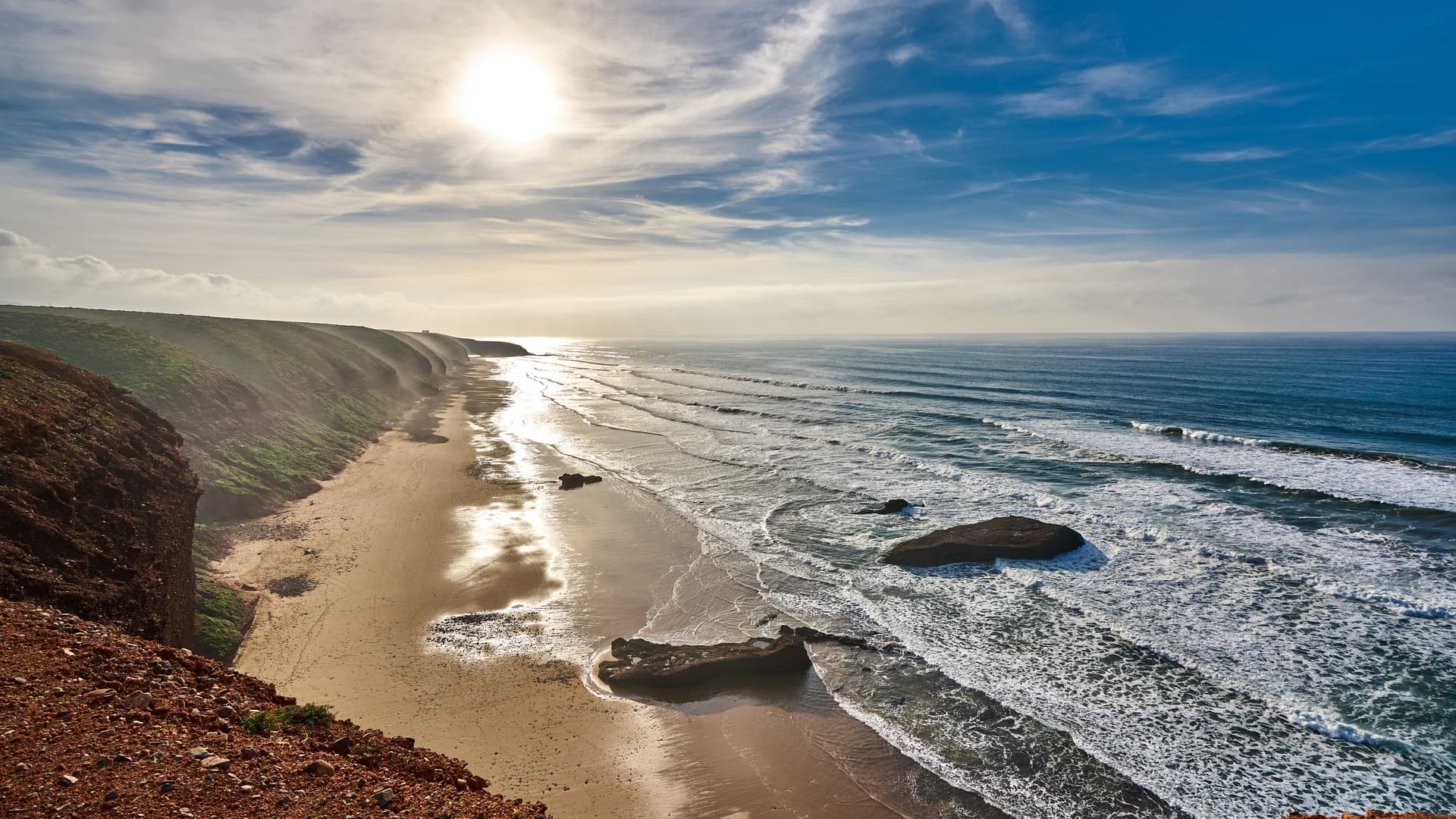
Legzira Beach stretches along Morocco's Atlantic coast, between Mirleft and Sidi Ifni, at the foot of red sandstone cliffs. Long celebrated for its natural arches carved by erosion, it remains a remarkable geological site even after the collapse of the northern arch in September 2016. The golden sand, waters open to the Atlantic, and absence of heavy development make it a preserved destination, beloved by photographers, surfers, and coastal hikers.
Why visit Legzira
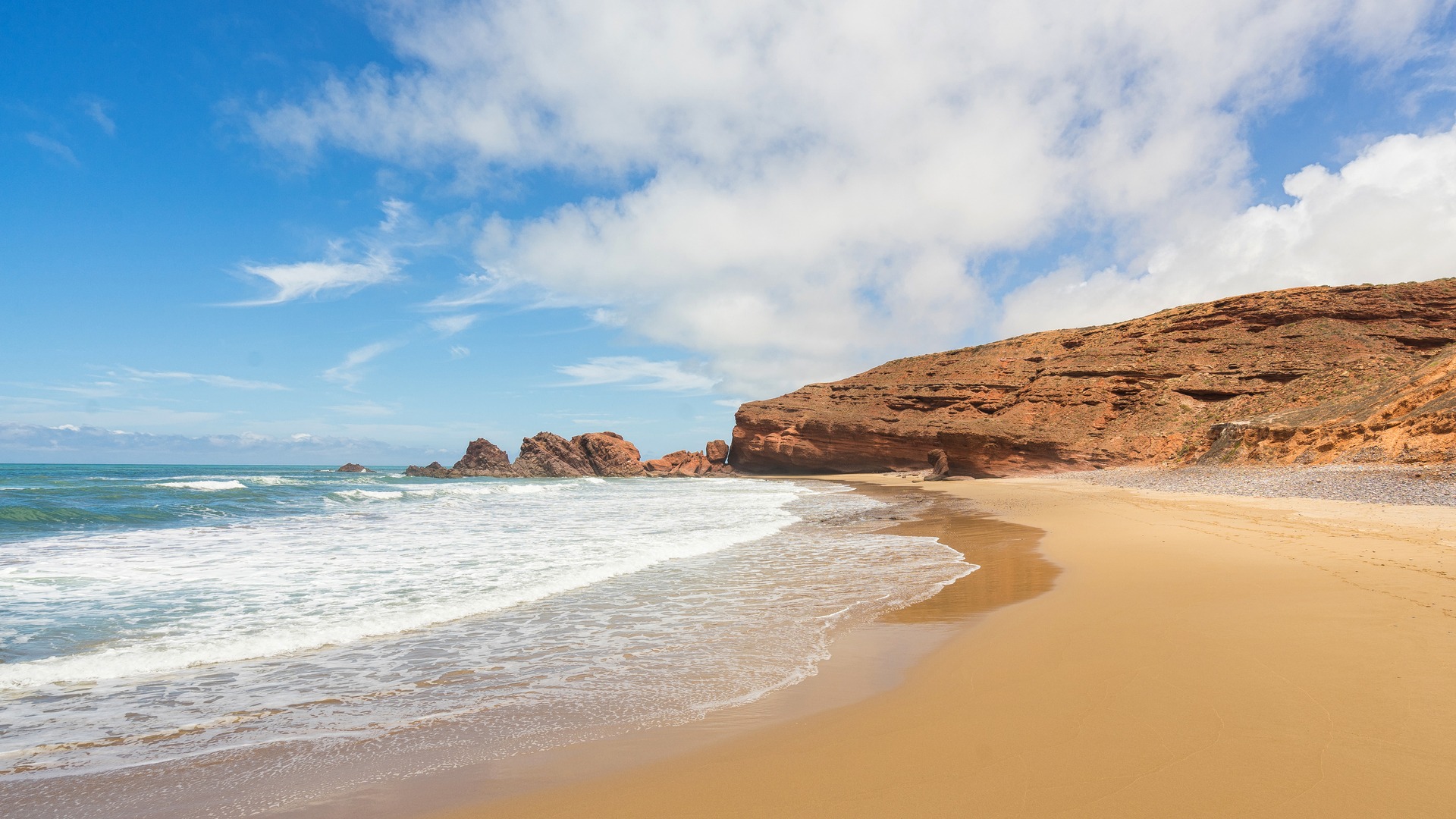
Legzira resembles no other beach in Morocco. Red cliffs plunge directly into the ocean, forming a geological landscape best explored on foot at low tide, stretching several kilometres. The contrast between oxidized sandstone, pale sand, and Atlantic spray draws primarily two types of visitors: lovers of raw landscapes and photographers, who come for the golden-hour light, and surfers, drawn by the consistent waves along this stretch of coast.
The site remains largely undeveloped. A few beachside cafés and guesthouses, no resort complexes, minimal commercial activity. This simplicity is part of the experience: you come to walk, observe, and take your time.
What to see and do
The arches and cliffs
Two large arches were historically the site's signature features. The first collapsed on September 23, 2016, victim to marine erosion and the fragility of the sandstone. The second arch, further south, remains in place but is equally exposed to erosion: passing beneath it is discouraged, especially at high tide. Remnants of the collapsed arch are visible on the sand, now forming sculptural rock formations.
Beyond the arches, walking along the cliffs reveals cavities, coloured strata, and rock pillars isolated by erosion. The walk should only be undertaken at low tide, for safety reasons.
Surfing and paragliding
Legzira is one of Morocco's southern coast surf spots, more low-key than Imsouane or Taghazout. The waves suit intermediate level surfers. A few local schools offer equipment rental and lessons.
Tandem paragliding is also available from the heights, with takeoff facing the sea. Several operators run from Mirleft.
Swimming and precautions
Swimming is possible but the Atlantic here is exposed: currents, heavy swells, and no organized supervision outside peak season. Caution is essential, especially with children, and areas beneath the cliffs should be avoided due to risk of rockfall.
When to go
Legzira's climate is temperate year-round. In summer (June-August), daytime temperatures hover between 28 and 30°C, with nights of 18-20°C. Winter remains mild, with nights around 16-18°C and some rainy spells. Spring and autumn offer the best conditions for combining hiking, photography, and moderate swimming.
For photography, late afternoon is when the cliffs reach their most saturated colour. For surfing, autumn and winter bring the most consistent swells.
How to get there
From Agadir, allow approximately 2 hours' drive. The route follows the N1 toward Tiznit, then turns onto the P1704 toward Sidi Ifni, with a signposted detour of about 1.5 km to the beach. A rental car offers the most flexibility, as the site is not directly served by public transport.
Buses connect Agadir to Tiznit and then to Sidi Ifni, from where a local taxi reaches Legzira. Budget half a day of travel by public transport. A private taxi from Agadir is an option: agree on the fare before departure.
Practical information
- Free access to the site, no entry fee
- Allow a minimum of half a day on site to enjoy the cliffs at low tide
- A few beachside cafés and guesthouses for dining
- Check tide times before walking beneath the cliffs
- Avoid parking too close to the cliffs in strong winds
Nearby
The town of Sidi Ifni, 11 km to the south, merits a detour for its Spanish colonial architecture and lighthouse. Fort Bou Jerif, a ruined former military post amid semi-desert landscape, can be visited as a day excursion. Further north, Souss-Massa National Park shelters wetlands, dunes, and migratory birds, including the bald ibis.
Frequently asked questions
Frequently asked questions
One of the two large arches collapsed in September 2016 due to erosion. The second arch remains visible but is fragile. Blocks from the vanished arch are still present on the beach.
Swimming is possible but the Atlantic here has strong currents and heavy waves. There is no permanent supervision. It's best to stay close to shore and avoid areas beneath the cliffs.
Half a day allows time to walk along the cliffs, observe the arches, and enjoy the sunset. An overnight stay at a local guesthouse lets you experience the site in the day's two best light conditions.
A car is the most practical option. Public transport exists via Tiznit and Sidi Ifni but requires multiple connections. A private taxi from Agadir is possible with the fare negotiated in advance.
Learn more
Legzira fits easily into an itinerary along Morocco's southern Atlantic coast, between Agadir, Tiznit, and Sidi Ifni. To plan a complete trip, see our suggestions for organising a trip to Morocco.
Interested in this visit?
We can include it in your personalised itinerary.