Ksar Aït Abou Aam (Ksar Abouaam)
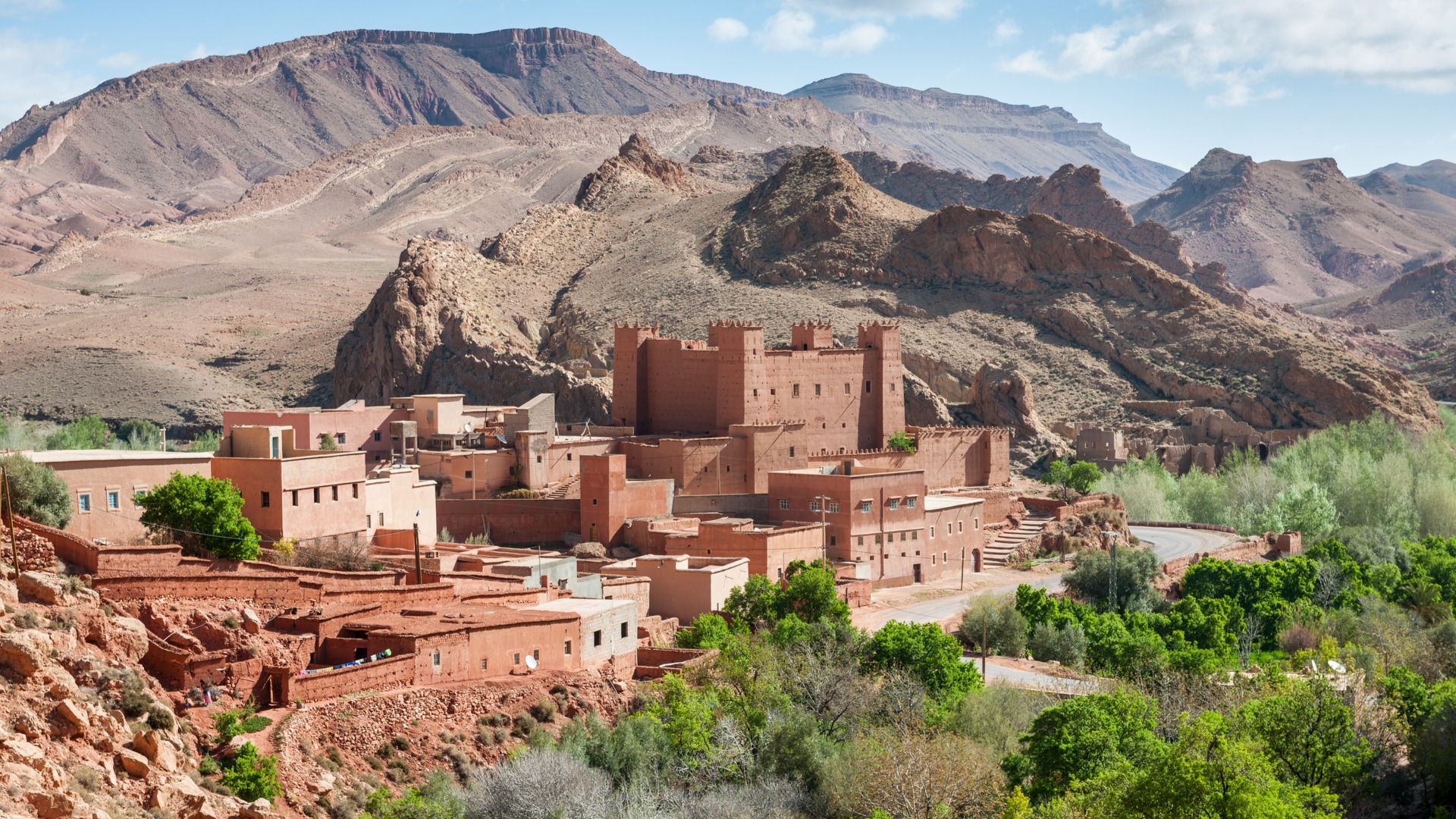
Ksar Abouaam is a fortified rammed-earth village in the Drâa valley, nestled between Agdz and Zagora. Its geometric towers, narrow alleyways and irrigated palm groves exemplify the architecture and lifestyle of the ksour in southern Maroc.
Ksar Abouaam is a traditional fortified village in the Drâa valley, in Zagora province, in southeastern Maroc. Built in rammed earth — raw earth mixed with straw — it exemplifies the defensive Berber and Arab architecture that punctuates this oasis valley. Surrounded by palm groves and gardens irrigated by seguias, it offers a tangible glimpse into the social and spatial organization of the Drâa's ksour.
What to See
The ksar presents itself as a cluster of tall houses tightly packed together, pierced by narrow alleyways. The corner towers in rammed earth, adorned with geometric relief patterns, are characteristic of the Drâa architectural style. Inside, a neighborhood mosque, collective granaries (agadirs) and communal spaces testify to organized community life. The surrounding palm grove remains active for agriculture.
History and Context
The ksour of the Drâa valley developed between the Middle Ages and the modern period as control points along the caravan routes connecting the Sahara to northern Maroc. Abouaam is part of a chain of ksour that punctuate the route between Agdz and Zagora. These villages once hosted Berber, Arab and Jewish communities whose architectural and social traces remain visible in the buildings.
Highlights of Your Visit
Rammed-Earth Architecture
The facades and towers reveal local expertise: recessed patterns, decorative crenellations, ochre renders. Low-angle morning or evening light accentuates the reliefs and textures of the raw earth.
The Palm Grove and Seguias
The traditional irrigation network (seguias) feeding the gardens and crops of dates, henna and vegetables remains in operation. A walk through the palm grove allows you to observe this ancestral hydraulic system.
The Interior Urban Fabric
Covered alleyways, carved doorways and interior courtyards offer insight into domestic organization. Some families still inhabit the ksar; discretion is advised during your visit.
Etiquette and Visiting Guidelines
- Covered clothing recommended, shoulders and knees covered, out of respect for residents.
- Mosque: access is reserved for Muslims.
- Private spaces: do not enter houses without explicit invitation.
- Photography of people: seek permission before photographing residents.
Photography Tips
Golden light in late afternoon enhances the ochre tones of the rammed earth. Angles from the edges of the palm grove allow you to frame the towers with vegetation. Inside the alleyways, midday zenith light creates striking contrasts between shadow and light.
Location and Access
Ksar Abouaam is situated in the Drâa valley, on the road axis between Agdz and Zagora. National road N9 runs alongside the valley and provides access to the various ksour by car. A personal vehicle or rental from Zagora or Ouarzazate remains the most practical option. Wheelchair accessibility inside the ksar is limited due to narrow alleyways and uneven ground.
Nearby Attractions
- Ksar Tamnougalt — one of the best-preserved ksour in the valley, with a caïd's kasbah open to visitors.
- Agdz — town in the Drâa valley, a starting point for exploring surrounding ksour.
- Zagora — stopover town for circuits into the Chegaga desert and erg Chegaga.
- Drâa Palm Grove — one of Maroc's longest palm groves, extending for several dozen kilometers.
Frequently asked questions
Spring (March–April) and autumn (October–November) offer pleasant temperatures in the Drâa valley. Summer is very hot; winter remains mild during the day but nights can be cool.
A local guide is not mandatory but makes it easier to understand the place's history and helps avoid private areas. Local agencies in Zagora offer guides specializing in the Drâa valley.
Yes. The route between Agdz and Zagora runs alongside several ksour. A day is sufficient to visit two or three, including a stroll through the palm grove.
Photography of the architecture is generally accepted. To photograph residents, always ask their permission first.
Partially. Like many ksour in the Drâa, Abouaam is partly occupied and partly abandoned. Some sections are undergoing natural deterioration due to lack of upkeep.
Interested in this visit?
We can include it in your personalised itinerary.