Mazagan
Mazagan
Portuguese city of El Jadida, UNESCO World Heritage site: cistern, ramparts and pentagonal minaret on Morocco's Atlantic coast, 100 km south of Casablanca.
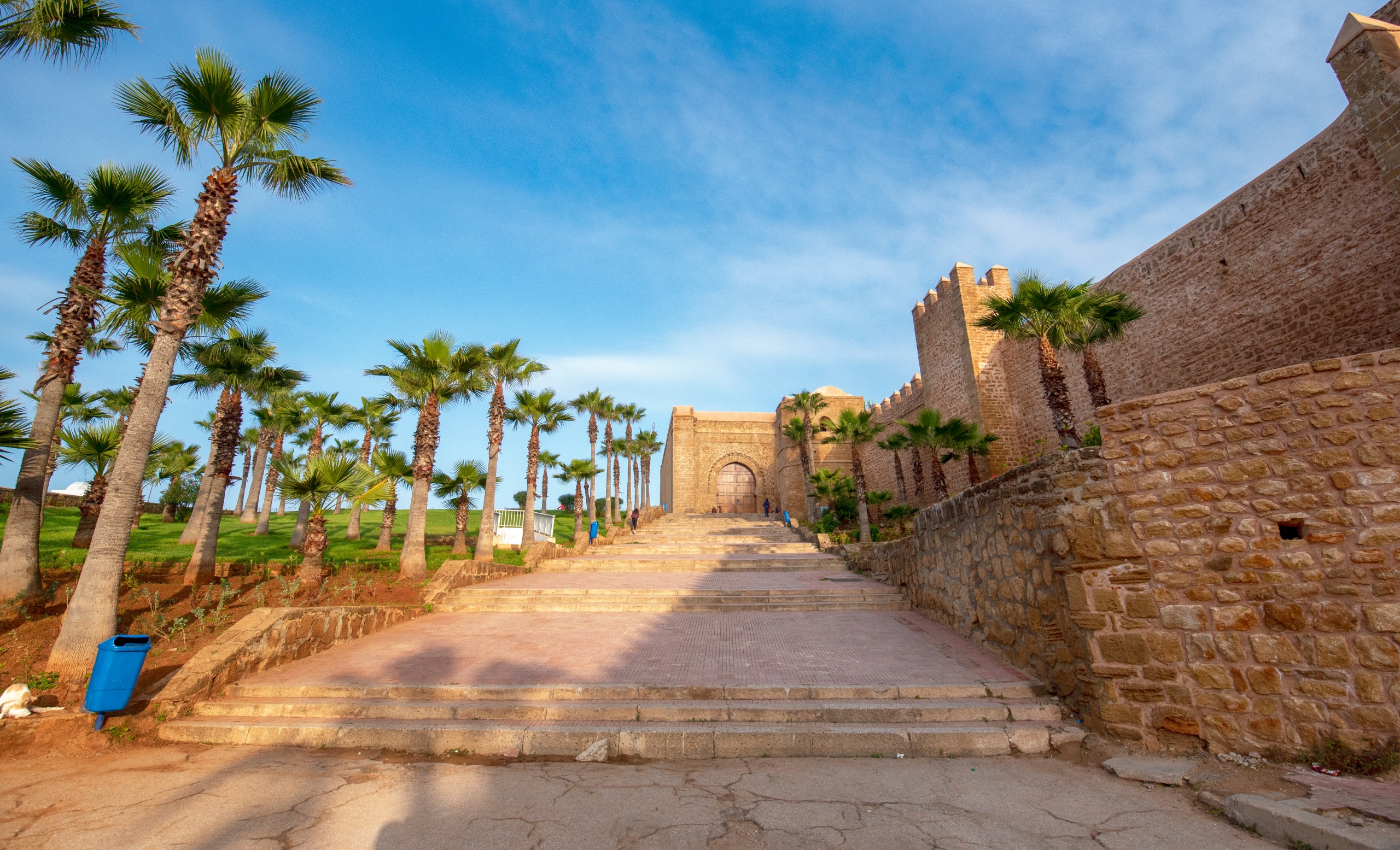
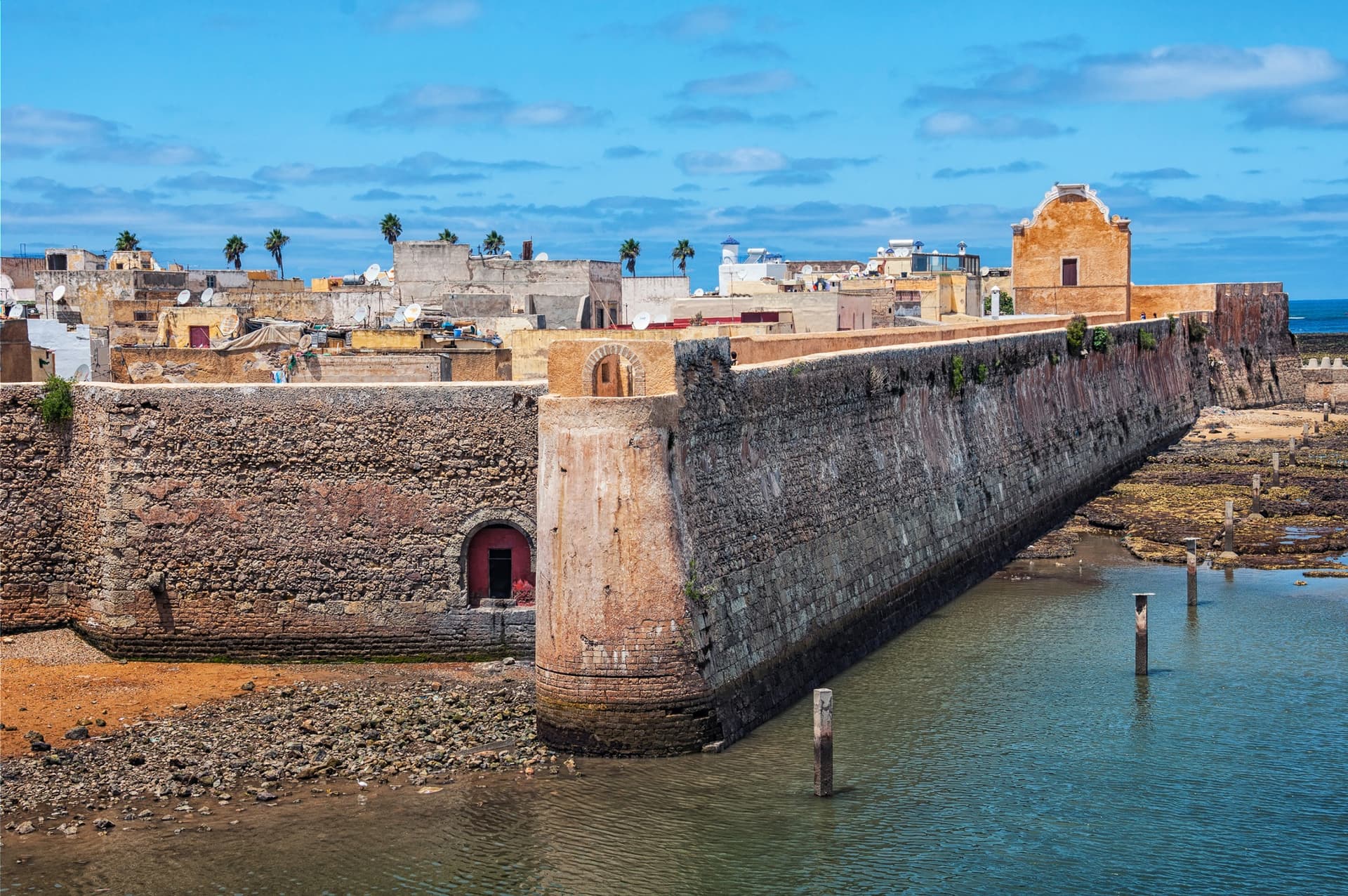
Once a Portuguese fortress on Morocco's Atlantic coast, Mazagan today refers to the fortified city of El Jadida, inscribed as a UNESCO World Heritage site in 2004. About a hundred kilometres south of Casablanca, its ramparts, underground cistern and Manueline vestiges tell the story of more than two and a half centuries of Portuguese presence on the coast.
Why visit Mazagan
The Portuguese city of El Jadida is one of the best-preserved examples of Portuguese Renaissance military architecture in Africa. The cistern, the Church of the Assumption and the bastions form a compact ensemble, visitable in half a day, which makes for a natural stop between Casablanca and Safi or Essaouira. The Atlantic climate remains temperate year-round, with summers less hot than inland.
- UNESCO site since 2004
- Portuguese military architecture of the 16th century
- Underground cistern famous for its light effects
- Atlantic waterfront and beaches at the gates of the medina
History of Mazagan
The Portuguese settled on the site in 1506 and built a strategic fortress to secure their maritime route to African trading posts. The city, surrounded by thick bastioned walls, resisted several attempts to recapture it. It remained Portuguese for approximately two hundred and sixty years, until its reconquest by Sultan Sidi Mohamed Ben Abdellah in 1769.
The place has borne several names: Rusibis in antiquity, Mazghan in Arabic, Mazagão under the Portuguese, then El Jadida ("the new") after Moroccan reconquest. Around the ramparts grew the modern Moroccan medina, which today surrounds the historic city.
What to see in the Portuguese city
The Portuguese cistern
It is Mazagan's most visited monument. Originally a weapons room, the space was transformed into a cistern to store water in case of prolonged siege. The quadrilateral chamber measures more than 1,000 m² and rests on five rows of pilasters and arches inspired by Gothic architecture. A central well pierces the vault and lets a shaft of light through, which reflects in a thin film of water on the floor, creating a striking visual effect. The cistern had been forgotten for centuries until a merchant rediscovered it during work in his shop. Several filmmakers have shot there, notably Orson Welles for his Othello.
The Church of the Assumption
This former Portuguese church, built in the Manueline style (late Gothic), overlooks the main square of the city. It is now closed to the public but its façade remains a prominent landmark in the historic quarter.
The mosque and its pentagonal minaret
Facing the church stands a mosque whose minaret, with its pentagonal plan, is said to be one of the very few—if not the only—religious buildings with pentagonal shape in the world. The minaret was fitted into a former Portuguese watchtower, which explains its unusual geometry.
The ramparts and the Bastion of the Angel
The rampart walk is largely accessible and allows you to make the circuit of the city from above. The Bastion of the Angel, at the northern corner, offers a broad view over the ocean, El Jadida's fishing port and the rooftops of the medina.
Falconry
The region perpetuates a tradition of falcon hunting dating back to the Middle Ages. The most renowned falconers come from the villages of Lakouassem and Ouled Frei, where demonstrations are sometimes organized for visitors.
Practical information
- Access: El Jadida is located about 100 km south of Casablanca, accessible by train (Casablanca–El Jadida line) or via the A5 motorway.
- Duration of visit: allow 2 to 3 hours for the Portuguese city; half a day if you include the port and the outer medina.
- Entry fee: moderate admission for the cistern; ramparts and alleys are free to access.
- Opening hours: the cistern is open daily during daytime; check locally before visiting.
- Tip: the natural lighting of the cistern is most photogenic at midday, when the sun falls directly through the well.
When to visit
El Jadida enjoys a mild Atlantic climate. Spring (April-June) and early autumn (September-October) offer the best conditions: pleasant temperatures, low crowds and clear light on the ramparts. Summer remains temperate thanks to sea breezes, but local attendance increases significantly as the city is a popular beach destination for Moroccans. Winter is mild but rainy at times.
In the surrounding area
- Azemmour, about ten kilometres to the north, is a small fortified town on the Oum Errabia, renowned for its white and blue painted alleys and for its shad, estuary fish that constitute a local speciality.
- Jorf Lasfar port, a former lobster fishing village, has become one of Africa's largest ports, specializing in phosphate export. Morocco ranks among the world's leading phosphate exporters.
- Mazagan Beach Resort, a few kilometres to the south, offers an 18-hole golf course and a sandy beach stretching about 7 km, also accessible to visitors outside the resort.
- Further along the coast, Safi and Essaouira naturally extend an Atlantic itinerary.
Frequently asked questions
Frequently asked questions
Yes. Mazagan is the Portuguese name of the fortified city built from 1506. After Moroccan reconquest in 1769, the city was renamed El Jadida. Today, "Mazagan" refers more specifically to the Portuguese city inscribed on the UNESCO list, within El Jadida.
Two to three hours are sufficient for the cistern, the Church of the Assumption, the mosque and the rampart walk. Allow half a day if you add the fishing port and the outer medina.
El Jadida is about 100 km south of Casablanca. The train connects the two cities in less than two hours, and the A5 motorway allows quick access by car.
For its Gothic architecture—five rows of pilasters and arches over more than 1,000 m²—and for the unique light effect created by the central well reflected in the water on the floor. Several films have been shot there, including Othello by Orson Welles.
It is reputed to be the only minaret with a pentagonal plan in the world. Its shape is explained by its reuse: it is a former Portuguese watchtower converted into a minaret after 1769.
Plan your trip
Mazagan is particularly well-suited as a stop on the Atlantic coast, between Casablanca and the south. To build your complete itinerary, consult our ideas for journeys in Morocco and our other attraction guides, such as Jemaa el-Fna square in Marrakech or the Aït Benhaddou kasbah on the southern route.
Interested in this visit?
We can include it in your personalised itinerary.