Menara Gardens
Menara Gardens
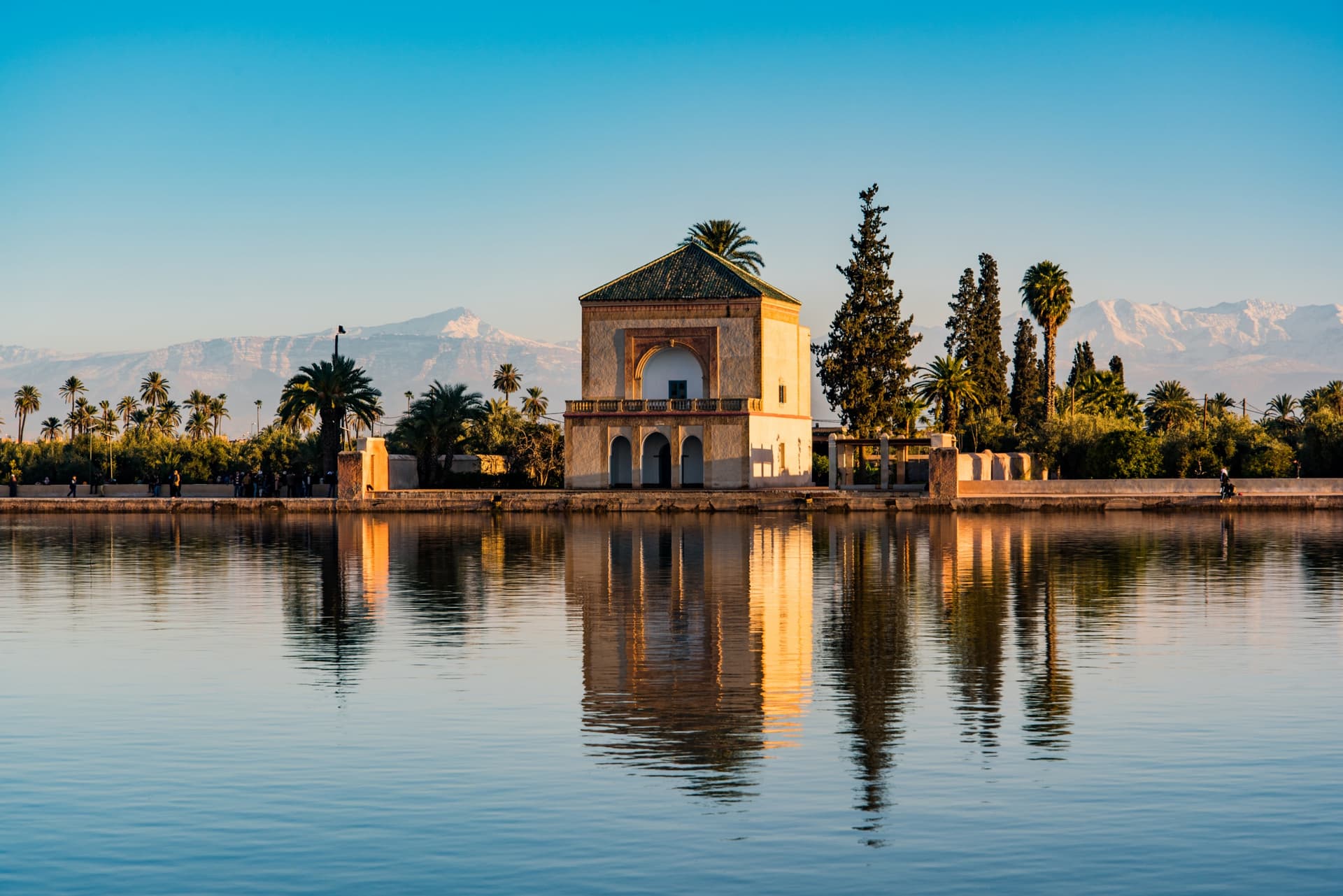
Almohad olive grove of ten hectares on the outskirts of Marrakech, organized around a large basin and a pavilion offering views of the Atlas.
On the western edge of Marrakech, the Menara Gardens form a vast olive grove of roughly ten hectares, organized around a rectangular basin and a pavilion. The site, created in the 13th century, is one of the city's oldest landscaped spaces and remains a daily walking destination for Marrakechis.
Why visit the Menara Gardens
The Menara is neither a formal French-style garden nor a flower-adorned riad: it is a working olive grove, still irrigated according to a medieval system. Its appeal lies in this understated character. On clear days, the large basin mirrors the snow-capped silhouette of the Atlas behind the pavilion. The contrast between the geometric rigour of the pool and the orderly rows of olive trees compose an emblematic image of Marrakech, reproduced on postcards since the early 20th century.
The site suits a brief visit (1 to 1.5 hours) as a complement to a day in the medina. Above all, it offers a welcome counterpoint to the bustle of the souks: few shops, few solicitations, plenty of space.
History of the site
The gardens were laid out in the 13th century by the Almohads, a Berber dynasty that made Marrakech their capital. The objective was twofold: to produce olive oil and to create a water reserve for the city. The basin, fed by an underground channel (khettara) that draws water from the foothills of the Atlas, irrigates the olive grove through a gravity-fed system still in operation.
The green and white pavilion bordering the basin dates in its current form to the 19th century, under the Alaouite dynasty, built upon older foundations attributed to the Saadians (16th century). It served as a pleasure residence for the sultans, who would stay briefly during escapes from the medina. The upstairs terrace offers an unobstructed view of Marrakech and, on clear days, the Atlas mountain range.
What to see on site
- The basin: approximately 200 metres by 150, populated with carp. It still serves to irrigate the olive grove; swimming is not permitted.
- The pavilion: a two-storey building accessible for a modest entrance fee. The terrace offers the most photographed viewpoint on the site.
- The olive grove: century-old olive trees, crossed by rectilinear paths. A few cypress and palm trees complete the botanical palette.
- The hydraulic system: the irrigation gates and channels, visible from the pathways, illustrate Almohad engineering.
Folk performances and fireworks are organized occasionally, generally during official events or festivals.
When to visit
The Menara can be visited year-round, but light and temperature vary significantly by season.
- Spring (March–May): the most pleasant period. Mild temperatures, often clear skies, Atlas still snow-capped in the background.
- Autumn (October–November): conditions similar to spring, somewhat lighter crowds.
- Summer (June–August): intense midday heat. Prefer opening hours in the morning or late afternoon.
- Winter (December–February): cool mornings, sharp light, better visibility of the snow-covered Atlas.
For photography, late afternoon remains the most favourable window: the pavilion is lit from the front and the basin reflects the golden sky.
Practical information
- Park access: free entry to the olive grove and around the basin. The pavilion is visited separately, for a modest fee.
- Hours: daytime opening, closing in late afternoon (around 6 pm). Verify locally before visiting.
- Visit duration: allow 1 to 1.5 hours to walk around the basin, ascend the terrace, and stroll through the olive grove.
- Equipment: hat, water, and closed-toe shoes, especially in summer. Few shaded areas outside the olive grove itself.
How to get there
The site is located approximately 2 km west of the medina, or a 45-minute walk from Jamaa El Fna square, via Menara Avenue. The walk is flat but lacks shade.
By petit taxi (beige taxi in Marrakech), the journey from the centre is quick. Ask for the meter to be turned on or agree on a fare before departure. Several urban bus routes also serve Menara Avenue from Bab Doukkala. Hotels in Hivernage and Guéliz are approximately 15–20 minutes on foot.
Nearby attractions
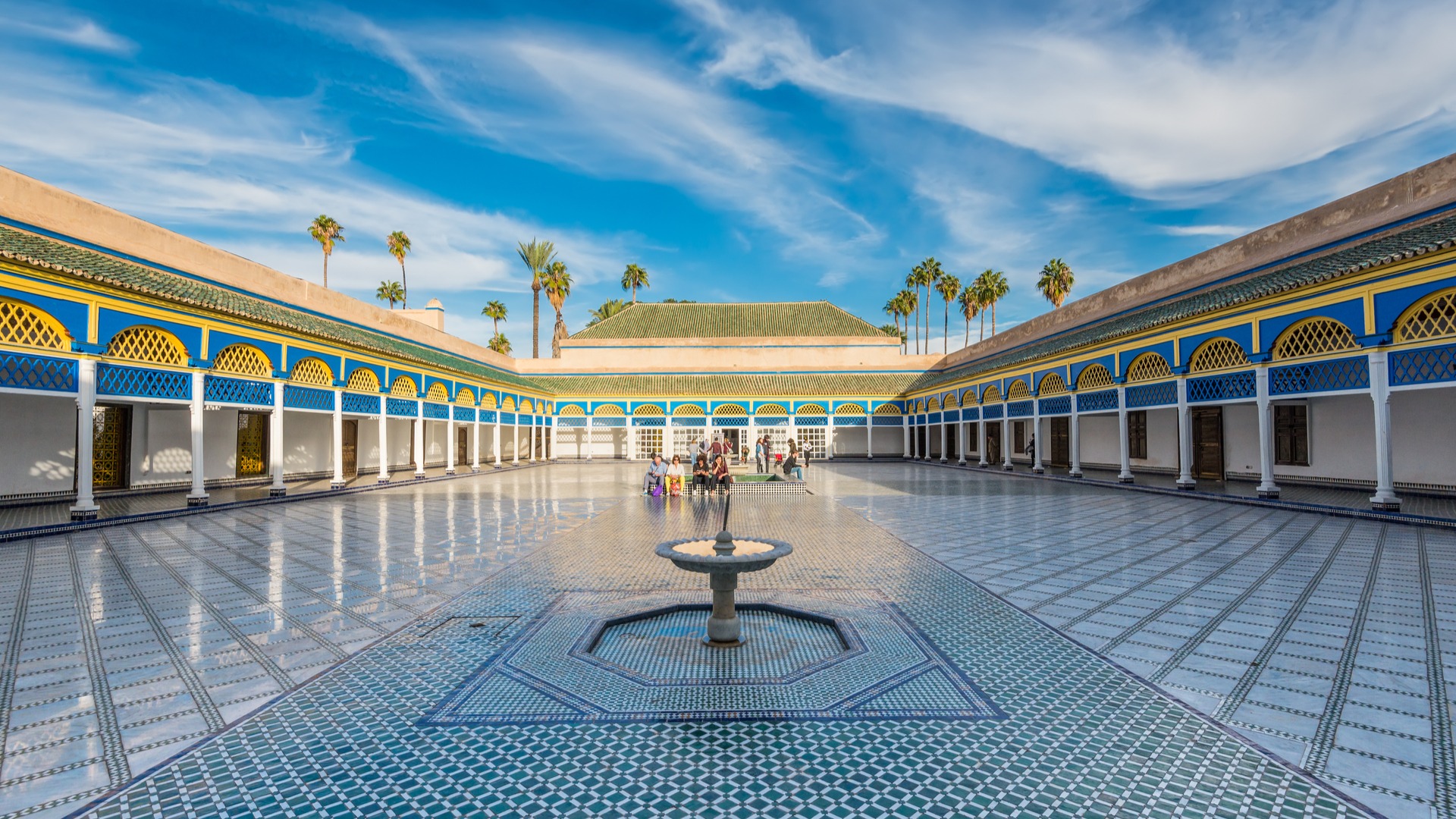
- The Bahia Palace, in the medina, to extend your visit with an example of 19th-century Moroccan residential architecture.
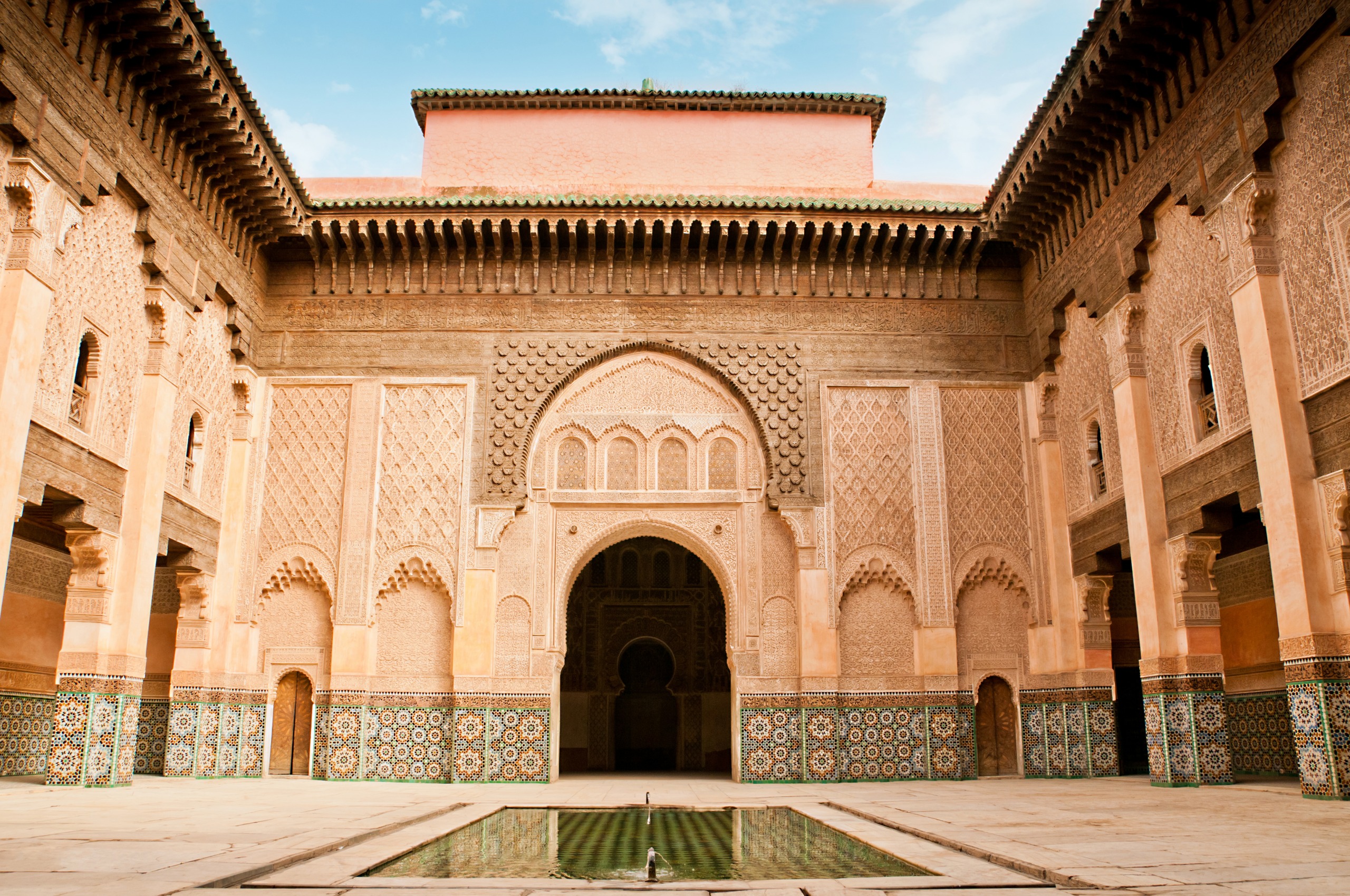
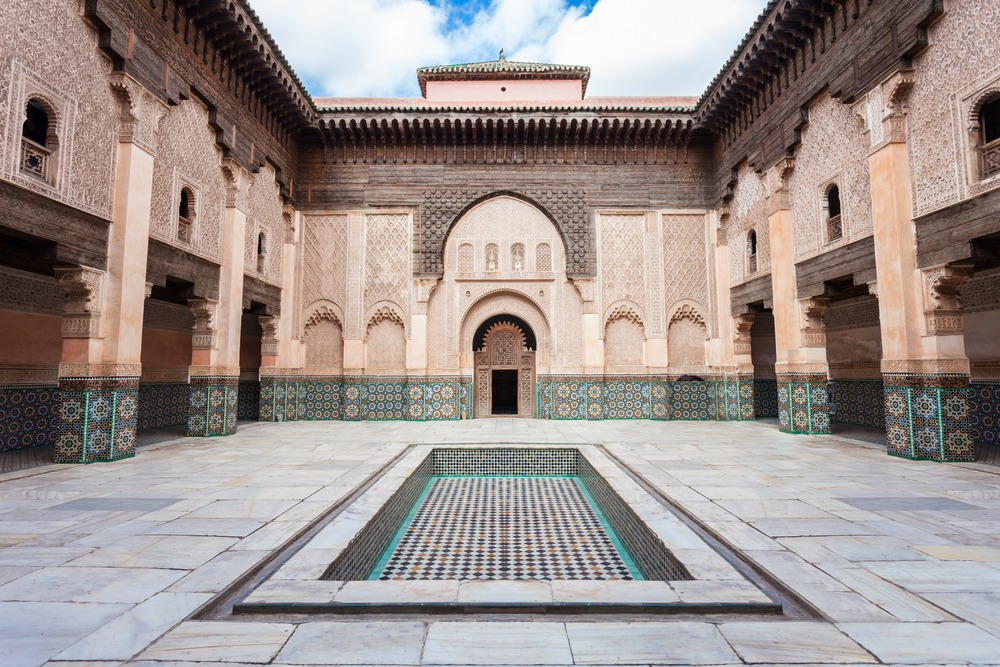
- The Ben Youssef Medersa, a Quranic school with remarkable carved décor.
- The historic centre of Marrakech, a 45-minute walk via Menara Avenue.
Frequently asked questions
Frequently asked questions
No. The basin is an irrigation structure fed from the Atlas and designed for the olive grove. Swimming is prohibited.
One to one and a half hours are sufficient to walk around the basin, visit the pavilion, and stroll through the olive grove.
Access to the park and basin is free. Only the pavilion visit requires a ticket, at a modest rate.
Yes, on clear days, especially in winter and spring when the peaks are snow-covered. Atmospheric pollution and summer haze reduce visibility in summer.
Yes. Its proximity to the medina allows you to follow up with Bahia Palace or Ben Youssef Medersa the same day.
Plan your trip
The Menara Gardens naturally fit into a stay in Marrakech, whether a long weekend or a broader tour including the Atlas and southern Morocco. To build a custom itinerary, consult our Morocco travel suggestions.
Nearby
Interested in this visit?
We can include it in your personalised itinerary.