Ourika Valley
Ourika Valley
An hour south of Marrakech, Ourika Valley combines Amazigh villages, Setti-Fatma waterfalls, Tafza eco-museum and mountain gardens.
An hour's drive south of Marrakech, Ourika Valley stretches into the foothills of the High Atlas, following the wadi that gives it its name. This excursion, one of the most popular from the red city, combines Amazigh villages clinging to the slopes, terraced agriculture, thematic gardens and a waterfall trail that peaks above Setti-Fatma.
Why visit Ourika Valley
The valley takes its name from Wadi Ourika, whose banks are shaded by poplars and weeping willows, contrasting sharply with the dry landscapes of the Haouz plain. For Marrakech residents and visitors alike, the appeal lies in a swift change of atmosphere: in less than two hours, you leave the medina for a cool valley floor, crossed by water and lined with terraced gardens.
The territory is inhabited by Amazigh tribes that have practiced terraced agriculture for centuries in the fertile Haouz plain and on the hillsides. This presence is evident in the architecture, crops, souks and crafts sold along the road. The valley suits both a day excursion and a longer rural stay.
What to see and do in the valley
Setti-Fatma and the seven waterfalls
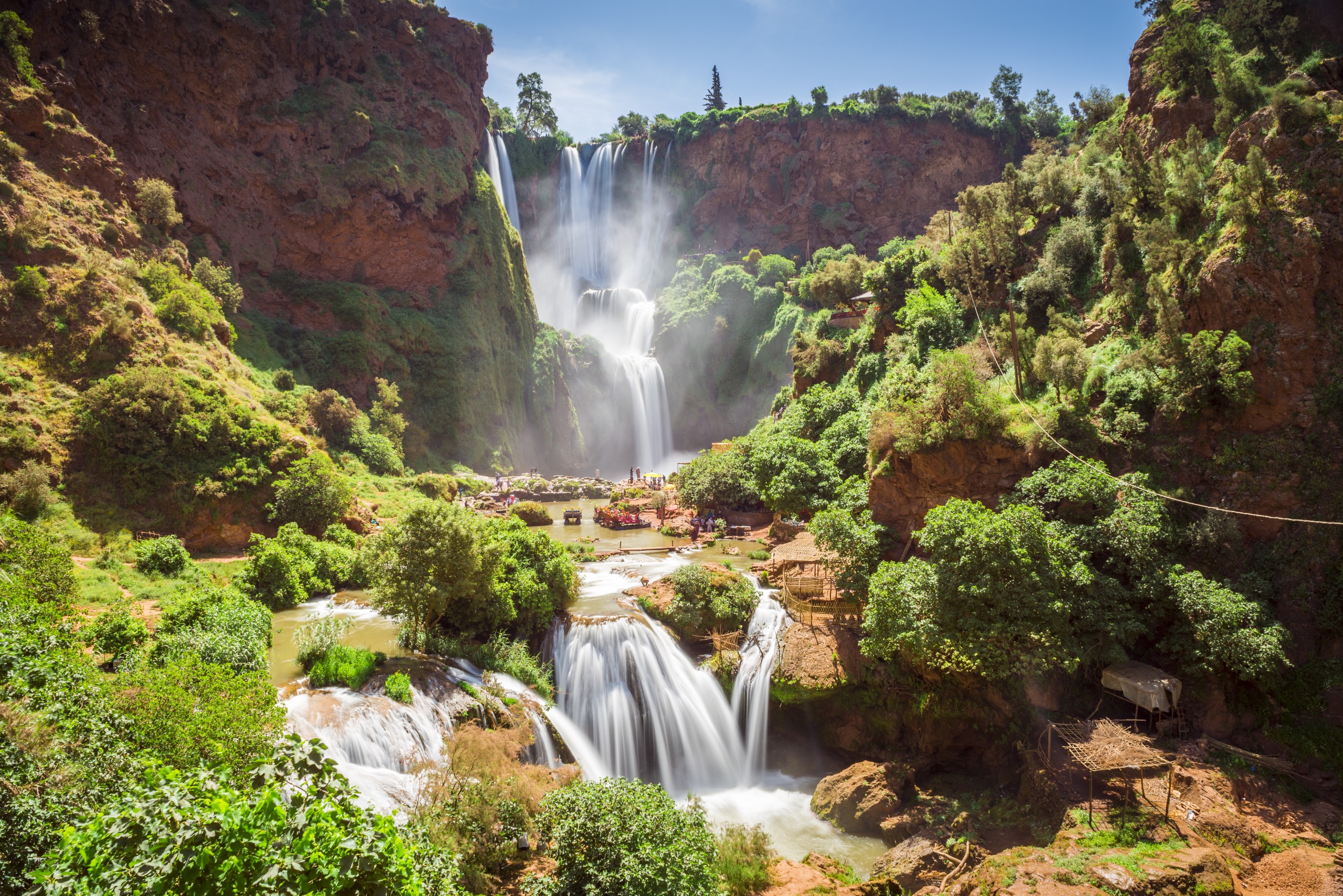
The village of Setti-Fatma, at 1,500 m altitude, marks the highest point accessible by car. It is the starting point for the so-called seven waterfall trek, which takes approximately 1.5 to 2 hours of hiking. The route is rocky in places and requires good hiking boots. Less experienced hikers can stop at the first waterfall, which opens onto a panorama of the Yaghour massif.
The Tafza Amazigh eco-museum
In the heart of Tafza village, the Amazigh eco-museum presents the traditional habitat, agricultural tools, jewelry and clothing of the region. The visit takes about an hour and provides a useful introduction to the culture of the Atlas valleys before continuing on the road.
The Tnine-de-l'Ourika souk
Every Monday, the Tnine-de-l'Ourika weekly market brings together farmers from nearby villages. You'll find agricultural produce, livestock, textiles and everyday objects. It's a country market rather than a tourist souk: the interest is ethnographic rather than commercial.
Gardens and saffron farm
The valley has several botanical sites:
- a garden of medicinal and aromatic plants, gathering species used locally;
- the mountain garden of Timalizène, tiered on the slopes;
- a saffron farm where you can observe the cultivation of Crocus sativus and purchase a few grams of spice.
Arhbalou and waterside restaurants
The village of Arhbalou, upstream in the valley, is known for its row of small restaurants set along the wadi. It is a frequent lunch stop before heading up toward Setti-Fatma.
When to go
Ourika Valley can be visited year-round, but each season has its constraints:
- Spring (March–May): the most favorable period, sustained water flow, mild temperatures and green slopes.
- Summer (June–August): the classic refuge for Marrakech residents escaping the heat; the valley remains cooler than the plain but the valley floor can be very crowded on weekends.
- Autumn (September–October): soft light, moderate crowds, pleasant hiking.
- Winter (November–February): risk of flash floods after rain and snow at higher elevations; the waterfall hike may be impassable.
How to get there from Marrakech
The valley stretches over sixty kilometers southeast of Marrakech, via the P2017 road. Allow about 1 to 1.25 hours to Tnine-de-l'Ourika and 1.5 to 2 hours to Setti-Fatma depending on traffic and mountain road conditions.
- Car rental: the most flexible option, paved road to Setti-Fatma.
- Shared grand taxi from Bab Er Robb bus station in Marrakech: economical, drops off at Setti-Fatma.
- Organized day excursion: the most common option, often combined with a stay in an Amazigh home and lunch at Arhbalou.
Practical information
- Duration of visit: one day for a standard excursion, two to three days to include a hike and garden exploration.
- Equipment: closed hiking shoes for the waterfalls, warm clothing at altitude even in summer, sun protection.
- Accommodation: basic but decent options (guesthouses, inns, bed and breakfasts), notably at Timalizène garden, Anergui and Oulmès.
- Safety: caution in case of storms; the wadi can overflow quickly.
- Guides: local guides are available at Setti-Fatma for the waterfall trek, useful beyond the first cascade.
Worth combining in the region
Several sites lend themselves to an extension from the valley:
- Marrakech and its historic monuments, the logical starting point.
- Bahia Palace, to visit before or after the excursion.
- Attiq Waterfalls, another water site in the Middle Atlas for comparison.
- Ifrane National Park, for further exploration at altitude toward the Middle Atlas.
Frequently asked questions
Frequently asked questions
Setti-Fatma, the highest village in the valley, is about 65 km southeast of Marrakech, roughly 1.5 to 2 hours' drive depending on conditions.
The first waterfall is reached in 30 to 45 minutes on a rocky but non-technical path. The six others require better fitness and good hiking boots; allow 1.5 to 2 hours of hiking in total.
The souk is held every Monday. It brings together farmers from neighboring villages and retains an authentic agricultural character.
Yes, several guesthouses, inns and bed and breakfasts exist, notably at Timalizène, Anergui and Oulmès. Accommodation is basic but allows for a two to three-day visit.
Spring offers the best conditions (abundant water, mild temperatures, green landscapes). Summer remains practicable but very crowded; winter brings the risk of floods and snow at higher elevations.
Include Ourika Valley in your journey
To combine Ourika Valley with Marrakech, the Atlas and other regions of the country, explore our itineraries on travel to Morocco.
Interested in this visit?
We can include it in your personalised itinerary.