Ouzoud Waterfalls
Ouzoud Waterfalls
Located 150 km from Marrakech, the Ouzoud Waterfalls plunge 110 meters into the heart of an olive grove inhabited by macaques. Complete guide to planning your visit.
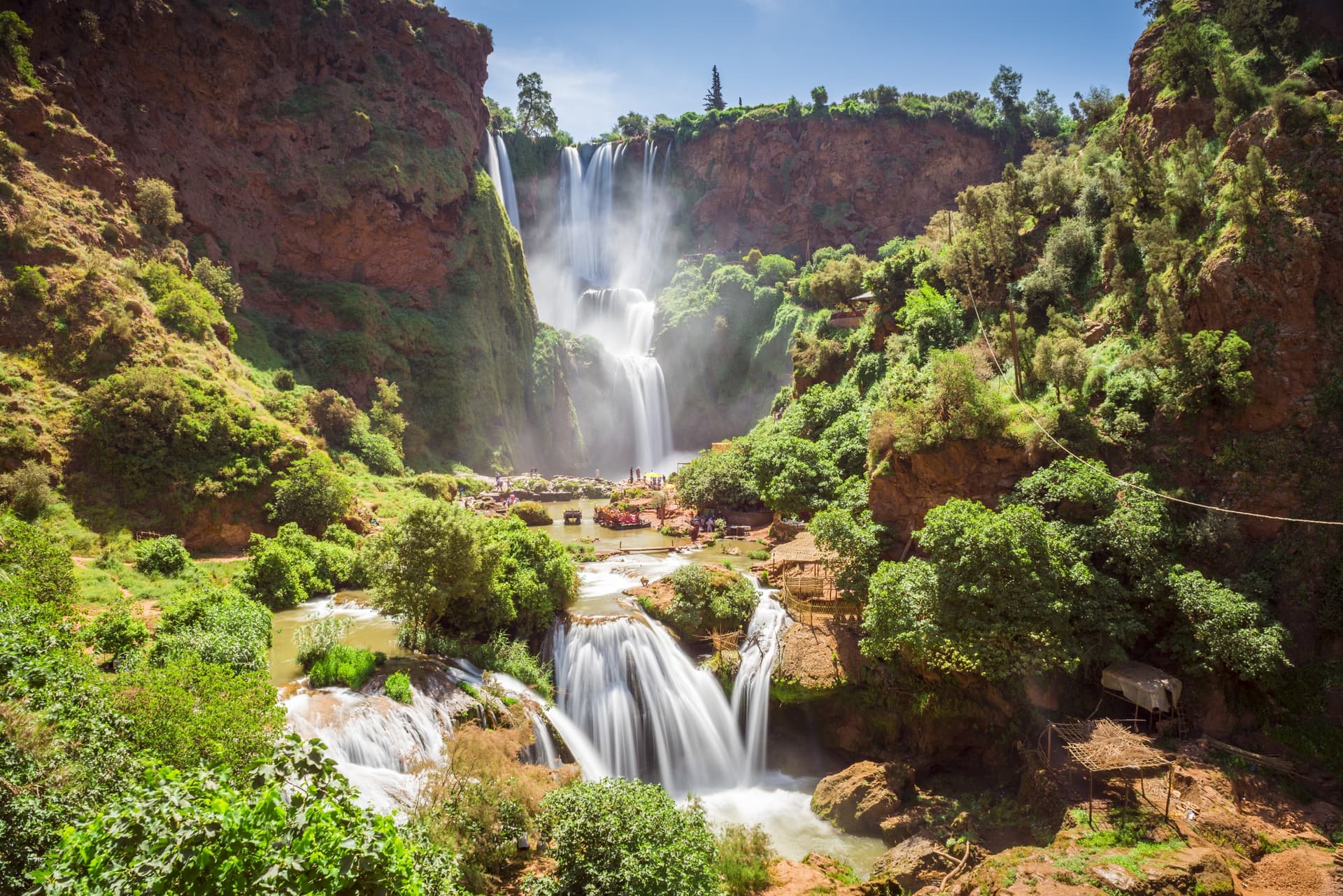
Located approximately 150 km northeast of Marrakech, in the Middle Atlas, the Ouzoud Waterfalls form one of Morocco's most visited natural sites. The name of the place, which means "sweet" in Berber, refers to the olive oil produced locally for generations. The main waterfall plunges approximately 110 meters into a canyon lined with olive trees and bougainvilleas.
Why visit the Ouzoud Waterfalls
The site combines several rare features in the region: sustained water flow, dense vegetation and visible wildlife. It offers a striking contrast to the aridity of the Marrakech plain and constitutes a popular day excursion to escape the urban heat.
- A waterfall of approximately 110 meters, among the highest in North Africa
- A colony of Barbary macaques roaming freely around the trails
- Natural pools ideal for swimming at the base of the waterfalls
- A traditional olive grove still in production
- Access by well-maintained, shaded paths suitable for families
What to see and do on site
The waterfalls and pools
Several trails descend from the plateau to the foot of the falls. The elevation gain is moderate and the paths are well-maintained, sometimes stepped, often shaded by olive trees. At the bottom, natural pools allow for swimming when water flow permits; bring a bathing suit and shoes with good grip for wet rocks.
Boat crossing
At the foot of the main waterfall, boatmen offer short crossings in artisanal vessels with sometimes unexpected names, such as "le France." The trip approaches the curtain of water and offers another perspective on the falls.
Barbary macaques
The site is home to a population of Barbary macaques, a protected species. You will encounter them along the trails and near dining areas. Avoid feeding them: this alters their behavior and can result in bites.
The olive grove and oil production
The plateau overlooking the waterfalls is covered with olive trees, some of which are pressed using traditional methods in small traditional mills. Several producers open their workshops to visitors and offer tastings of fresh oil.
When to visit
The waterfall flow varies significantly by season.
- Spring (March-May): most favorable period. Water flow is high after snowmelt, vegetation is dense and temperatures remain comfortable.
- Summer (June-August): significant crowds, considerable heat on the trails. Swimming is highly popular. Plan your visit for early morning or late afternoon.
- Autumn (September-October): moderate visitor numbers, lower water flow but pleasant light.
- Winter (November-February): peaceful site, cool temperatures along the river, swimming not advisable.
Practical information
- Duration of visit: allow 2 to 4 hours on site, longer if you have lunch overlooking the waterfalls
- Equipment: closed hiking shoes, bathing suit and towel, water, sun protection and hat
- Rates: site access is free. Organized excursions from Marrakech are available at varying prices depending on format (group, private, meals included)
- Dining: several small restaurants and terraces serve classic Moroccan dishes (couscous, tagine, salads) accompanied by mint tea, often with views of the falls
- Accommodation: guesthouses and small hotels in the village of Ouzoud for those wishing to extend their stay
How to get there
From Marrakech, allow approximately 2.5 to 3 hours of driving to cover the 150 km separating the city from the waterfalls. The route follows the N8 then turns towards Azilal.
- Car rental: the most flexible option, paid parking at the site entrance
- Organized excursion: numerous full-day formulas departing from Marrakech, transport, guide and meals typically included
- Shared transport: grands taxis or minibuses to Azilal, then local taxi to the waterfalls — economical option but longer journey
To see in the region
The Ouzoud Waterfalls can be part of a broader itinerary around Marrakech and southern Morocco. Before or after your visit, several sites merit a detour:
- Palais de la Bahia, a refined example of 19th-century Moroccan architecture in Marrakech
- Medersa Ben Youssef, former Quranic school in the heart of the medina
- Medersa Bou Inania in Fès, another masterpiece of Marinid art
- Fort Bou Jerif, former military post in the south
Frequently asked questions
Frequently asked questions
The main waterfall measures approximately 110 meters, making it one of the highest in North Africa. The descent occurs in several successive tiers.
Yes, natural pools allow for swimming, primarily from spring through autumn. Bring a bathing suit, towel and shoes suitable for slippery rocks.
Allow 2 to 4 hours to descend to the pools, enjoy swimming and return. With lunch on site, plan for a full half-day.
The drive takes 2.5 to 3 hours for 150 km. Most visitors opt for an organized full-day excursion, but car rental or shared transport via Azilal are also possible.
"Ouzoud" means "sweet" in Berber and refers to the olive oil produced locally, the plateau being covered with traditional olive groves.
The site is home to a population of Barbary macaques roaming freely, visible along the trails. It is recommended not to feed them and to maintain a safe distance.
Preparing your trip
The Ouzoud Waterfalls fit easily into an itinerary combining Marrakech, the Middle Atlas and southern Morocco. To build a custom itinerary incorporating this site and other must-see stops, consult our suggestions for Morocco trips.
Interested in this visit?
We can include it in your personalised itinerary.