Khénifra National Park
Khénifra National Park
Established in 2008 in the Middle Atlas, Khénifra National Park protects 200,000 hectares of cedar forest, Barbary sheep and Morocco's water sources.
Khénifra National Park protects over 200,000 hectares of forests, plateaus and valleys in the Moroccan Middle Atlas. Created in 2008, it is part of a regional conservation strategy alongside the Ifrane and Eastern High Atlas parks, and is home to fauna and flora characteristic of medium-altitude relief.
Why visit Khénifra National Park
The park stands out for the vastness of its cedar forest, one of the largest in Morocco, and its role in preserving the country's water resources. Several springs and watercourses originate there, feeding the watersheds that irrigate the plains below.
For visitors, it's an opportunity to experience medium mountain scenery quite different from the desert and coastal landscapes of the kingdom: dense forests, grassy clearings, herds of Barbary sheep and observation of birds of prey.
History and creation of the park
Khénifra National Park was established in 2008 to address growing pressure on Middle Atlas ecosystems, particularly from logging and overgrazing. Its creation followed that of the Eastern High Atlas National Park, founded in 2004 over more than 50,000 hectares.
In 2010, a new administrative division attached part of the park to Midelt province. The protected area now extends between the provinces of Khénifra and Ifrane, forming with these a coherent ecological whole dedicated to the conservation of the Atlas cedar and the preservation of the country's water reserves.
What to see in the park
Wildlife
The park's emblematic animal is the Barbary sheep, a mountain ungulate threatened across North Africa. You will also observe:
- the rock partridge, iconic game bird of Moroccan mountain ranges;
- several species of birds of prey, including eagles;
- the Barbary macaque, endemic to the Maghreb;
- wild boars and, more discreetly, striped hyenas.
Flora
The vegetation cover is dominated by the Atlas cedar, accompanied by junipers and pines. The understory and clearings shelter diverse herbaceous flora, particularly visible in spring.
Landscapes
Limestone plateaus, gorges, springs and forests make up a contrasting landscape. 4x4 routes, organized according to established routes, allow access to the most representative sectors without disturbing sensitive areas.
When to visit the park
Spring (April to June) is generally the most favorable season: mild temperatures, flowering, sustained animal activity. Autumn (September-October) also offers good conditions, with striking colors in the cedar forest.
Summer remains accessible thanks to the altitude, which tempers the heat. Winter can bring snow to higher elevations, making certain trails difficult to access.
Practical information
- Type of visit: guided 4x4 excursion along an established route, recommended to comply with park regulations.
- Duration: plan for a half day to a full day depending on the route chosen.
- Equipment: hiking shoes, clothing suitable for medium mountains, water, binoculars for wildlife observation.
- Guidance: go through a local operator or authorized guide, who knows the permitted trails and observation areas.
How to get there
The main access is via National Road N8, which crosses the Middle Atlas and serves the Khénifra region. The city of Khénifra is the logical starting point for organizing an excursion, with accommodation and service providers on site.
From Fès or Meknès, allow approximately two to three hours by road. From Marrakech, the journey is considerably longer and passes through Béni Mellal.
Nearby attractions
The Middle Atlas region brings together several complementary natural sites:
- The Ifrane National Park, a direct neighbor, extends the experience of the Atlas cedar forest.
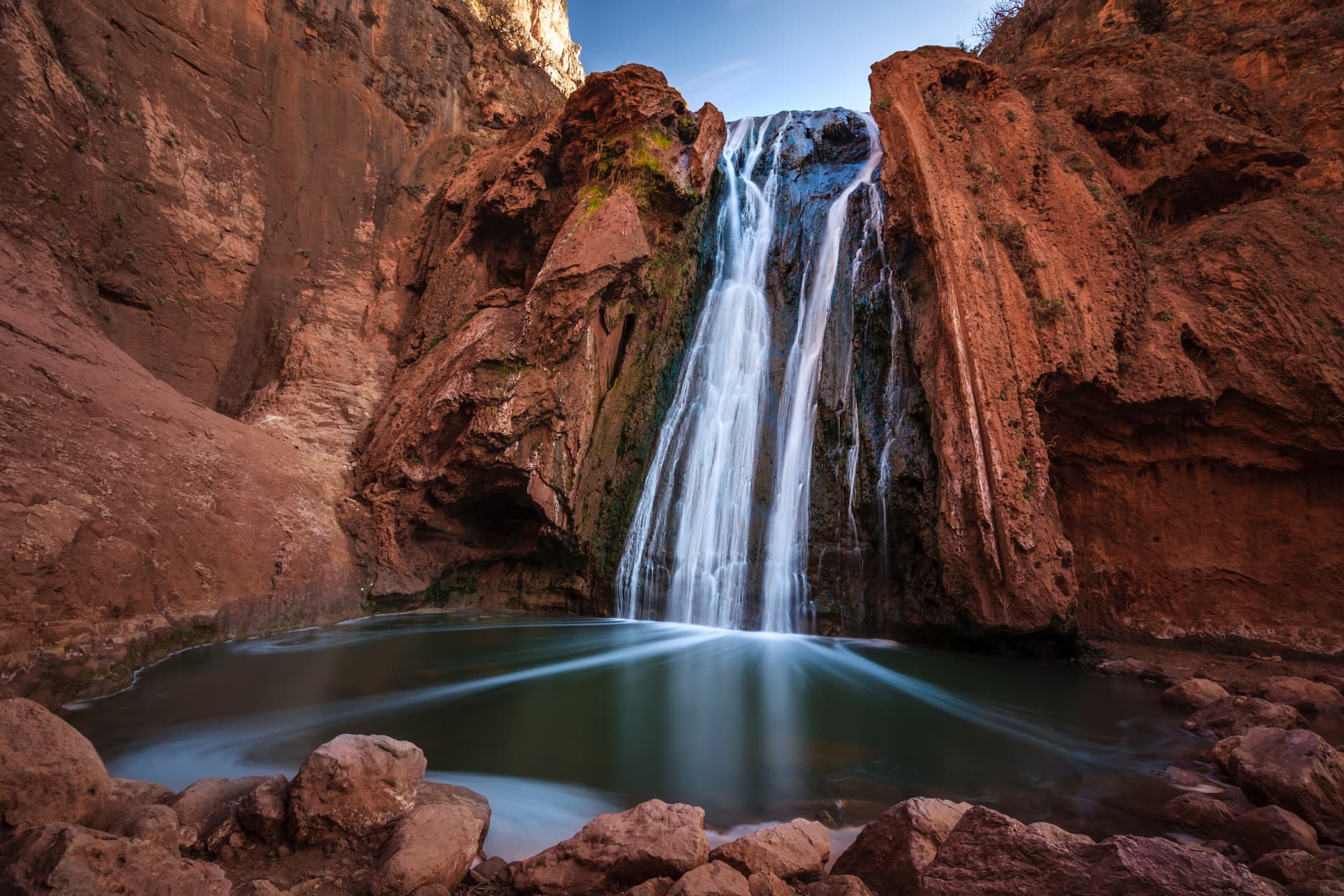
- The Attiq waterfalls offer a refreshing site nearby.
- Further south, the Skoura palm grove allows you to discover another facet of rural Morocco.
Frequently asked questions
Frequently asked questions
The park extends over more than 200,000 hectares in the Middle Atlas, between the provinces of Khénifra, Ifrane and Midelt.
The Barbary sheep, a threatened species of North African highlands, is the symbol of the park.
Visits are organized by 4x4 along established routes, with a guide or local operator.
Spring and autumn offer the most pleasant conditions for hiking and wildlife observation.
Plan your trip
Khénifra National Park fits naturally into a journey through the Middle Atlas and central Morocco. To build a tailor-made itinerary incorporating this site and other nature or cultural stops, explore our Morocco travel packages.
Interested in this visit?
We can include it in your personalised itinerary.