Ziz Gorges
Ziz Gorges
Departing from Errachidia, the Ziz Gorges connect the High Atlas to the Sahara through red limestone cliffs and the Tafilalet palm groves.
The Ziz Gorges form a spectacular corridor carved by the river of the same name between the High Atlas and the Sahara. Bordered by red limestone cliffs, they shelter a succession of palm groves and Berber villages that make up the Tafilalet oasis, one of the largest in Morocco. The city of Errachidia, in the east of the country, serves as the classic starting point for exploring the valley.
Why visit the Ziz Gorges
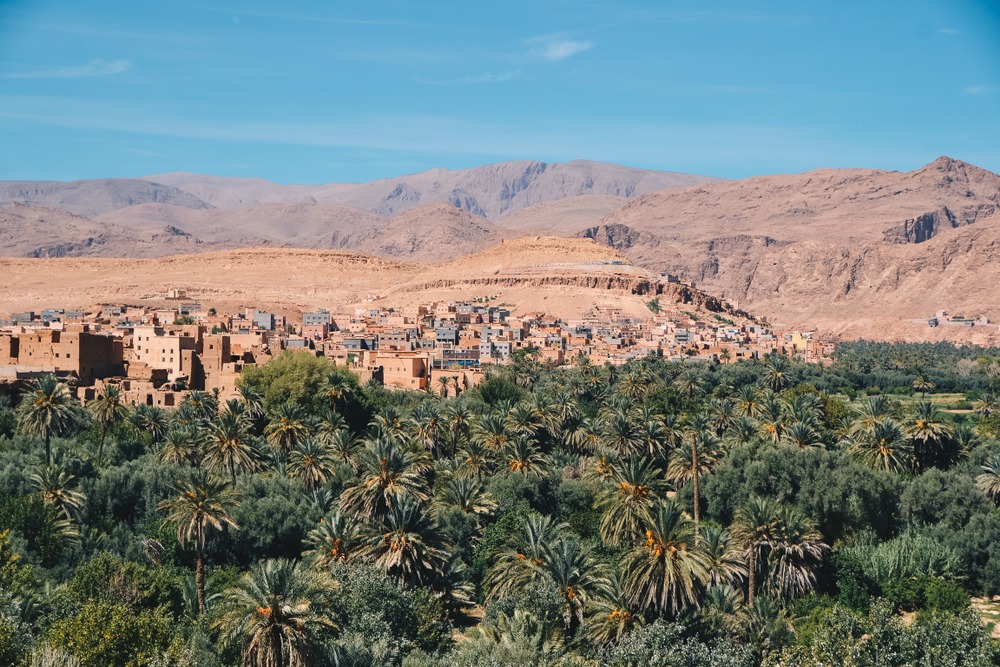
Crossing the gorges represents one of Morocco's most striking landscape transitions: within a few dozen kilometres, the terrain shifts from the High Atlas foothills to the gates of the Saharan desert. The contrast between the ochre cliffs, the green ribbon of palm groves irrigated by the Ziz, and the surrounding aridity gives the valley a distinctive visual character.
The appeal extends beyond scenery. The Tafilalet has long been home to sedentary Berber populations who cultivate dates and cereals and raise livestock thanks to the river's waters. At the end of the twentieth century, the region yielded significant paleontological remains, notably dinosaur fossils that enriched knowledge of the Sahara's prehistoric fauna.
What to see in the Ziz valley
The cliffs and the Ziz gorge
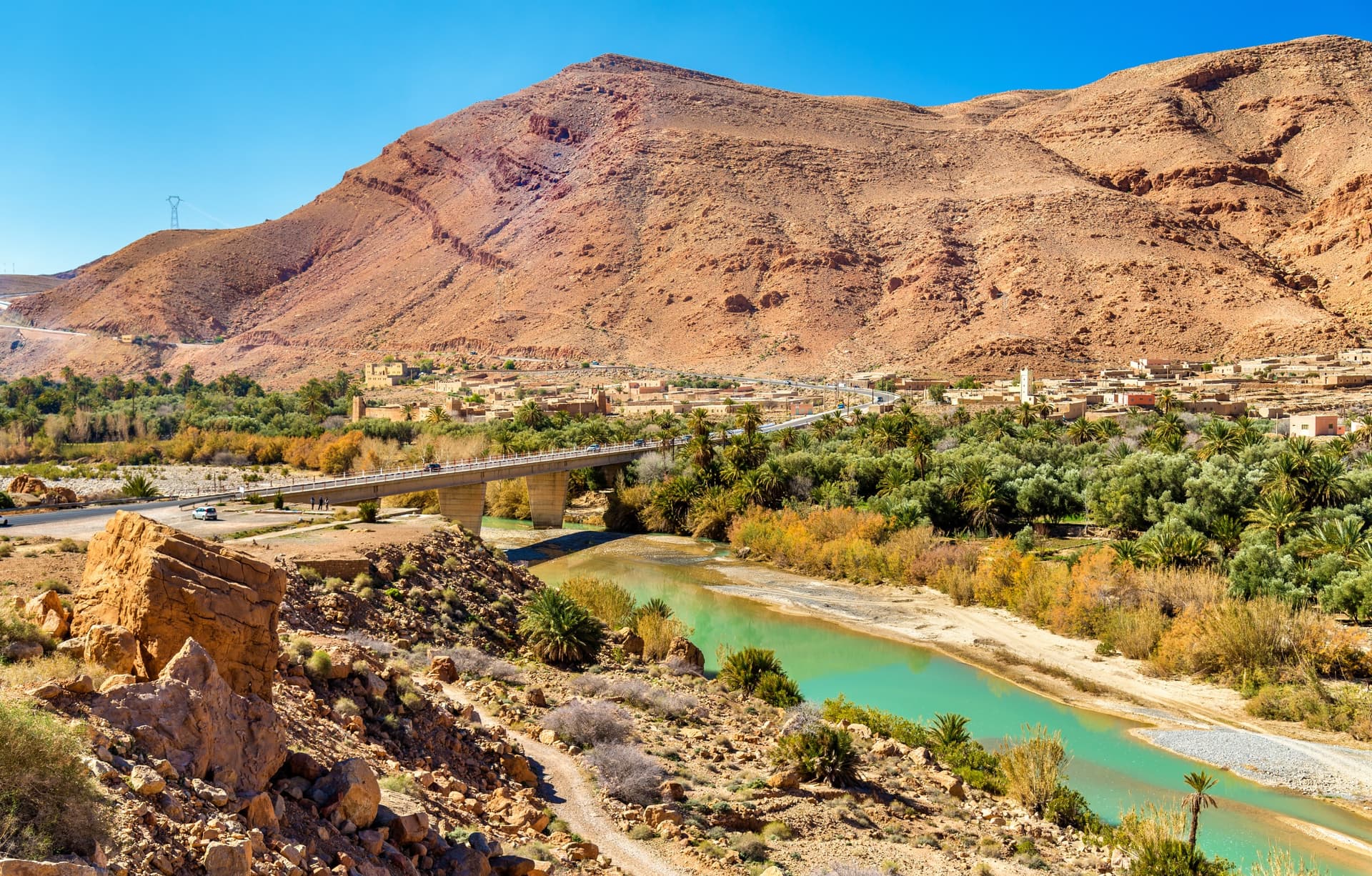
Road N13, which descends from Errachidia towards Erfoud, runs alongside the river and enters a narrow defile. The limestone cliffs, sometimes reddened by iron oxide, tower over the valley for several hundred metres. Several viewing platforms allow you to stop and observe the palm groves below.
The Ifri casbah and dam
South of Errachidia, the Hassan Addakhil dam holds back the Ziz waters and forms a body of water bordered by palms. Nearby, the Ifri casbah illustrates the rammed-earth architecture characteristic of southern Moroccan oases. The stop offers an overview of the reservoir and the first villages in the valley.
The Tafilalet palm groves
Downstream, the palm grove stretches for dozens of kilometres. Villages succeed one another at the foot of the cliffs, each built around its traditional irrigation canals (the seguias). It's an opportunity to observe date cultivation, which remains one of the area's primary resources.
The Erfoud gate
The defile ends with a narrow rocky passage called the Erfoud gate. Beyond it, the valley opens abruptly onto the pre-Saharan plain and marks the entrance to the Merzouga dunes.
When to visit the Ziz Gorges
The region experiences a semi-arid to pre-Saharan climate.
- October to April: the most pleasant period, with mild days and cool nights, even cold in the depths of winter.
- May and September: reasonable transitions, temperatures still high during the day.
- June to August: extreme daytime heat, unsuitable for extended visits.
Rainfall is rare but can cause sudden Ziz flooding, especially in late summer. It's best to check locally before venturing onto the valley's secondary trails.
Practical information
- Visit duration: the crossing from Errachidia to Erfoud takes half a day, but a full day allows you to include the dam, several viewpoints and a stop in the palm grove.
- Accommodation: several villages in the valley offer guesthouses and homestays, an option that allows you to extend your visit over two days.
- Camping: it's possible to spend the night in the valley in a campervan or organised camp, using designated sites.
- Equipment: plenty of water, sun protection and warm clothing for evenings outside summer.
How to get there
Errachidia is served by a small airport (Moulay Ali Cherif) with connections from Casablanca, as well as long-distance bus lines from Fès, Meknès and Marrakech. The gorges crossing is then made via road N13 towards Erfoud, accessible by rental car, public bus or with a driver. The road is tarmacked throughout.
Nearby attractions
- Errachidia, the most convenient staging city for exploring the valley.
- The Attiq waterfalls, another natural site in the region.
- The Bou Jerif fort, a testament to southern Moroccan military architecture.
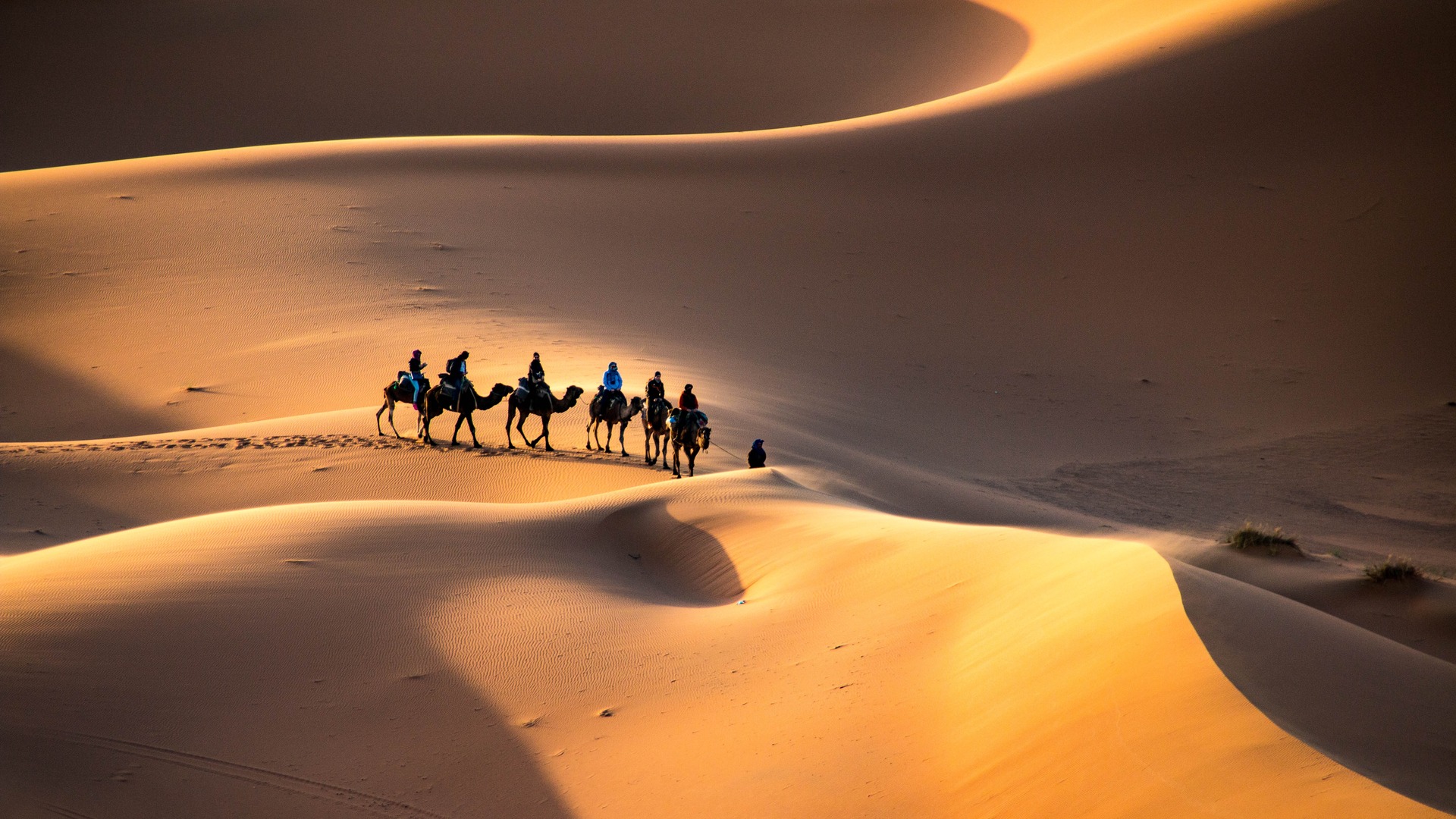
- Erfoud and the Merzouga dunes, at the southern end of the defile.
Frequently asked questions
Allow half a day for the drive between Errachidia and Erfoud, or a full day if you plan several stops at the dam, in the palm grove and at viewpoints.
Yes, the N13 is a well-signposted main road. A local guide, however, provides useful insights into Berber culture and oasis organisation.
October to April, when temperatures are bearable. Summer is marked by extreme heat unsuitable for visiting.
Errachidia concentrates conventional hotels. For a more immersive experience, guesthouses in the palm grove villages offer homestays.
Plan your trip
The Ziz Gorges fit naturally into an itinerary connecting the Middle Atlas, the Tafilalet and the Merzouga desert. To build a tailor-made circuit, consult our Morocco travel suggestions.
Interested in this visit?
We can include it in your personalised itinerary.