Chellah
Chellah
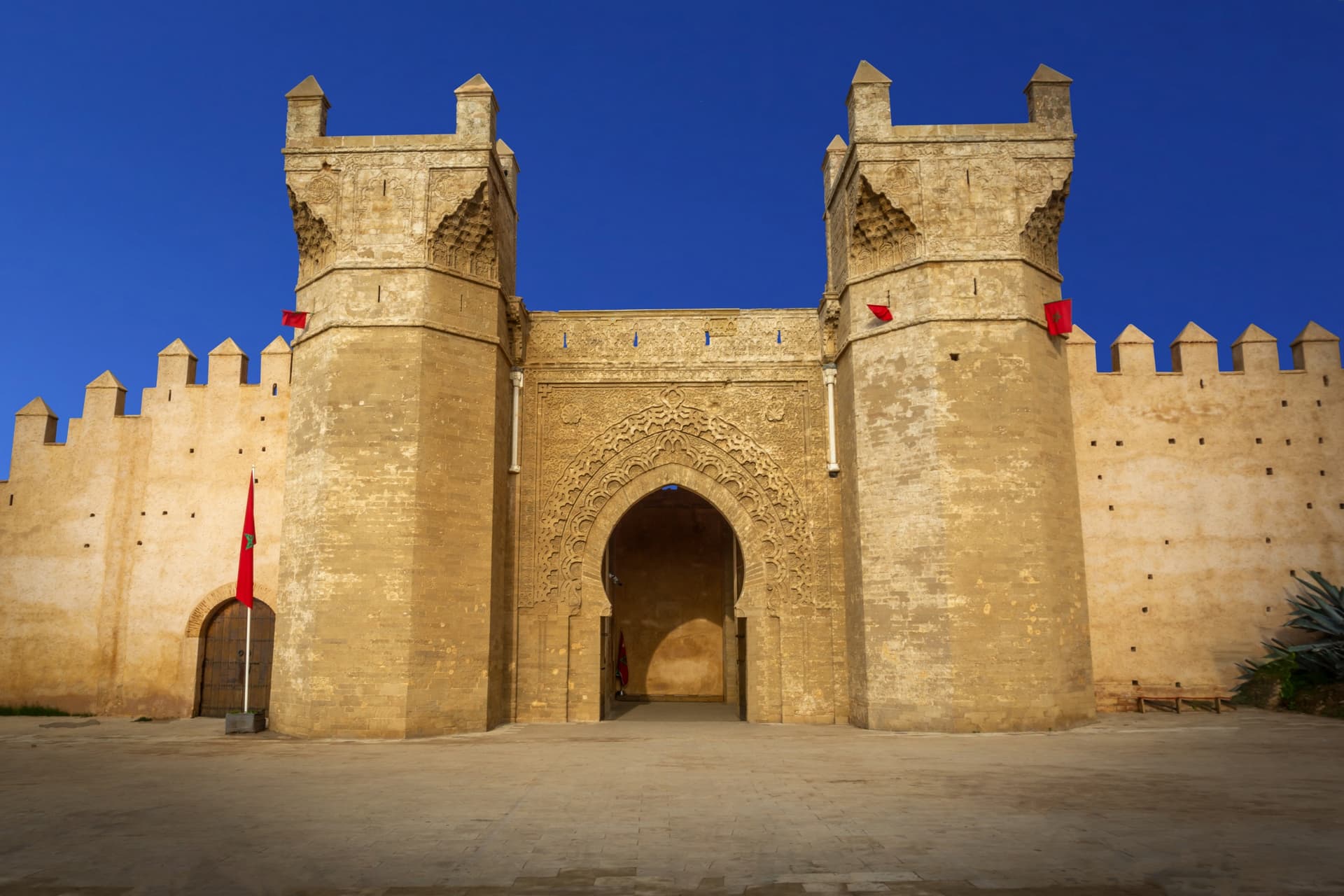
Chellah combines on a single site the Roman ruins of Sala Colonia and a 14th-century Merinid necropolis, south of Rabat's medina. Storks, zellige tilework and lush vegetation create a singular atmosphere.
Chellah is a medieval necropolis and Roman archaeological site located south of Rabat's medina. Once the Roman city of Sala Colonia, it was repurposed as a Merinid necropolis in the 14th century. The site blends Roman ruins, Islamic mausoleums and gardens overgrown with vegetation. White storks nest permanently on the collapsed minarets, adding a singular atmosphere to the whole.
Quick practical info
- Admission: paid (site managed by Morocco's Ministry of Culture)
- Suggested duration: 1 to 1.5 hours
- Dress code: no strict obligation, though modest attire is recommended near the mausoleums
- Access: on foot from Rabat's medina or by taxi; parking available at the entrance
- Accessibility: limited — pathways are partly paved or unpaved, with changes in elevation
What to see
The site divides into two distinct zones. The lower section preserves Roman remains: forum, baths, paved roadway and milestone markers. The upper, Merinid section includes a ruined mosque, royal mausoleums, a sacred eel pool and a partially standing minaret. Vegetation — fig trees, bougainvillea, wild grasses — colonizes the stonework and creates a striking contrast with the architecture.
History and context
Sala Colonia was founded by the Romans in the 1st century CE on the left bank of the Bou Regreg. The city was abandoned around the 3rd century. The Merinid sultan Abou Youssef Yacoub chose the site in the 13th century to establish a dynastic necropolis. His successor Abou el-Hassan had the mosque and mausoleums built in the 14th century. The site is listed as part of Morocco's national heritage.
Highlights of the visit
The sacred eel pool
A small basin fed by a spring is home to eels revered as sacred by local tradition. Women leave hard-boiled eggs here as a sign of devotion. The scene, unusual and memorable, ranks among the site's most striking moments.
The Merinid minaret
The minaret of the Merinid mosque, partially collapsed, serves as a perch for white storks. Their imposing nests crown the ruins from November to July or so. The spectacle is particularly animated in spring.
The Roman remains
The paved Roman road, column bases and baths clearly reveal the layout of Sala Colonia. Interpretive panels place each structure in its historical context.
The royal mausoleums
The tombs of Abou el-Hassan and his wife Chams ed-Douha preserve zellige tilework and Kufic inscriptions in good condition. The sober, geometric Merinid funerary architecture contrasts strikingly with the surrounding vegetation.
Photography tips
Morning light is ideal: it illuminates the Roman ruins without backlighting. In late afternoon, golden light enhances the zellige of the mausoleums. To photograph storks, a telephoto lens is useful — nests are elevated. Lush vegetation creates good foregrounds year-round.
Location and access
Chellah lies south of Rabat's medina, just a few minutes' walk from Bab Oudaia and the Kasbah des Oudaias. The main entrance opens onto Avenue Yacoub el-Mansour. City taxis easily serve the site from downtown. No tram line runs directly to the entrance.
Nearby
- Hassan Tower — unfinished 12th-century minaret and Mohammed V mausoleum, less than 15 minutes' walk away.
- Kasbah des Oudaias — Almohad fortress overlooking the Bou Regreg estuary, with Andalusian gardens.
- Rabat Medina — compact and accessible medina, ideal to complete your day.
- Rabat Archaeological Museum — Roman collections from Sala Colonia and Volubilis, in direct echo of a Chellah visit.
Want to discover this destination?
Our local advisors design your tailor-made trip.