Jebel Saghro
Contemplate the spectacular landscapes of the High Atlas and discover the traditional life of nomadic Berbers at Jebel Saghro. Hike through a wild and pristine environment and observe unique flora and fauna.
Contemplate the spectacular landscapes of the High Atlas and discover the traditional life of nomadic Berbers at Jebel Saghro. Hike through a wild and pristine environment and observe unique flora and fauna.
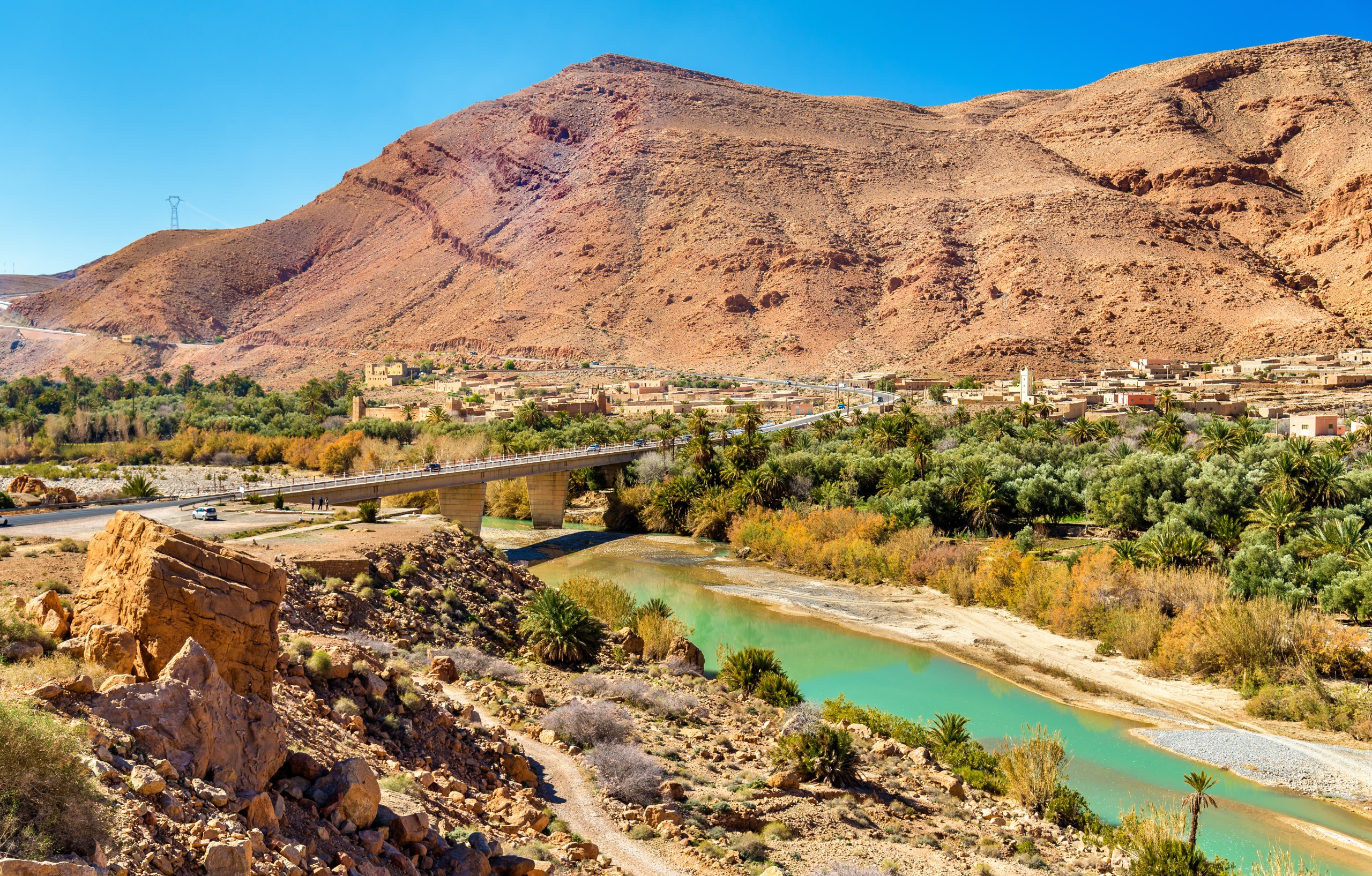
Embark on an unforgettable escape into southern Maroc, where Jebel Saghro awaits you for an exceptional day of picnicking. With its elegance, this mountain unveils a kaleidoscope of grand landscapes in a setting with an otherworldly atmosphere. This place is rich in discoveries: explore its deep gorges, observe the rock formations, enjoy its refreshing waterfalls, and visit its lush oases. It is also the preferred destination for hikers.
A Brief History of Jebel Saghro
Jebel Saghro was formed between 230 and 570 million years ago, during the Precambrian period. The explorer Charles de Foucauld left his mark on the region during his travels, particularly through his work La Reconnaissance au Maroc, written in 1888 in Paris. This work includes detailed cartography of Jebel Saghro.
During the French protectorate, the region was the site of the Battle of Bougafer, between February and March 1933. French troops faced resistance from the Aït Atta tribes, led by Sheikh Assou Oubasslam, loyal to the Sultan of Maroc. It was also on these mountainous lands that Captain Henry de Bournazel, a major protagonist in the conflict, lost his life while attacking the rocky summit.
Discovering Jebel Saghro
Jebel Saghro, also called Adrar Saghro, is a mountain located at an altitude of 2,712 meters. Less than 100 km south of the central High Atlas, it dominates the valleys of the Drâa and the Dadès and forms the eastern part of the Anti-Atlas chain.
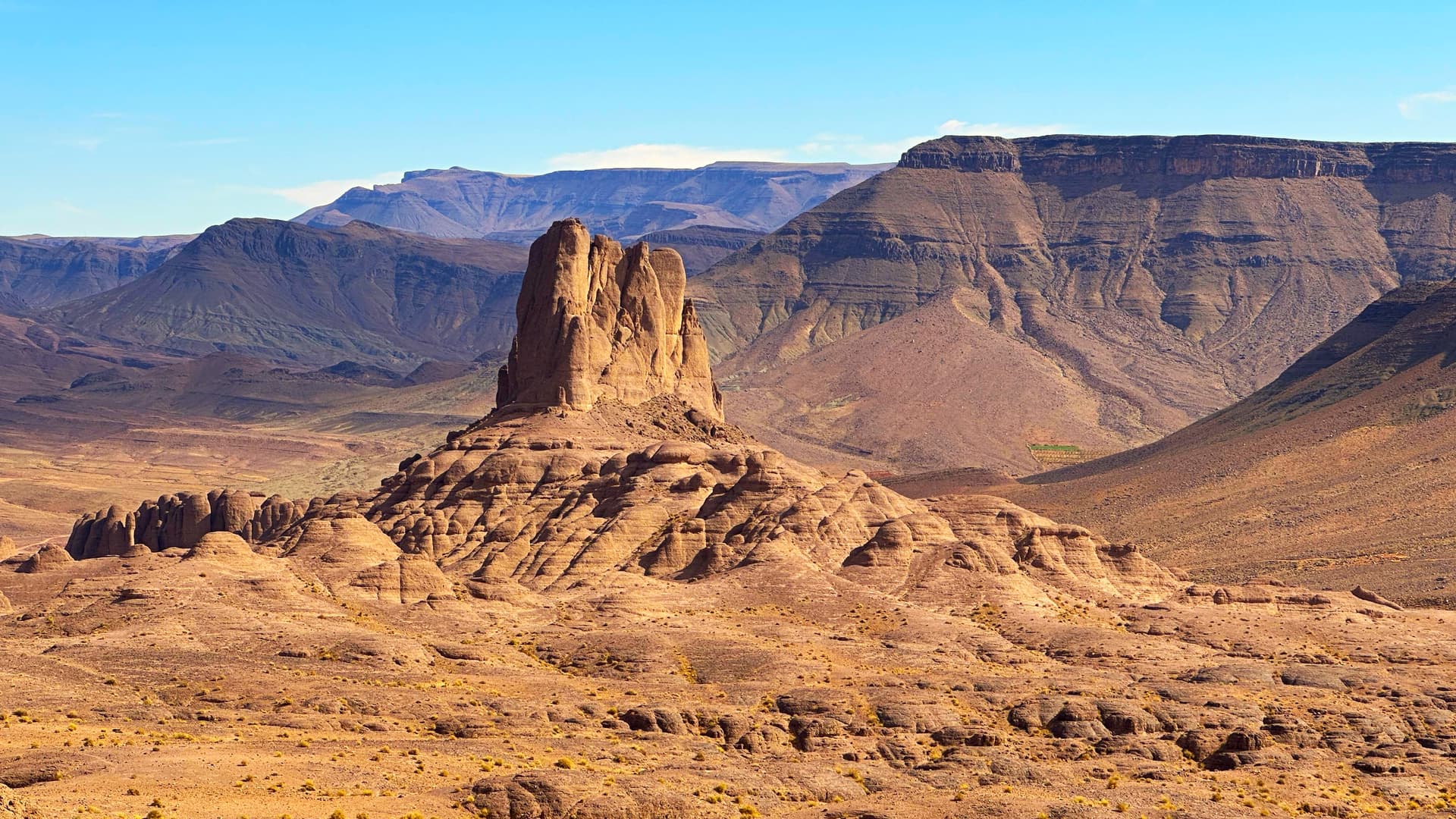
Belonging to the Anti-Atlas chain, this mountain offers a varied lunar landscape, comprising plateaus, tabular reliefs, canyons, volcanic needles and forests, complemented by basalt peaks called "necks". The plateaus display characteristic black rocks, contrasting with the lush valleys.
Exploring Jebel Saghro invites you to cross mountain passes via sometimes challenging but spectacular paths, such as the Col du Kouaouch (2,592 m), the Col de Tazazert (2,283 m), and the Col du Tagmout (1,919 m).
A Photogenic Landscape
Have your camera ready to capture the idyllic scenery of Jebel Saghro, with plateaus, rock faces, volcanic formations, and basalt columns. This environment, shaped by ancient volcanic eruptions and erosion, offers a visually striking backdrop. Touches of greenery, brought by date palms, oleanders, and junipers, enhance these desert expanses.
The summits of Jbel Saghro offer panoramic views over the emblematic surrounding valleys, stretching to the snow-capped peaks of Ighil M'Goun.
It is also rich in biodiversity, with areas such as the Tagadilt valley, which is home to a variety of birds, and the Anlif fossil site. To the north, it is bordered by the Route of a Thousand Kasbahs, an itinerary that connects Ouarzazate to Tinjdad.
An Ornithological Paradise
For bird enthusiasts, the Bird Valley of Jebel Saghro is a true paradise, particularly between December and March. The wildlife also offers surprises thanks to the presence of golden eagles and yellow and black scorpions.
Meet the Aït Atta and Their Rural Heritage
While exploring the surroundings, you'll have a wonderful encounter with the nomads of the tribe called Aït Atta. According to ancient traditions, they live with their herds of sheep and goats in the vast Saghro desert. They reside with their families in a khaïma, a type of traditional Moroccan tent made of fine strips of goat hair.
The land of the Aït Atta is home to approximately 68,000 inhabitants. Two main villages, Nkob and Tazzarine, are situated along the only paved road. In these stone and rammed-earth villages, crops of wheat, barley, vegetables, and fruit trees such as almond, walnut, and a few peach trees thrive thanks to favorable irrigation systems.
Along the way, take the opportunity to familiarize yourself with sheep and goat herders. Practicing transhumance, they change pastures one to two times a month, especially during summer when they leave the arid lands and migrate northward.
The Ultimate Trekking Destination
This massif is the favorite destination for hikers, with itineraries on foot or by 4x4. It is the 4x4 excursions that are gaining in popularity, offering the chance to explore vast territories with less physical effort. Hiking expeditions, with stops at lodges or bivouacs, are made more accessible through the use of mules to carry baggage.
Circuits for Every Level
All circuits are adapted to every skill level. The most classic route departs from Tagedilt and N'Kob, crossing the south side before reaching Kelaat M'Gouna on the north slope. Adventure lovers often prefer a more challenging route, which begins at Alnif and crosses Mount Bougafer to Ikniouen. This trek includes passage through the massif's highest point, Jbel Amalou n'Mansour, which stands at 2,712 meters altitude.
Essential Packing List
- Water and beverages
- Backpack
- Large travel bag
- First aid kit
- Personal medications
- Clothing
- Sunscreen
- Sleeping bag
Practical Information
Climate
Located in the driest section of the Anti-Atlas mountain chain, Djebel Saghro stands apart from other western regions due to its lack of atmospheric humidity. Annual rainfall remains below 100 mm in the south, while at the summits it reaches 300 mm.
When to Visit?
To fully enjoy Djebel Saghro under favorable conditions, plan your escape during spring and autumn. Winter is also a suitable time, but be prepared for temperature fluctuations.
From Ouarzazate, reaching Djebel Saghro requires approximately two and a half hours of driving, covering a distance of 170 km. Follow the N10 road toward the Dadès, passing through Boulmane de Dadès until you reach Ikniouen.
You can also travel through the Draa valley. From there, take the N9 toward Nkob, then continue to the small village of Handour. To better explore the Jbel Saghro trails with complete peace of mind, contact an experienced driver.