Attiq Waterfalls
Attiq Waterfalls
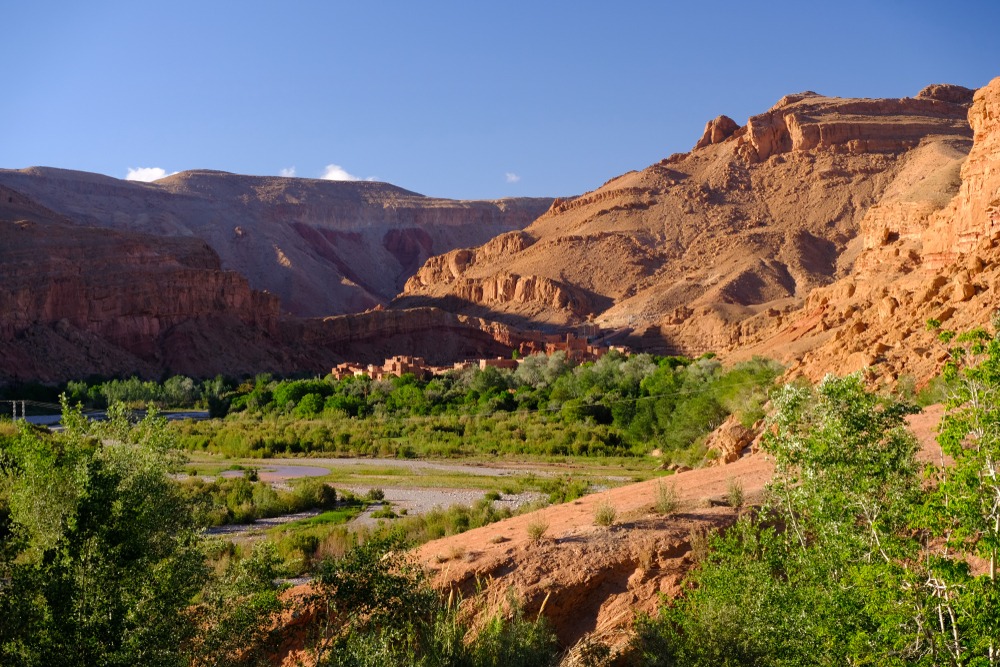
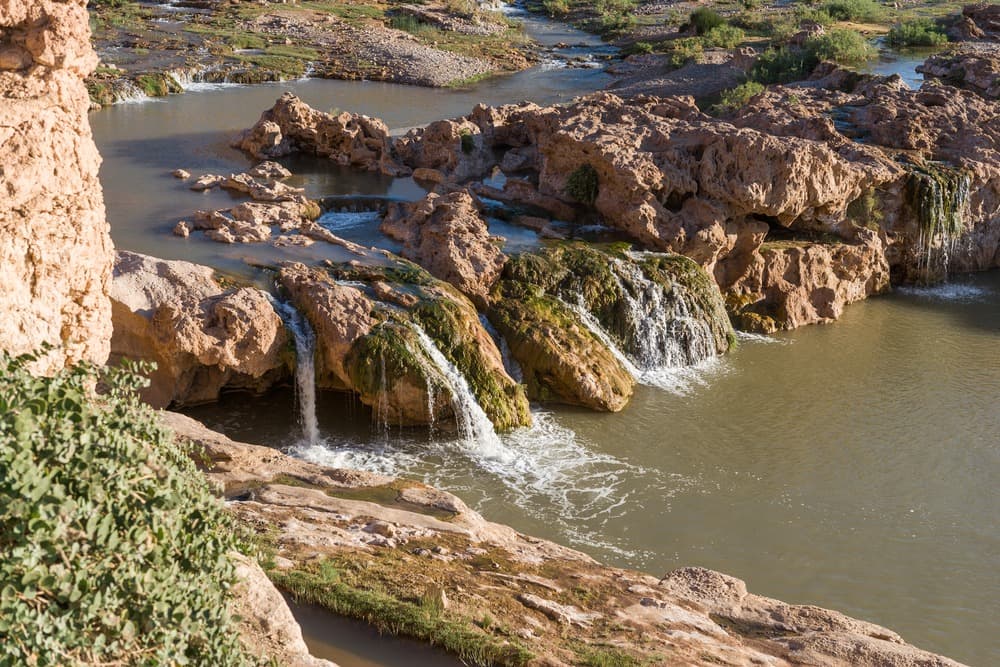
Near Tissint, on the road between Tata and Ouarzazate, the Attiq waterfalls pour their salt waters down a rocky ledge bordered by palm trees.
The Attiq waterfalls surge near the village of Tissint, in southern Morocco, along the road linking Tata to Ouarzazate. A rare feature: their waters are saline, so much so that they gave their name to the neighbouring village. The site combines rocky waterfalls, rock pools and palm groves in a desert setting on the edge of Djebel Bani.
Why visit the Attiq waterfalls
The site presents an uncommon combination in Morocco: salt water cascades pouring over a rocky ledge in the middle of an arid zone. The rocks bear whitish traces left by salt evaporation, a visual signature unique to this place. The word tissint actually means "salt" in the Amazigh language, a direct reference to these mineral-rich waters.
The appeal of the detour also lies in its geography: the waterfalls sit at the edge of the Tissint palm groves, at the transition between the anti-Atlas foothills and the presaharan expanses. It makes for a natural stop on a multi-day itinerary through the South, combining desert, oases and Berber villages.
What to see on site
The waterfalls form several successive cascades over a rocky ledge, feeding pools below. A row of palm trees borders the watercourse, while small rocky hills frame the background. Flow varies greatly depending on the season and recent rainfall; the site is most spectacular after winter and spring rains.
- The main pool beneath the falls, wider and deeper, serves as a bathing area in summer.
- The intermediate pools, accessible on foot by climbing the rocky ledge.
- Salt deposits visible on the walls and stones, testament to the particular composition of the waters.
- The Tissint palm groves, a few minutes' drive away, which naturally extends your visit.
The site is open and unfenced: there is no ticket office or developed tourist infrastructure, making it a simple stop, geared more towards picnicking and swimming than organised tours.
When to visit
The season greatly influences the experience. In spring (March-April) and after winter rains, the flow is stronger and the pools fill up. In summer, temperatures in southern Morocco can exceed 40°C midday; swimming in the main pool then becomes the primary draw for local visitors. Autumn and winter offer milder temperatures for hiking around the site, but flow can be low in dry years.
For a good visit, prefer morning or late afternoon, especially between May and September.
Practical information
- Access: free, no known ticket office.
- Visit duration: allow 1 to 2 hours on site, more if you plan swimming and picnicking.
- Swimming: possible in the main pool in summer; salt waters, bring something to rinse off.
- Gear: closed-toe shoes for the rocks, hat, plenty of water, sunscreen.
- Food: few options on site, pack a picnic or stock up in Tissint or Tata.
- Accommodation: a few guesthouses in Tissint and Tata; for more choice, Ouarzazate or Taroudant remain the regional bases.
How to get there
The waterfalls are near Tissint, on the road connecting Tata to Foum Zguid then Ouarzazate. Several routes allow access depending on your starting point:
- From Tata: direct road northeast towards Foum Zguid, with Tissint as the first major stop.
- From Ouarzazate: head south via Foum Zguid, crossing Djebel Bani.
- From Agadir or Taroudant: scenic road through the Anti-Atlas via Igherm and Talaouine, then Tata.
The lack of regular public transport makes a car (rental or private vehicle with driver) the most practical solution. Roads are paved but winding; allow several hours of travel from each of these towns.
What to see nearby
- The village of Tissint and its palm groves, minutes from the site.
- Lake Bani, a seasonal body of water offering striking contrast with the surrounding barren landscape.
- Djebel Bani, a rocky plateau marking the boundary between the presaharan desert and the High Atlas foothills, ideal for hiking.
- Tata, a stopover town with its palm groves and rock carvings in the surrounding region.
- Further along the route, you can continue towards Fort Bou Jerif in the southwest, or head back to Bahia Palace in Marrakech for a contrasting urban stay.
Plan your trip
The Attiq waterfalls fit naturally into a southern Morocco circuit combining desert, oases and Berber villages. To build a custom itinerary including Tata, Tissint and the Ouarzazate route, explore our Morocco trips.
Interested in this visit?
We can include it in your personalised itinerary.