Kasbah Maktob Tamnougalt
Kasbah Maktob Tamnougalt
Former capital of the Mezguita, Kasbah of Tamnougalt overlooks the Drâa valley with its earthen ksar, ethnographic museum and covered alleyways.
Kasbah of Tamnougalt: earthen sentinel of the Drâa valley
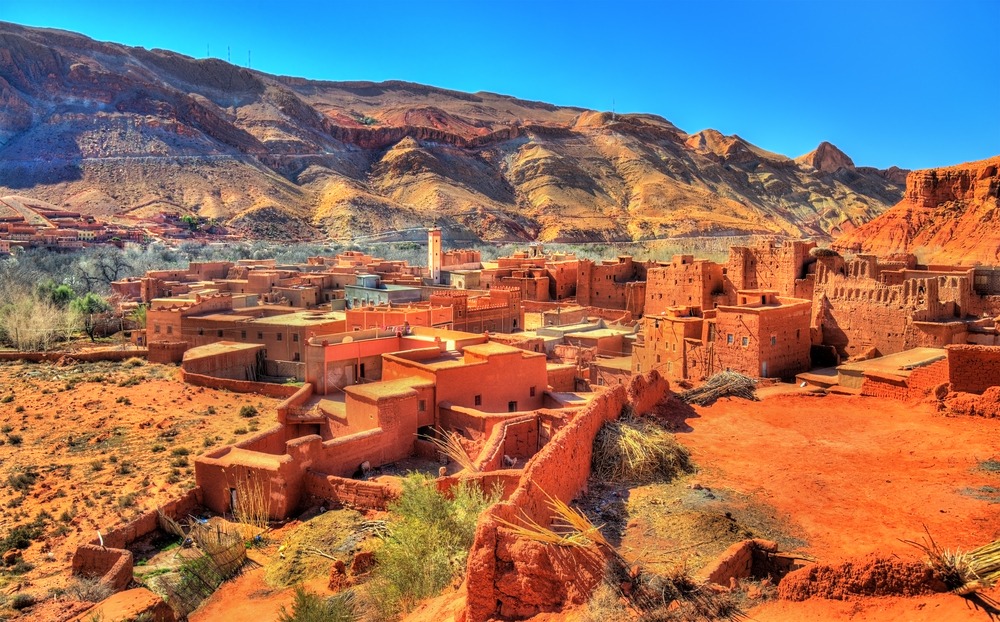
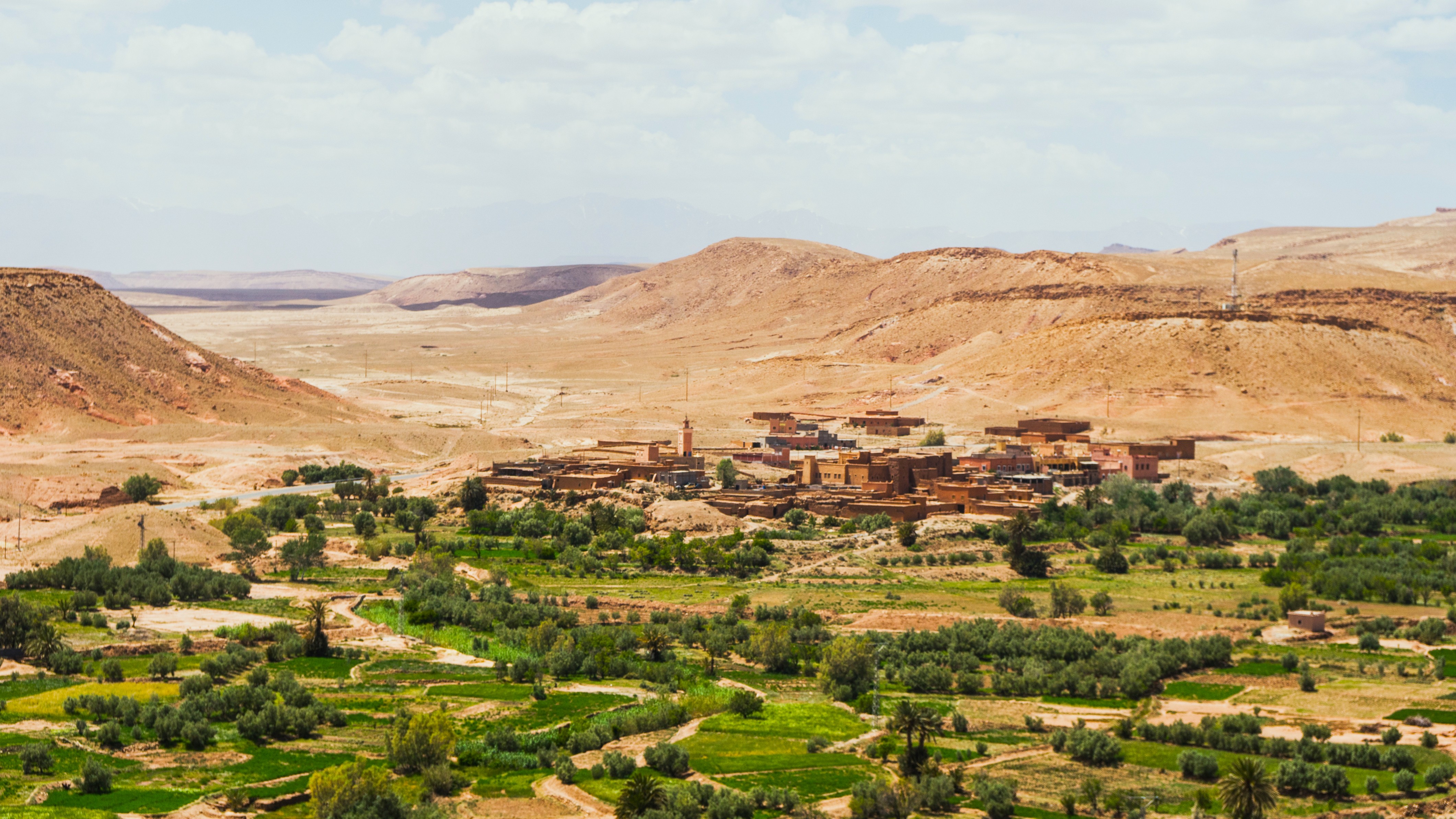
Kasbah of Tamnougalt stands about ten kilometers south of Agdez, in Zagora province, overlooking the Drâa valley. This fortified earthen ksar is one of the best-preserved defensive complexes in the Mezguita region, the Drâa's first oasis when descending from Ouarzazate. A former administrative capital of the valley, the kasbah long controlled the passage of trans-Saharan caravans between the Sahel and Marrakech.
Why visit Kasbah of Tamnougalt
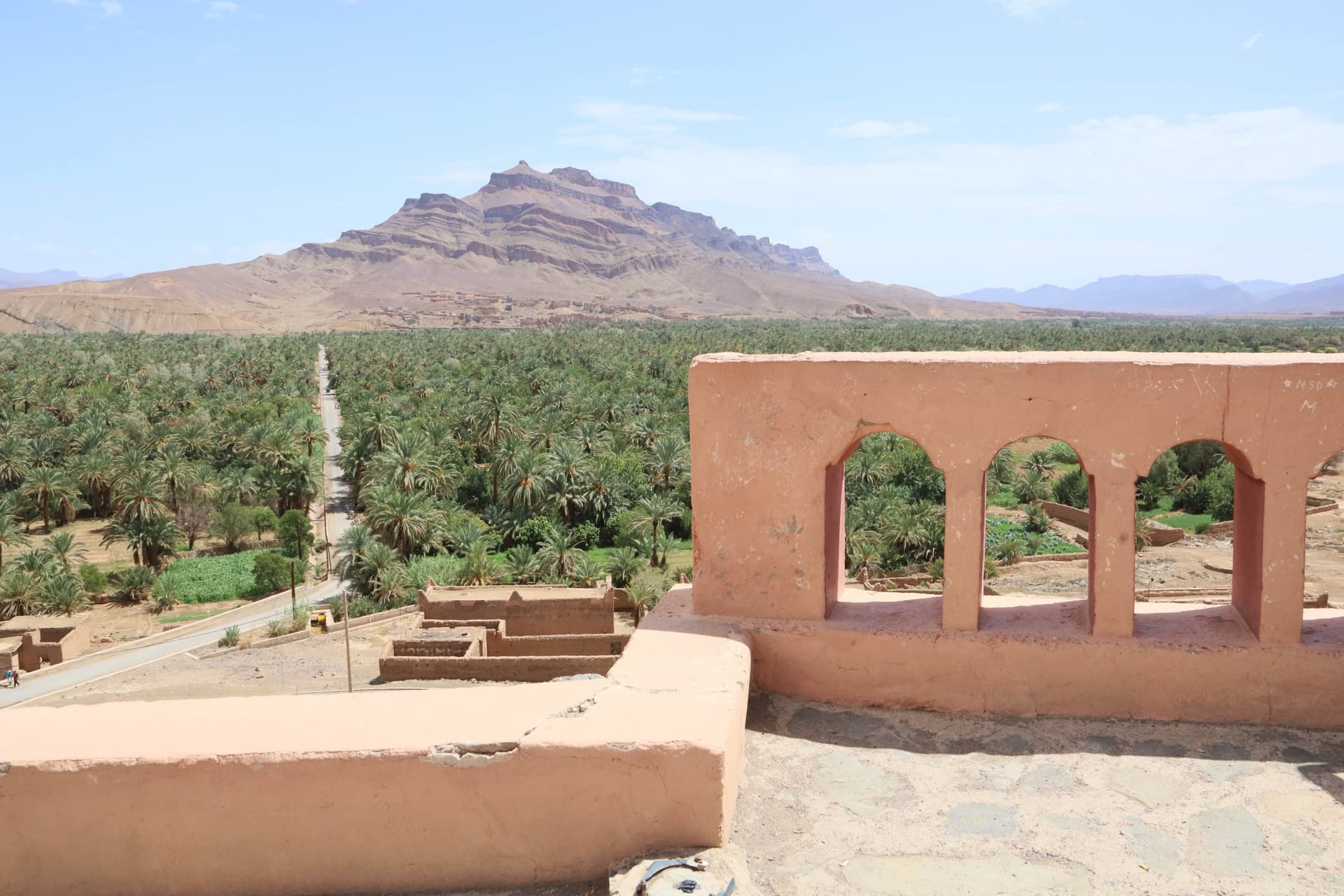
The site's appeal is threefold: architectural, historical, and scenic. The ksar preserves its original urban fabric, with covered alleyways, crenellated corner towers, and raw earth houses adorned with Berber motifs. Unlike more restored sites such as Aït-Ben-Haddou, Tamnougalt remains partially inhabited, giving the visit a living dimension. The panorama of the Drâa palm grove from the terraces completes the experience.
A history tied to the caravan route
From the 16th to the 19th century, Tamnougalt was the seat of the caïdate of the Mezguita tribe, one of the Drâa's great Berber confederations. The kasbah served simultaneously as the caïd's residence, customary court, and military checkpoint on the route linking Sijilmassa, Timbuktu, and Marrakech. Revenue from the trade in gold, salt, and enslaved people funded its expansion. At its height, the ksar housed several hundred families, Jewish and Muslim, organized around a mosque, synagogue, and mellah.
The 19th-century commercial decline, followed by modern urbanization around Agdez, emptied much of the village. Part of the fortification collapsed, but the kasbah's core has been gradually consolidated since the 2000s.
What to see on site
Earthen architecture
The walls are built using rammed earth mixed with straw, a technique typical of pre-Saharan oases. The facades of the main kasbah retain their raw brick window frames, decorative crenellations, and the geometric motifs characteristic of southern Maroc.
The kasbah museum
Part of the caïd's residence has been converted into a small ethnographic museum. Here you'll find objects from Mezguita daily life: grain mills, Berber utensils, silver jewelry, wedding garments, Quranic manuscripts, and documents on the valley's tribal organization. Plan 30 to 45 minutes for your visit.
The ksar and its alleyways
Beyond the caïd's kasbah, Tamnougalt's ksar forms a labyrinth of covered lanes, designed to shield from heat. You'll traverse remains of the mellah (former Jewish quarter), communal grain silos, and several traditional houses.
The palm grove
Below, the Drâa palm grove extends for kilometers. Paths between the gardens allow you to reach neighboring ksour on foot, such as Timiderte.
Practical information
- The kasbah is generally visited with a local guide from the village, which is customary and facilitates understanding the site.
- Entry fees are modest; bring some cash for the museum and a tip for your guide.
- Covering clothing is recommended out of respect for residents still living in the ksar.
- Good shoes advised: alleyway surfaces are uneven and some areas are in ruins.
- Allow 1 to 2 hours for your visit, longer if combining with a walk through the palm grove.
When to visit
The climate is Saharan, dry, and contrasted. The best period runs from October to April, with mild days and cool nights. From June to August, afternoon temperatures frequently exceed 40°C: it's better to visit early morning or late afternoon, when low-angle light showcases the ochre walls. Spring coincides with maximum greenery in the palm grove.
How to get there
Tamnougalt is located a few kilometers south of Agdez, along National Road N9 connecting Ouarzazate to Zagora. From Ouarzazate, expect about 1 hour 30 minutes of driving, after crossing the Tizi-n-Tinififft pass (1,660 m), which offers one of the finest viewpoints over the entrance to the Drâa valley. A sign indicates the ksar on the right when coming from the north; the access track crosses the palm grove for a few hundred meters.
What to see nearby
The kasbah is part of a broader itinerary through southern Maroc. In the immediate vicinity, Agdez and the village of Timiderte extend your discovery of earthen architecture. Further south, Zagora and the Tinfou dunes open onto the Sahara. For monuments, you can extend your visit to the Palais de Bahia in Marrakech or the Merinid medersas such as the medersa of Ben Youssef and the Medersa of Bou Inania in Fès, which complete the panorama of Moroccan architecture. For enthusiasts of isolated fortified sites, the Fort Bou Jerif in the southwest represents another testament to defensive heritage.
Planning the rest of your journey
Kasbah of Tamnougalt naturally fits into a circuit through southern Maroc connecting Ouarzazate, the Drâa valley, and the desert. To build a bespoke itinerary, consult our Maroc journeys.
Interested in this visit?
We can include it in your personalised itinerary.