Sidi Ifni
Sidi Ifni
A former Spanish fishing port perched on the Atlantic coast, Sidi Ifni captivates with its untamed beaches, the striking red arches of Legzira, and a unique atmosphere found nowhere else in Maroc.
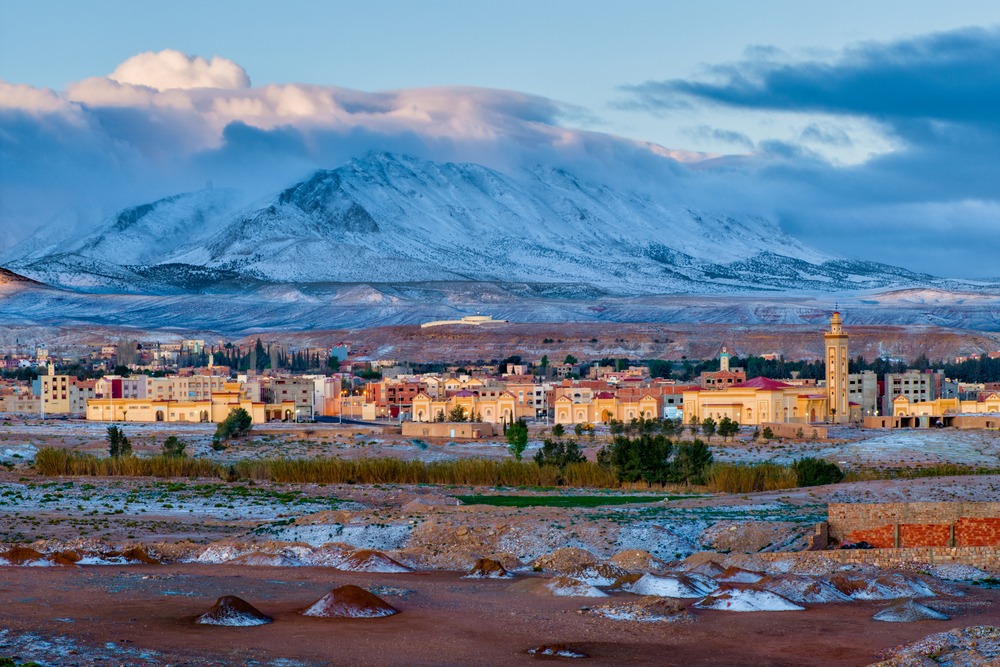
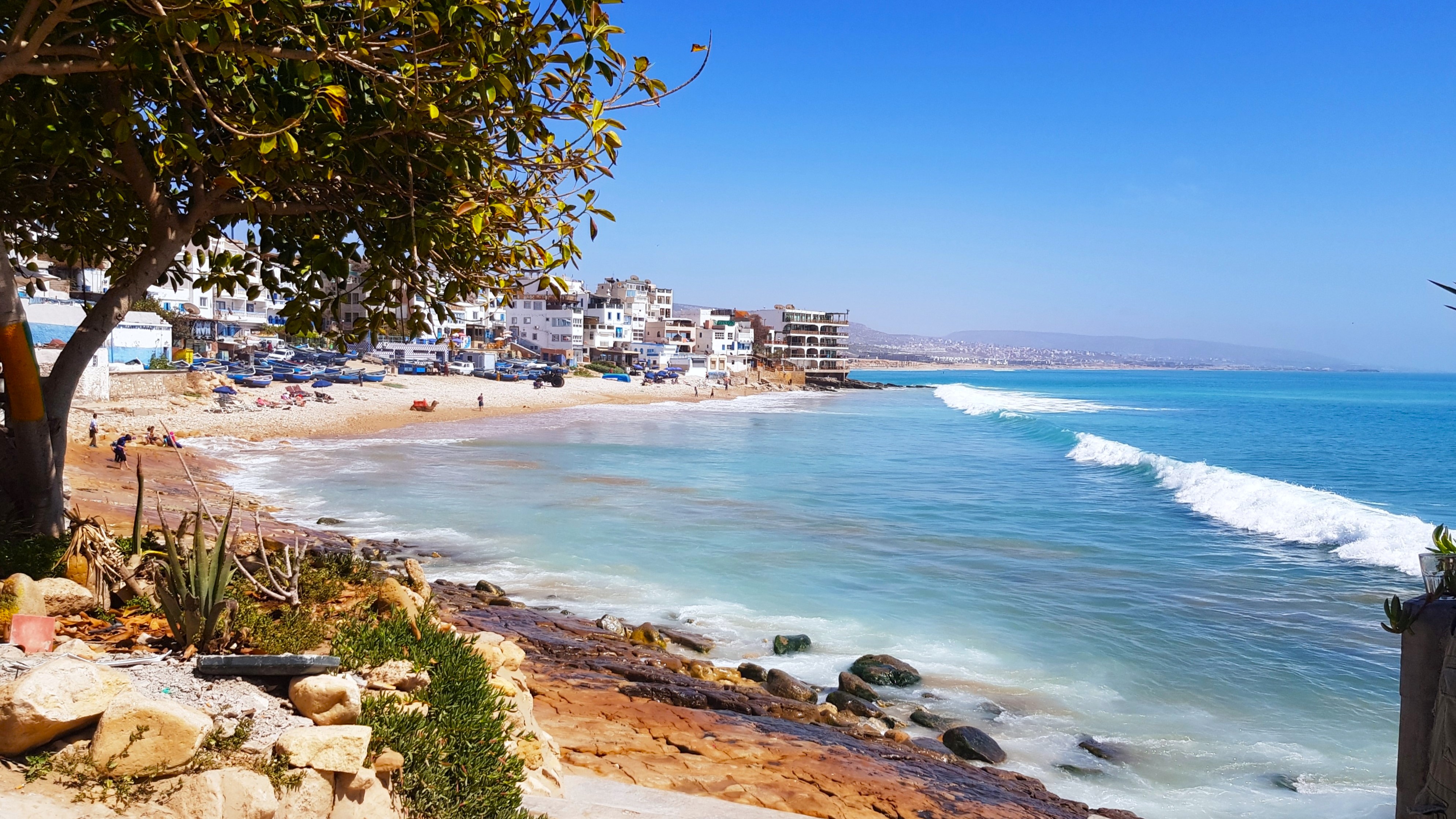
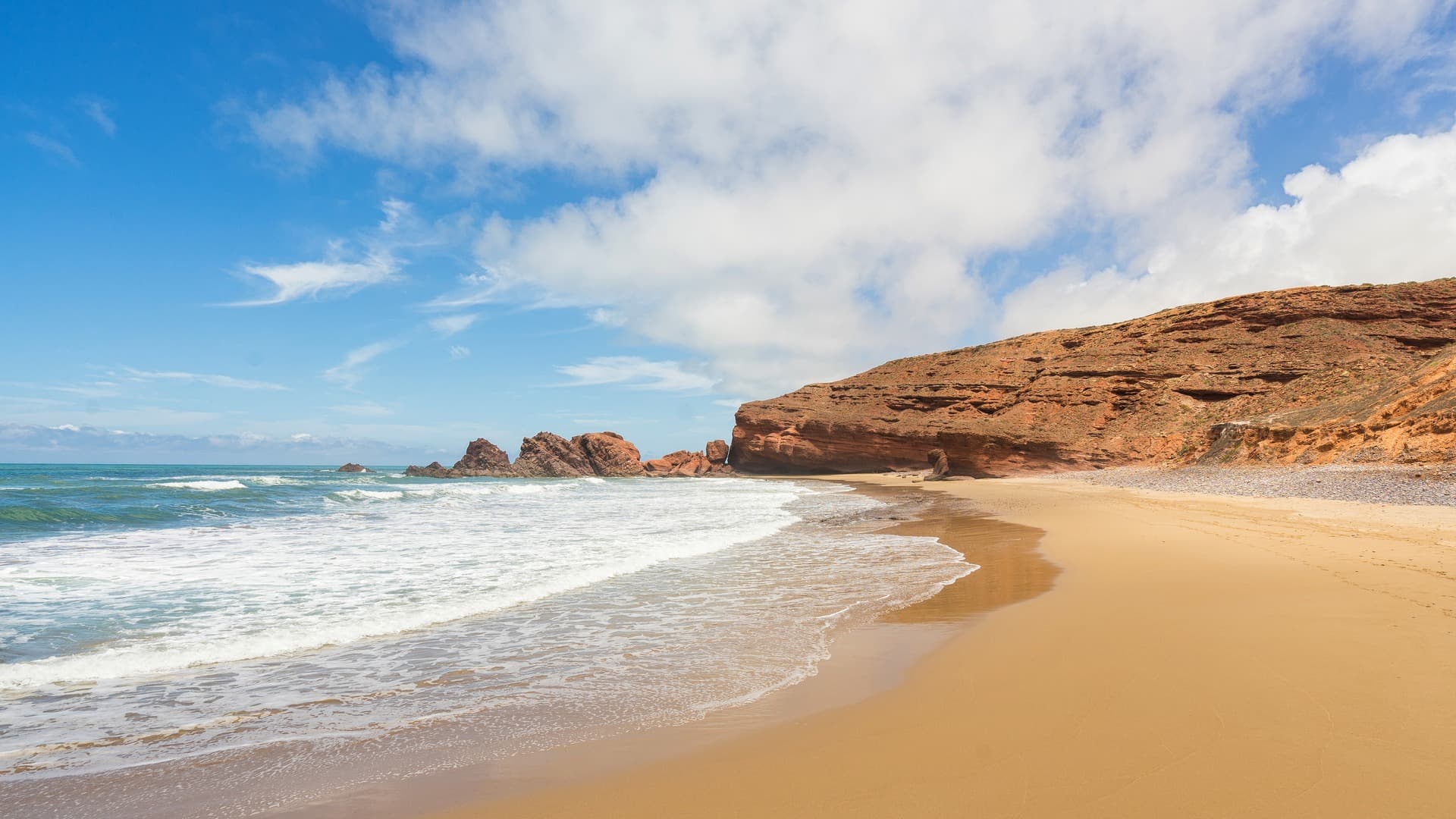
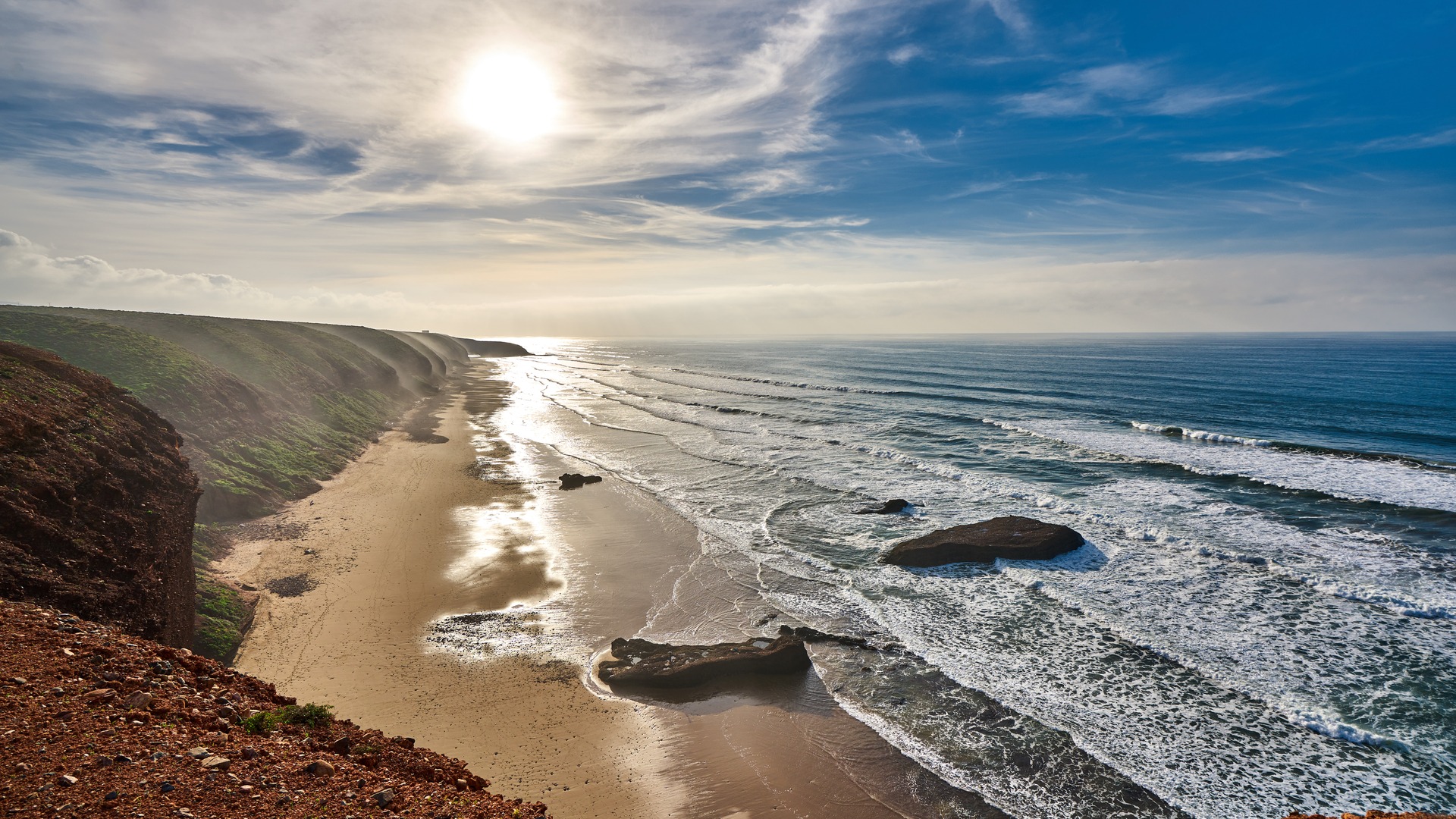
An extraordinary destination in Maroc, Sidi Ifni sits nestled among the mountains of the Anti-Atlas range, its southern slopes overlooking the Atlantic Ocean. This former Spanish fishing port enjoys a pleasant climate year-round, complemented by picturesque sandy beaches. Legzira Beach stands out as a highlight, distinguished by its magnificent red rock arches carved by the sea. The town draws both local residents and international tourists seeking camping, surfing, paragliding, and fishing.
History
Sidi Ifni boasts a rich and varied history marked by significant events. During the Almoravid period, the city is believed to have welcomed the Aït Baâmrane tribes, renowned for their warrior reputation. The settlement was also inhabited by the Guezoula tribes, the Masmouda tribes, and the Arab Banu Maqil.
In 1934, the region fell under Spanish occupation under a treaty dating from 1767, confirmed in 1860. This treaty aimed to grant Spain territory for establishing fishing settlements. Under Francisco Franco Bahamonde's regime, Sidi Ifni was transformed into a military base and political centre of Spanish West Africa.
During the Spanish period, Sidi Ifni experienced rapid development. Its streets and avenues were organised according to a colonial plan, featuring a central oval plaza surrounded by significant buildings including the town hall, the governor's palace, the Spanish consulate, and the cathedral. The city also housed cinemas, hotels, a zoo, a swimming pool, and even an airport. At that time, approximately 15,000 Spanish soldiers were stationed in the region.
However, the foreign presence in Sidi Ifni was poorly received by the Aït Baâmrane. Over the years, the area under Spanish control diminished, covering only a few square kilometres by 1960. The Treaty of Fès on 4 January 1969, resulting from this situation, improved relations between Franco and Hassan, and international pressure, ultimately ended Spanish sovereignty in the region.
In 1972, Sidi Ifni witnessed an assassination attempt against Hassan II. On 6 March 2010, the city gained independence from Tiznit.
Sidi Ifni Today
Sidi Ifni is home to approximately 20,000 inhabitants. Its economy is centred on fishing. The catches include sardines, sole, sea bream, meagre, and tuna. Agriculture also plays a significant role in the local economy. Argan trees abound in the surrounding countryside. However, the city is particularly renowned for its prickly pear cactus. It is indeed considered Maroc's prickly pear capital. Approximately 30% of the country's prickly pear production comes from this region. The plantations cover an area exceeding 45,000 hectares.
Sidi Ifni lies near appealing beaches such as Mirleft, Sidi Ouarzig, and Plage Blanche. However, tourism remains relatively underdeveloped, and the town has only a handful of hotels.
Exploring Sidi Ifni
The Town
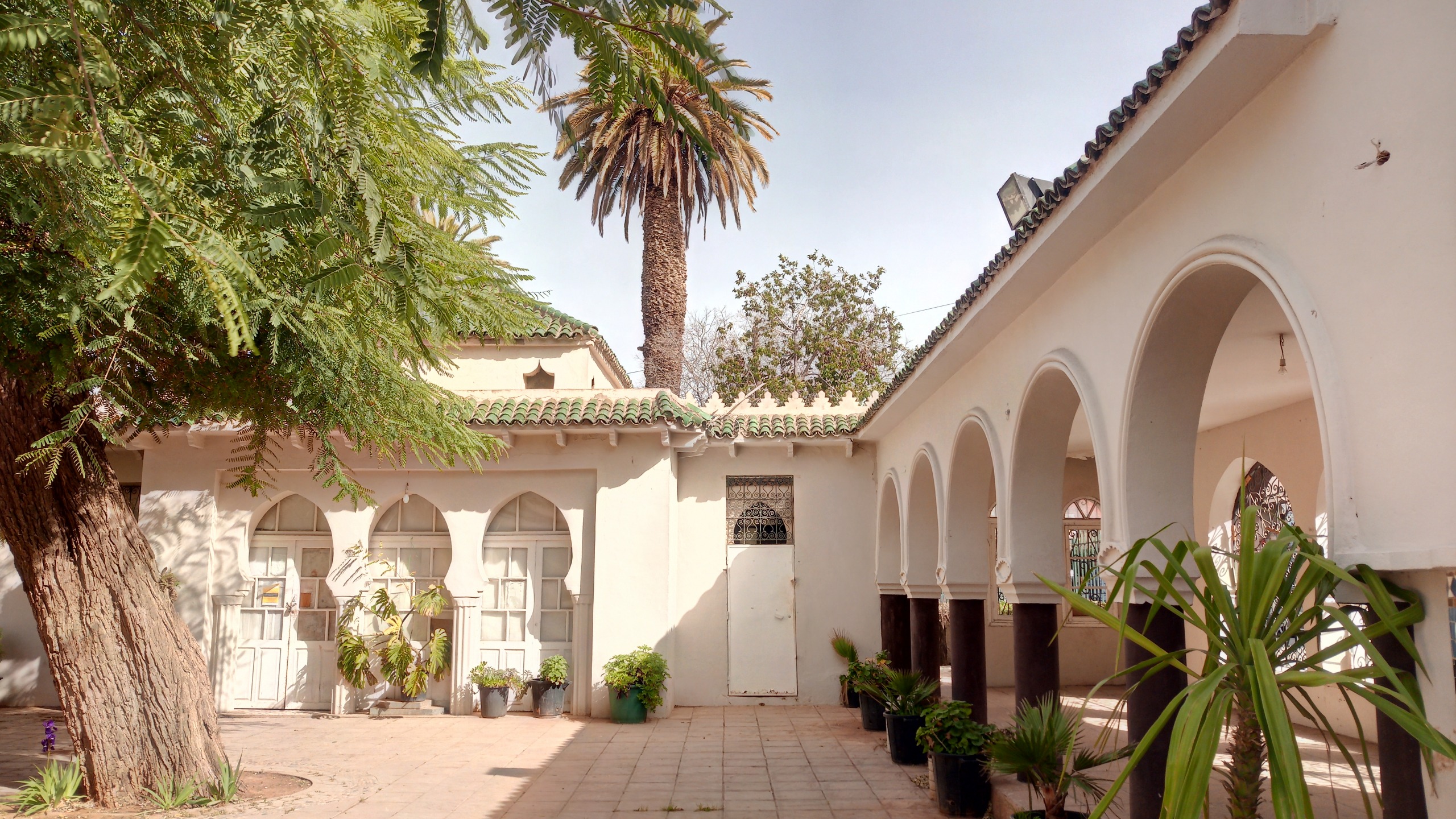
Begin your Sidi Ifni visit by discovering traces of its Spanish past, including the Church of Santa Cruz (now a courthouse), the Marine Infantry Barracks (the Barco guesthouse), the Naval Command Office (Marina restaurant), the royal palace, the Military Hospital, the Avenida cinema, the Military Treasury (cultural centre), and more. In the town's central square, now named Place Hassan II, you'll also find a fountain and Andalusian-style azulejo tiles. It's worth noting that several of the town's monuments are unfortunately abandoned, including the former police headquarters, the prison, the Legion barracks, and the Id Nacus fort.
The Surroundings
The region boasts one of Maroc's most beautiful coastal stretches. Just kilometres from the town centre lies the famous Lagzira Beach, graced with impressive arches sculpted by the ocean over millennia. Other picturesque beaches and small coves of white sand unfold nearby. From the town, you can also visit Plage Blanche, which extends for nearly 40 km.
Furthermore, hidden in the town's surroundings are the Oued Noun gorges, which harbour flamingos and tortoises; small valleys where you can admire argan trees and prickly pear cacti; and tiny Berber villages perched on hillsides.
Practical Information
When to Visit?
Sidi Ifni can be visited at any time of year, unless you plan to surf. In that case, summer is the ideal season.
Sidi Ifni is located 169 km from Agadir. It is accessible by coach from that city.
Want to discover this destination?
Our local advisors design your tailor-made trip.