High Atlas
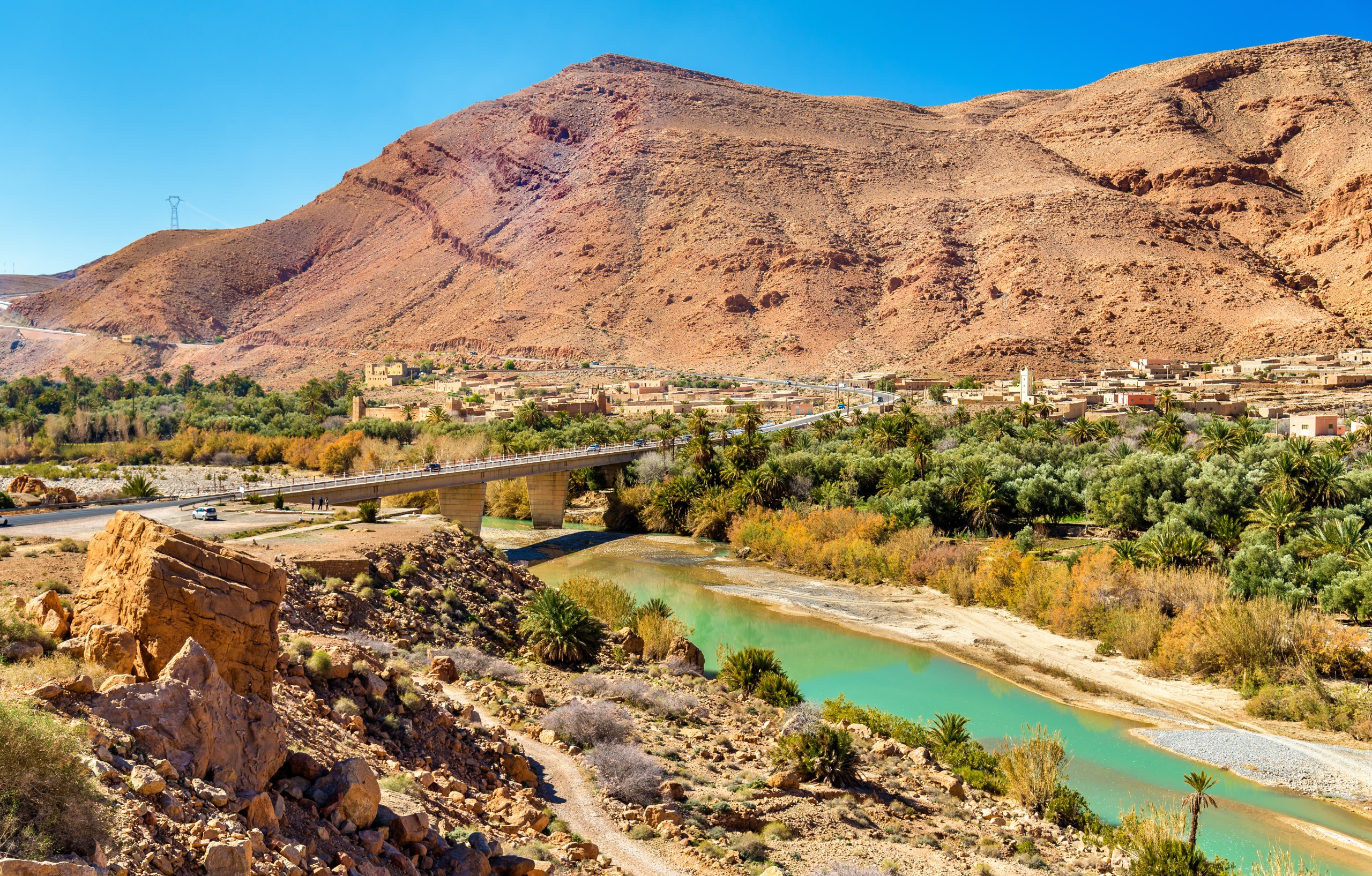
Nestled in the heart of the Berber region, the High Atlas promises complete immersion for nature lovers and serious hikers. Curious travelers can enjoy magnificent walks through breathtaking landscapes.
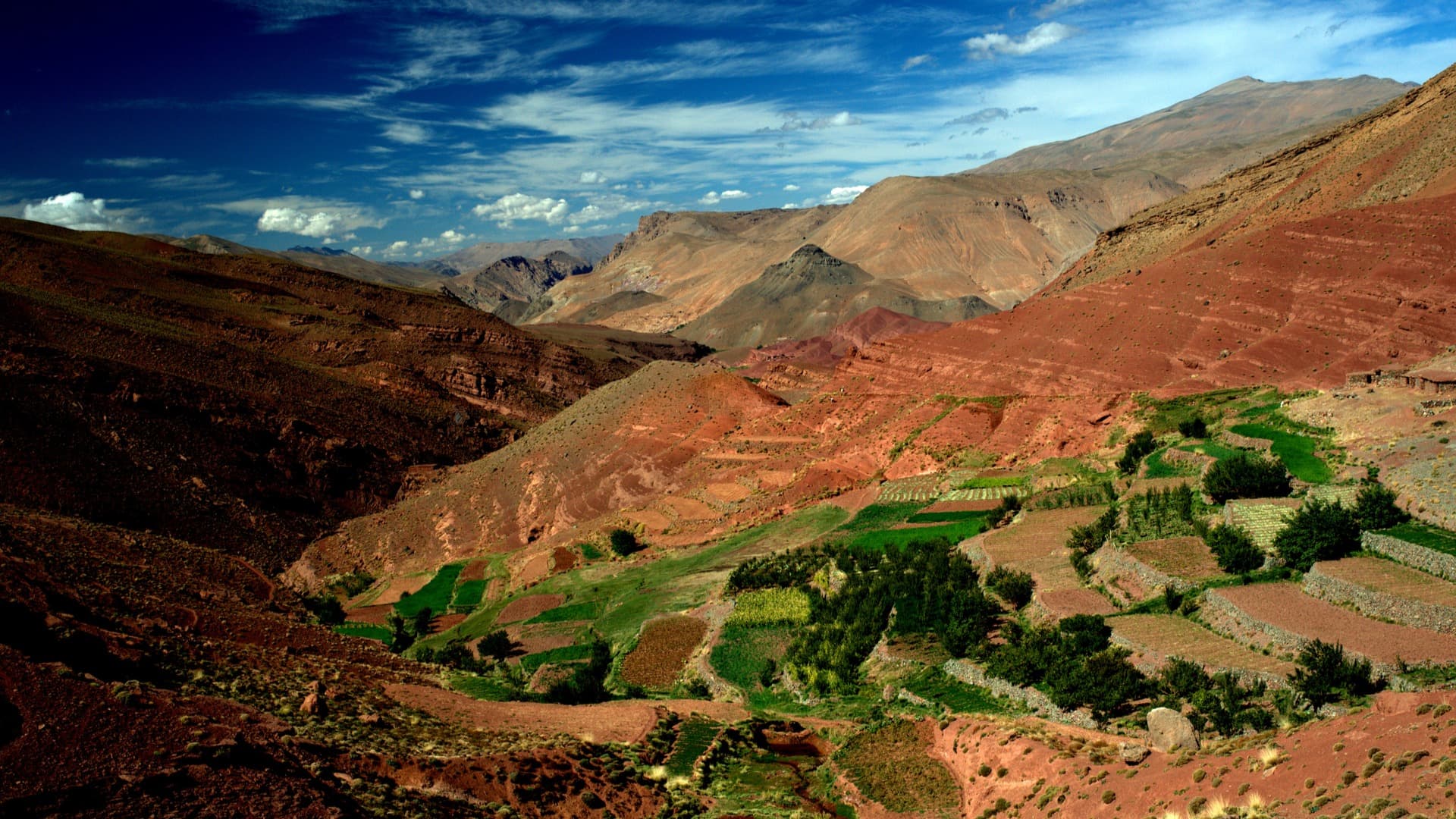
Nestled in the heart of the Berber region, the High Atlas promises complete immersion for nature lovers and serious hikers. Curious travelers can enjoy magnificent walks through breathtaking landscapes. Mountains, forests, cliffs harboring traditional villages, the High Atlas is simply one of Maroc's flagship destinations.
Home to the highest peak in all of Maroc and North Africa, this mountain range stretches approximately 750 kilometers and divides the country into three distinct regions: Atlantic Maroc, Mediterranean Maroc, and Saharan Maroc. The High Atlas is inhabited by the Amazigh Berber people who practice agriculture and livestock farming, the economic pillars of the region.
Among its three different areas (western, central, and eastern), the Western High Atlas, where the Toubkal National Park sits, is the oldest. The central section extends from Azilal to Ouarzazate. It consists mainly of limestone and tabular plateaus. Finally, the Eastern High Atlas is internationally recognized as a majestic archaeological site.
The High Atlas Today
What strikes you first about the High Atlas is the extraordinary beauty of the landscapes, then the hospitality and warmth of the populations in Berber villages. This region is indeed a favorite among hikers and lovers of wide open spaces.
You can either undertake a multi-week trek with a guide and cook, or make a short excursion to a Berber village and return to your hotel the same day. It's essential to prepare your hike carefully—choosing a program suited to your physical abilities. Snow-capped peaks and steep valleys await, traversed by well-trodden mountain paths.
In the villages, travelers should conduct themselves respectfully, particularly regarding local food and customs.
Above all, pack only what you absolutely need during your High Atlas trek. Bring quality sleeping bags, as nights can be very cool. Additionally, travelers should always pay the equivalent of a hotel room to the families who host them.
Fauna and Flora of the High Atlas
Regarding fauna: Felines are present in this vast wilderness sanctuary. The caracal lynx and the Barbary leopard coexist, though in a very limited area.
The most common mammals are largely nocturnal, such as weasels, jackals, foxes, and porcupines. Boars are found in oak groves, and mouflons are visible only between 2,000 and 4,000 meters altitude. The most famous mammals here are the Barbary macaques, a macaque species endemic to the region (though a threatened species).
Regarding reptiles, grass snakes are present even at high altitudes. There is only one venomous reptile, the Lataste's viper, which grows up to 40 centimeters long. Some fish also live in high-altitude streams.
Numerous raptors—booted eagle, peregrine falcon—and other bird species frequent this area, delighting ornithologists.
As for flora: Vegetation is layered between plains and mountains. From 850 to 1,200 meters, the space is occupied by doum palms and dwarf palms growing near Barbary thuyas, carob trees, wild olives, and pistachio lentisks.
At mid-mountain elevations (1,300 to 2,000 meters), humidity increases and green oak and red juniper dominate.
On the high plateaus and high valleys, trees disappear and are replaced by shrubby plants and broom, culminating in the Atlas daisy, a thick-leaved violet that blooms at Toubkal's summit.
When to Visit?
You'll encounter two types of mountain climates in the High Atlas. One, oceanic subtropical, manifests on the north and south slopes of the western section and on the north slope of the central part. The other, semi-arid continental, dominates the southern slope of central High Atlas and the entire eastern section.
Areas with oceanic subtropical climate are mainly exposed to Atlantic disturbances. With 600 to 1,000 mm of rainfall annually on average, they are relatively humid with sporadic, sometimes torrential precipitation. In summer, drought interspersed with thunderstorms is intense. However, beware of persistent snow (2,500 to 3,000 meters) from November to April. It can also linger between September and June at the highest peaks. Generally, the High Atlas is visited between April and September.
Set climate aside and venture to High Atlas regions in mid-August, and you may witness the moussem, a folkloric engagement festival held in the village of Setti Fatma.
From Marrakech, the starting point for several excursions to the High Atlas, head toward Ouarzazate. After a few kilometers, the High Atlas mountains reveal themselves gradually. Travel the famous scenic roads before reaching the Tizi N'Tichka pass, the highest mountain pass in Maroc, at 2,260 meters altitude. Beyond this pass, landscapes shift suddenly, and you arrive in the High Atlas region—a paradise for hikers and lovers of vast wilderness.
The key is choosing a route suited to your fitness level. A High Atlas trek can be challenging.
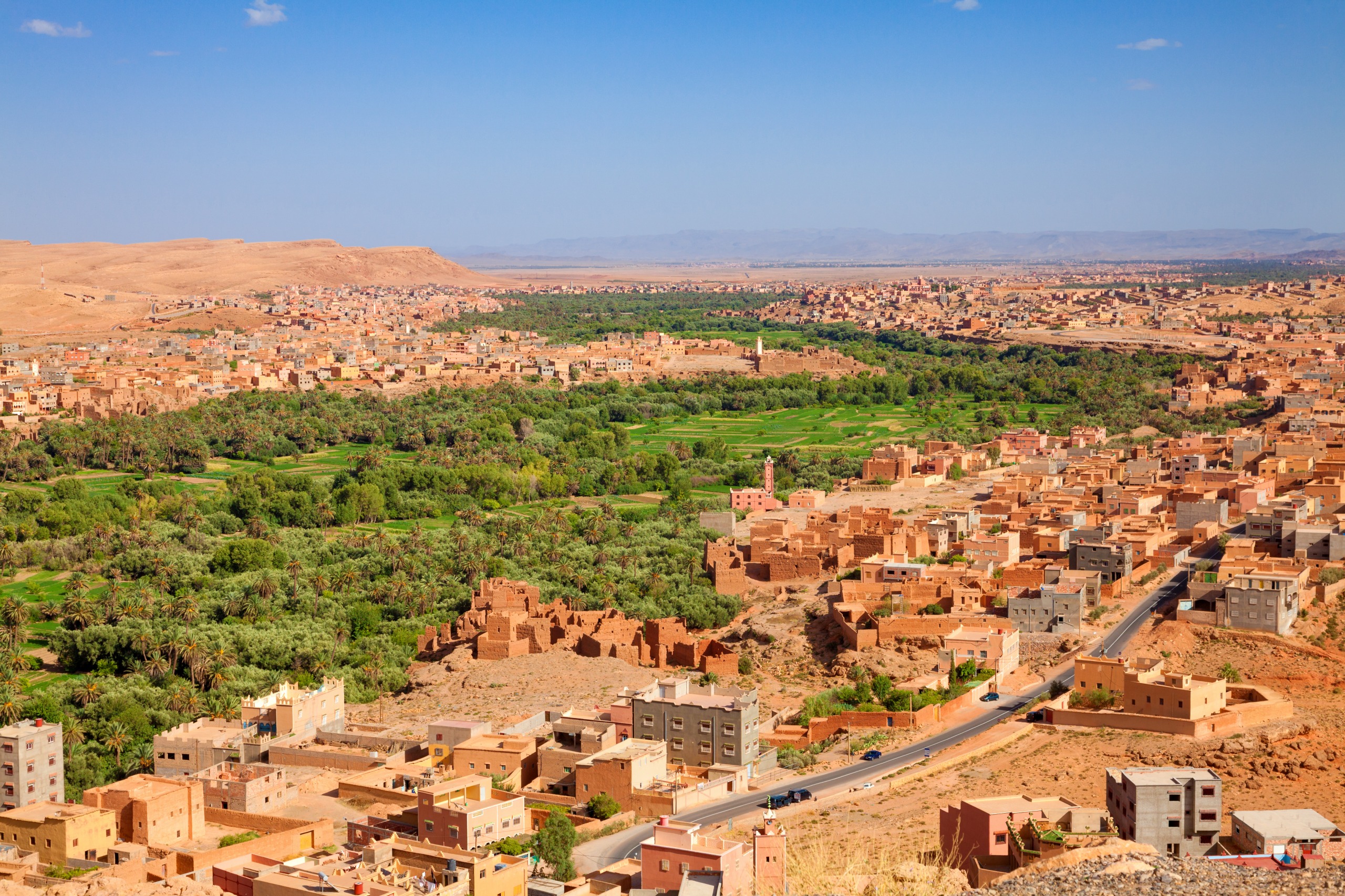
Begin your journey in the Ourika Valley, where you'll encounter several Berber villages, all worthy of a visit. The Berbers are the country's original inhabitants. They live solely from surrounding resources and build their homes with mountain stones, creating villages in different colors—red, black, or beige.
Next, make your way to the village of Setti Fatma, also in the Ourika Valley. It's the starting point for the Seven Waterfalls hike. You'll undoubtedly be captivated by the landscape beauty of these places.
Continue deeper into the mountains where several more villages and magnificent panoramas lie hidden. You'll likely spot herds of goats, as the local people are all herders.
A few kilometers further, the snow-covered landscapes of Toubkal Mountain come into view—the highest peak of the High Atlas, of all Maroc, and of North Africa, standing at 4,167 meters altitude. This summit sits within the national park bearing its name.
For those wishing to extend the trek further, venture into this magnificent reserve where numerous animal and plant species thrive. Toubkal National Park is renowned for its biodiversity.