North and Rif
Mediterranean and Andalusian Morocco: Chefchaouen perched at 600 m, Tangier and its strait, UNESCO Tétouan, and the green Rif eight months of the year.
Northern Morocco forms a band of roughly 350 km between Tangier on the Strait of Gibraltar and the Algerian border, structured by the Rif mountain chain that peaks at 2,456 meters at Jbel Tidirhine. This mountainous barrier, greener and more humid than the Atlas, captures rainfall from the Atlantic and explains the dense forest cover of cork oaks, cedars and pines, still thick around Bab Berred or in Talassemtane National Park. The contrast with the rest of the country is immediate: here the slopes are green eight months of the year, villages cling in tiers, and rain is not a rare occurrence.
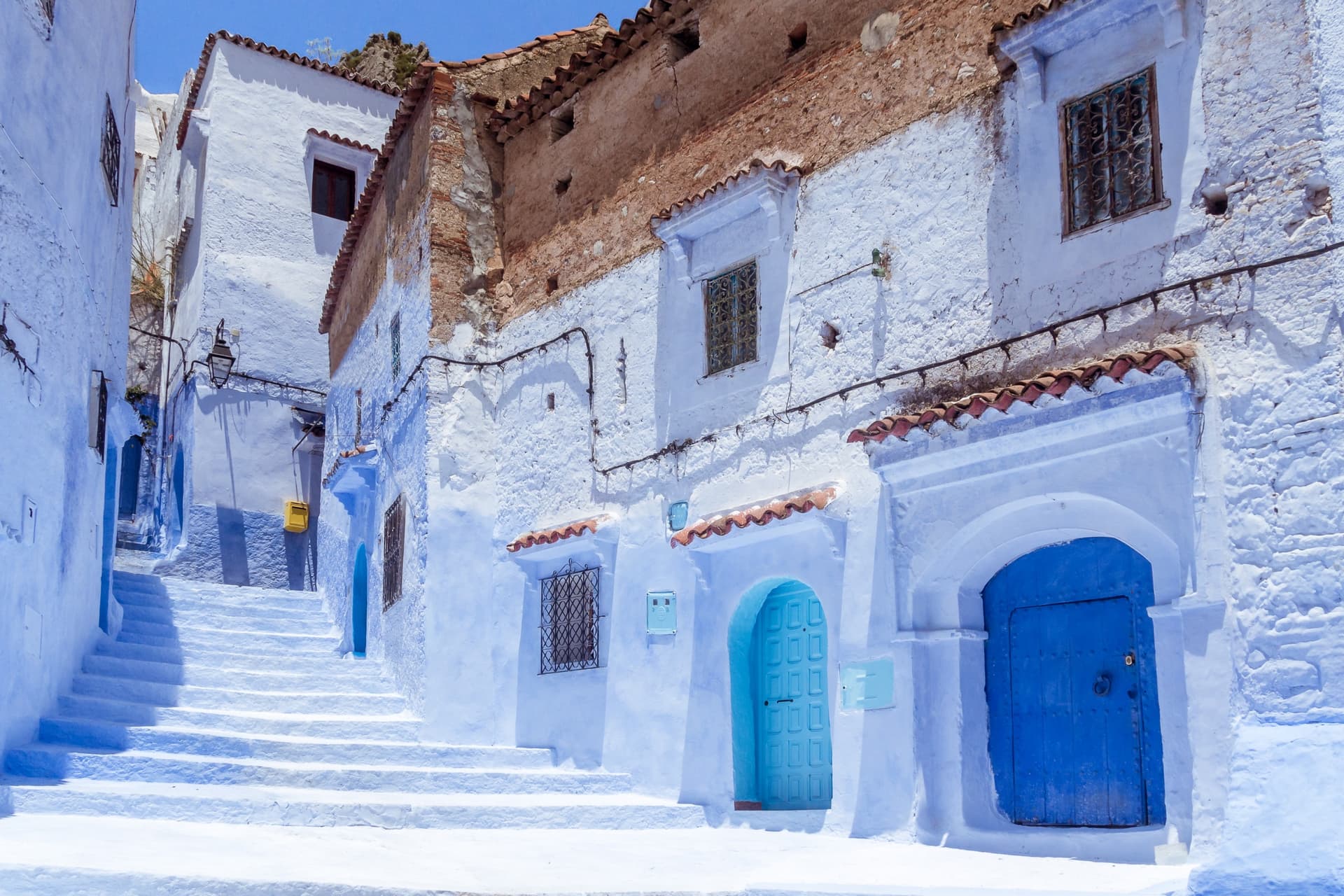
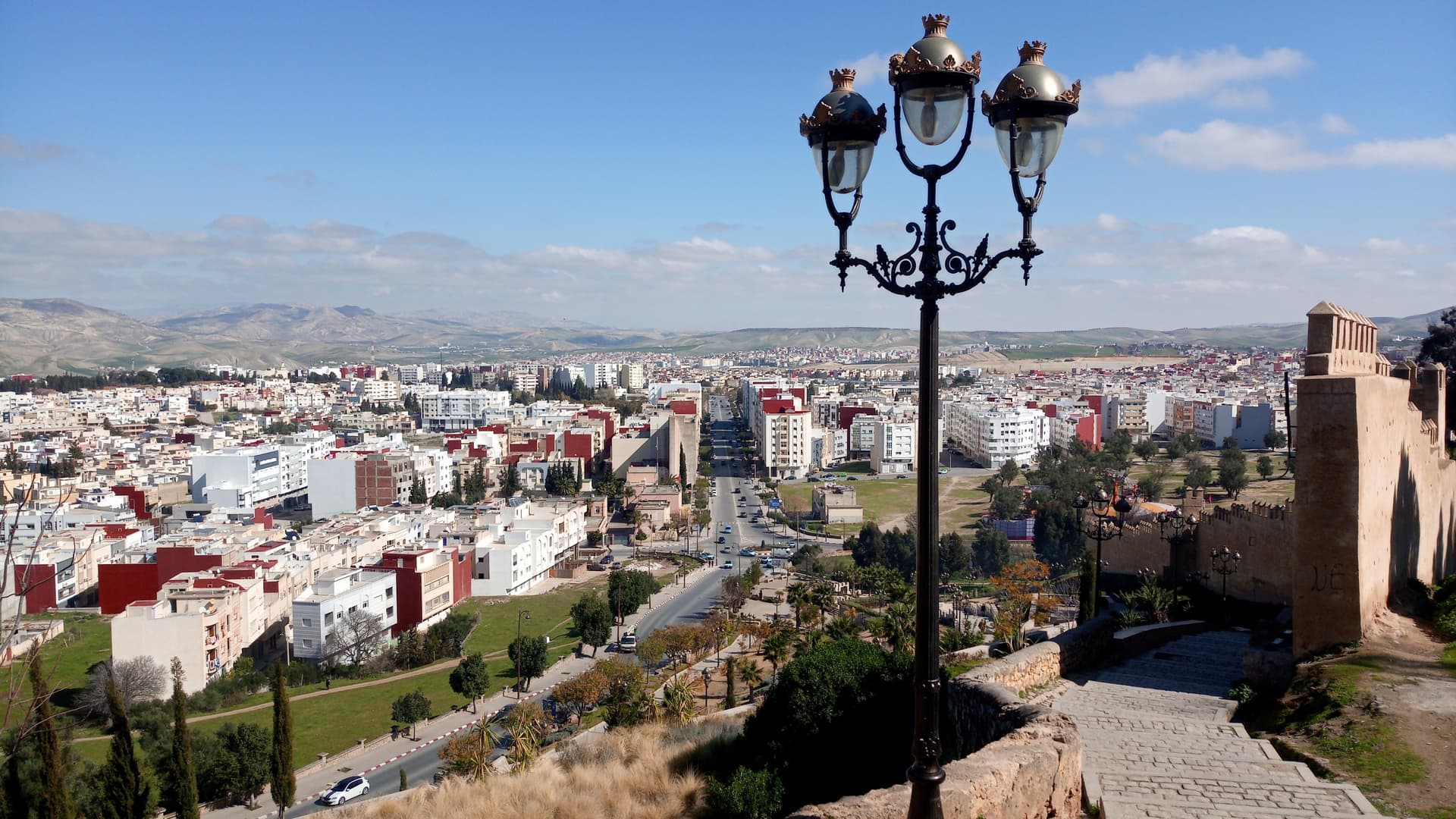
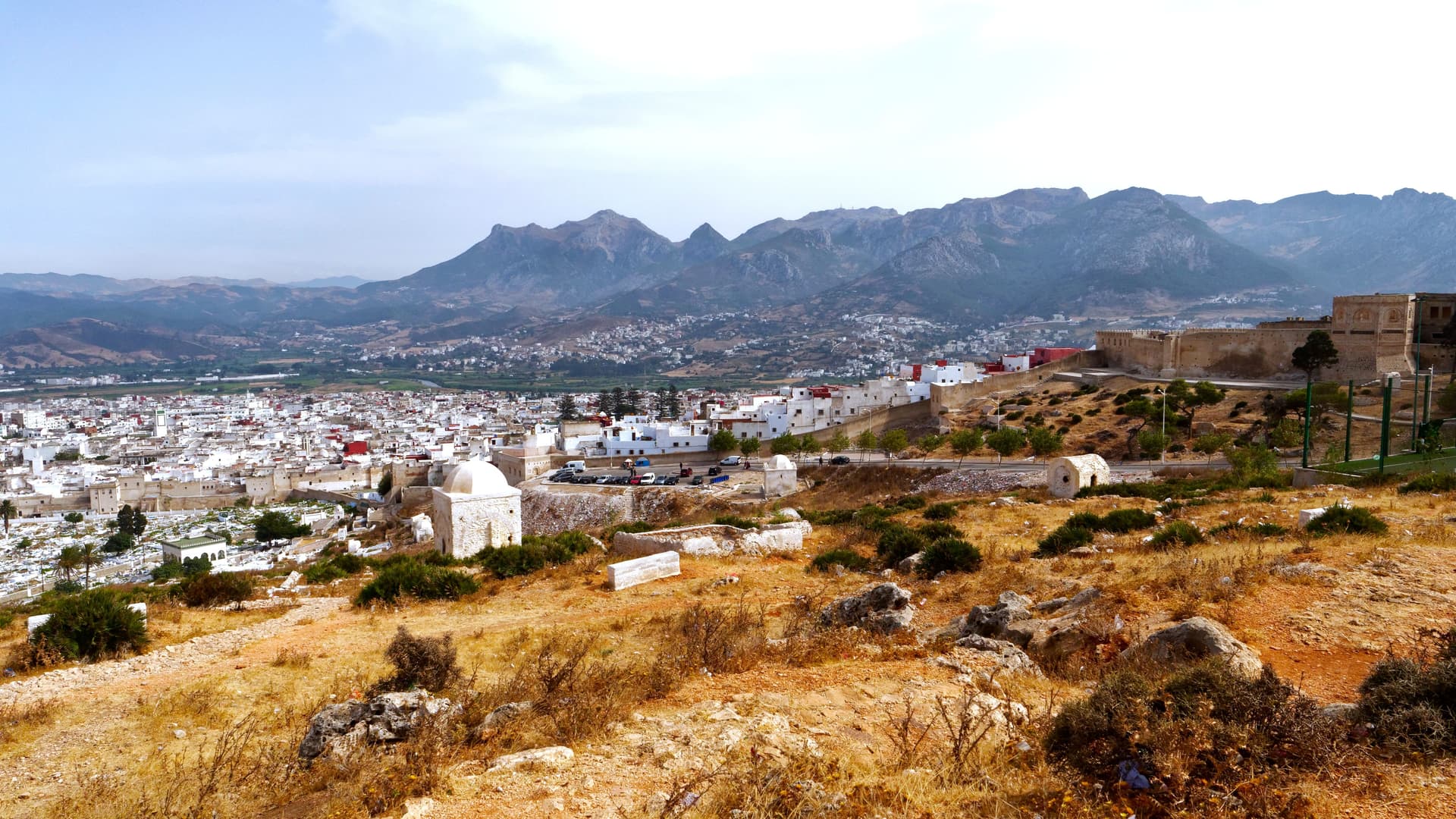
Three cities structure the region and complement one another. Tangier, a cosmopolitan city long placed under international status until 1956, retains a renovated medina around Petit Socco, a Kasbah overlooking the strait, and a port connected to Tarifa by 1-hour ferry. The city has transformed since the arrival of the Al Boraq high-speed train, which puts it 2h10 from Casablanca. Tétouan, 60 km to the south, bears the imprint of Spanish protectorate rule and a medina inscribed on the UNESCO World Heritage list since 1997, heir to Andalusian families fleeing Granada in the 15th century. Chefchaouen, perched at 600 meters on the flank of Jbel el-Kelaâ, owes its blue-washed facades to a tradition maintained since the 1930s, and remains a departure point for day hikes to Akchour waterfall or the God's Bridge.
The inhabitants of the Rif are largely Berber-speaking, speaking Tarifit, and their identity remains distinct from the rest of Morocco. The local economy rests on arboriculture (olives, figs, almonds in terraces), some goat herding, and fishing on the Mediterranean coast around Al Hoceima. Northern cuisine is recognizable by its fava bean bissara served at breakfast, fish tagines on the coast, and the use of fresh goat cheese, jben, found at weekly markets in Bab Taza or Derdara.
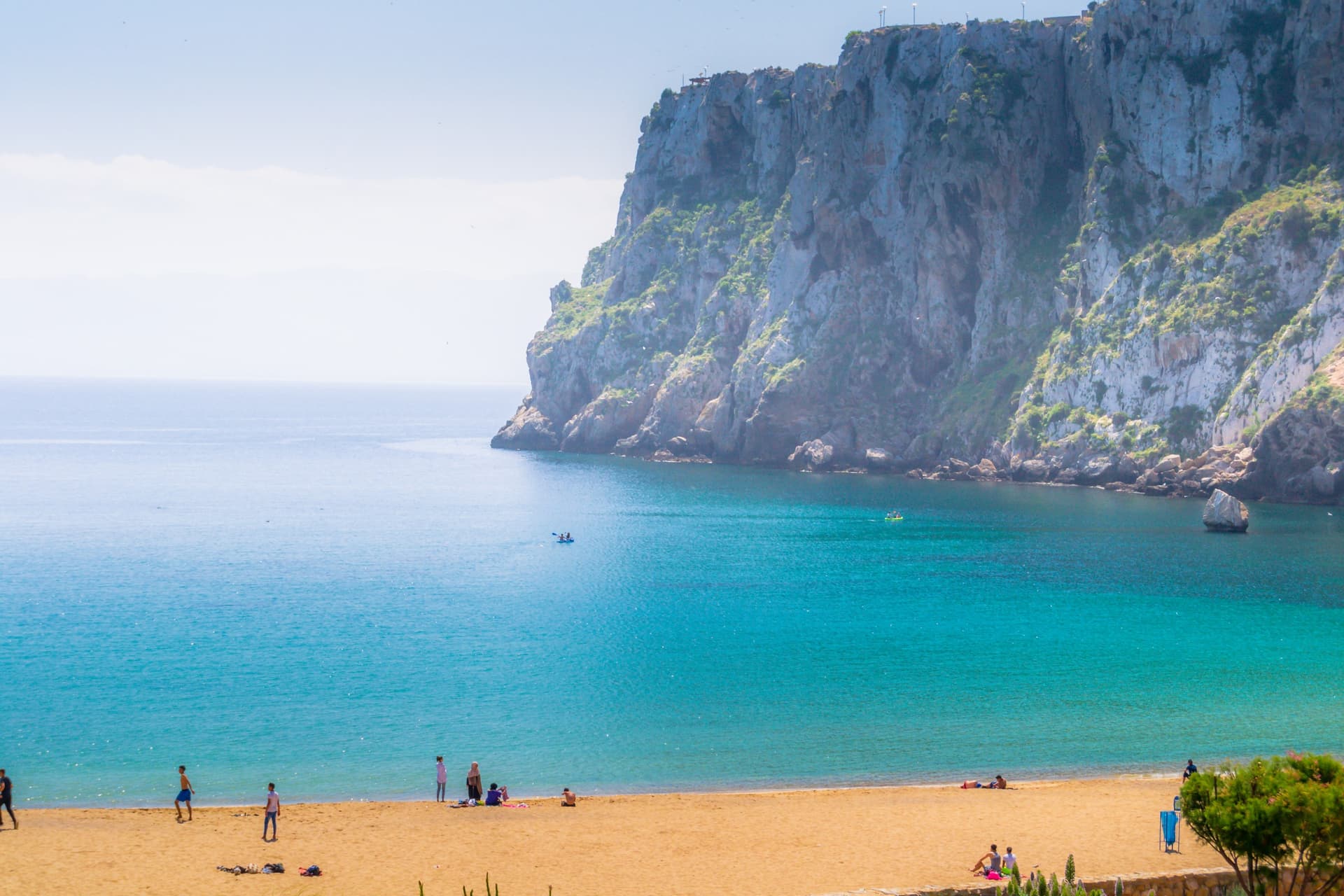
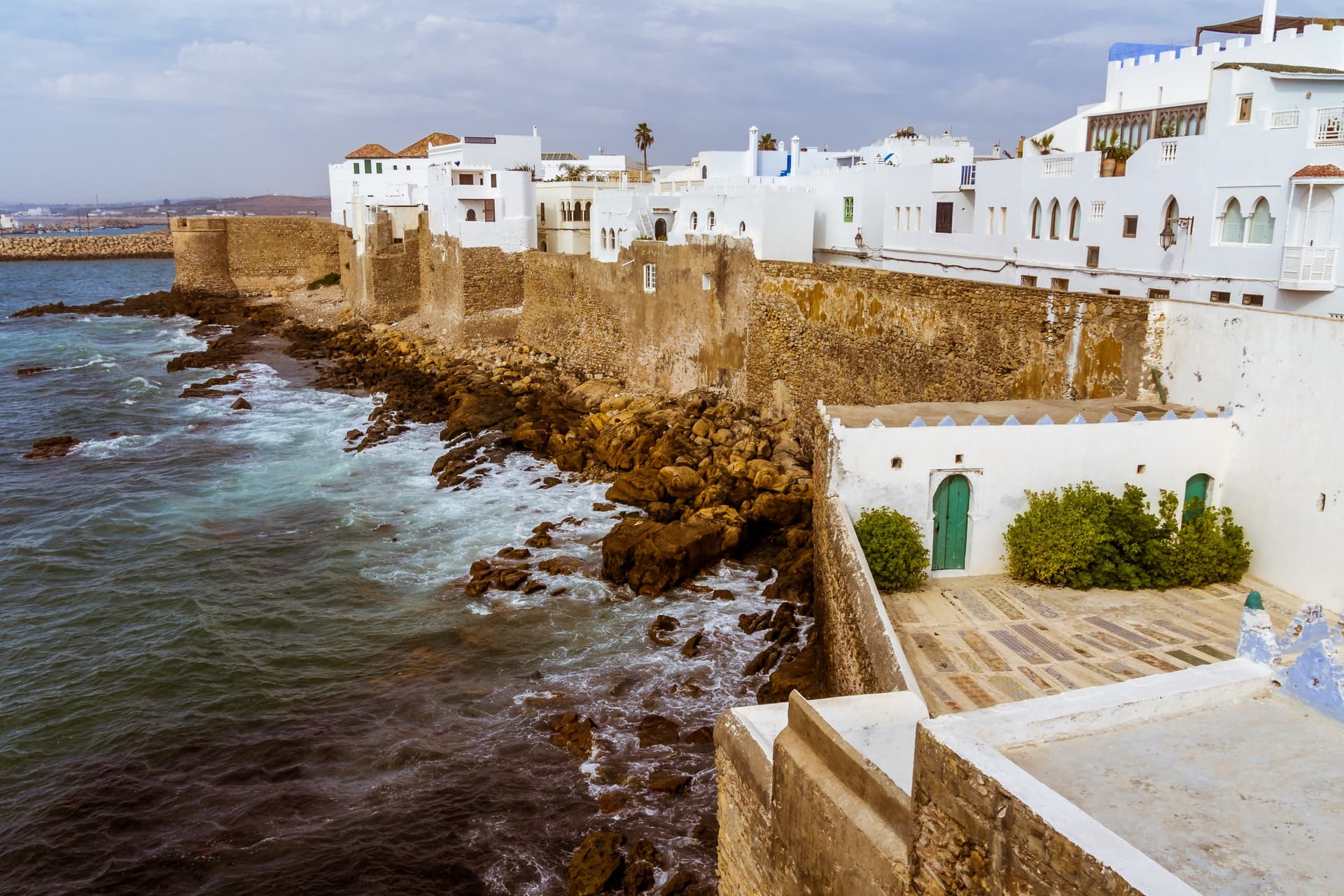
The Mediterranean coast, long overlooked by tourism, deserves a detour for those with time. Al Hoceima National Park protects 485 km² of limestone cliffs plunging into turquoise waters, with coves accessible only by boat from Cala Iris. Further east, Saïdia and the Marchica lagoon offer a landscape of sandy spits and wetlands where pink flamingos and ospreys winter. By contrast, the Atlantic coast of the North, around Asilah, presents a more Andalusian character with its 15th-century Portuguese ramparts and its festival of murals each summer in August.
The Rif hinterland remains little visited and that is its strength. Villages like Beni Bouayach, Issaguen or Targuist open onto agricultural valleys where the rhythm of life has not changed in a generation. We lead curious travelers here to discover a rural Morocco, far from conventional circuits, provided they accept simpler comfort and winding mountain roads. The region also lends itself to historical exploration: Volubilis and Lixus, two major Roman sites, mark the southwestern limits of this zone and complement a cultural approach spanning several centuries of Phoenician, Roman, Idrisid and Iberian occupation.
The North is discovered slowly, without the pressure of the great stages of the South. It is a region we propose to travelers who have already made a first journey to Morocco, or to those seeking from the outset a format less mineral, closer to the Mediterranean than to the desert.
To discover
Blue medina of Chefchaouen. Two days wandering the blue-washed alleyways between Plaza Uta el-Hammam and the Souika quarter, with a 1h30 climb at sunset to the Spanish Mosque for views over the city.
Akchour hike. A 6 km round-trip walk from Talembote bridge to the main waterfall, through oak forests in Talassemtane park, accessible level with fresh water in summer.
Kasbah and medina of Tangier. Visit to the Kasbah museum in the former Dar el-Makhzen palace, then descent to Petit Socco and the cafés where Paul Bowles wrote, with a stop at Cap Spartel 14 km to the west.
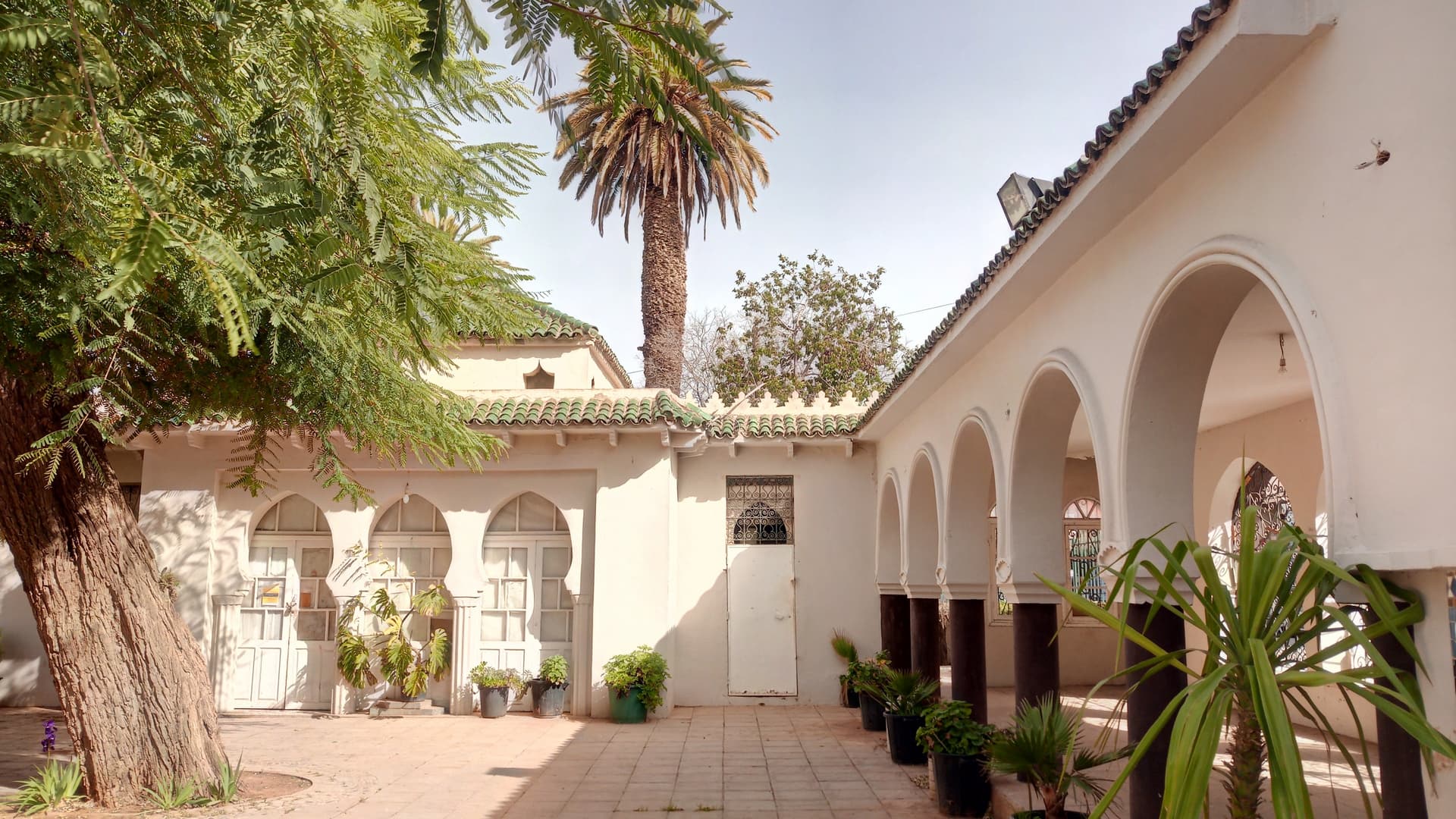
UNESCO medina of Tétouan. Tour through the seven historic quarters, including the mellah and Andalusian quarter, with a stop at the School of Traditional Crafts installed at Bab el-Okla since 1928.
Al Hoceima National Park. Day trip by boat from Cala Iris to the limestone cliffs and coves of Badis, with lunch of grilled fish in a fishing village accessible only by sea.
When to go
The best season for the North covers May-June and September-October. In Chefchaouen, daytime temperatures hover around 24 to 28°C, nights remain cool around 14°C at altitude, and trails are easily navigable. Tangier and the coast enjoy the same mild months, with the sea reaching 20 to 22°C in June and 23°C in September. July and August remain manageable, cooler than Marrakech (28 to 32°C versus 38 to 42°C), but weekend crowds at Chefchaouen and Mediterranean beaches complicate the experience.
Winter, from December to February, brings serious rainfall to the Rif: 800 to 1,200 mm annually concentrated over four months, sometimes with snow above 1,500 meters around Jbel Tidirhine. Mountain roads become slippery and some hiking trails are closed. March and April remain damp but mark the peak of greenery and almond tree blooms, interesting for photographer travelers accepting changeable weather.
Practical advice
We recommend 5 to 7 days to properly explore the North: 2 nights in Chefchaouen, 1 in Tétouan, 2 in Tangier, with a buffer day for the Al Hoceima or Asilah coast depending on interests. The logistics entry point is Tangier Ibn Battouta airport, connected daily to Paris and Madrid, or by train from Casablanca in 2h10 via Al Boraq. A car with driver remains the most flexible format for reaching Chefchaouen (2 hours from Tangier) and exploring the Rif valleys.
The most natural combination is with the Imperial Cities: Fès is just 4 hours by road from Chefchaouen via the N13, and the sequence North then Fès then Meknès builds a coherent 10 to 12-day journey. The North lends itself less well to direct combination with the Sahara or Southern Valleys, which require a pivot through Marrakech. Comfort levels are adequate in the three main cities, with good riads in Chefchaouen and Tétouan and a renovated hotel selection in Tangier. This region suits contemplative travelers, lovers of Andalusian and Mediterranean history, and occasional walkers wanting to alternate city and nature without heavy logistics.