Trekking in the Dadès Valley of Roses
The landscapes of the Dadès valley are arguably the most stunning in Morocco. Over 170 kilometers, from Ouarzazate to Boulmane, mountains, valleys and oases unfold in succession.
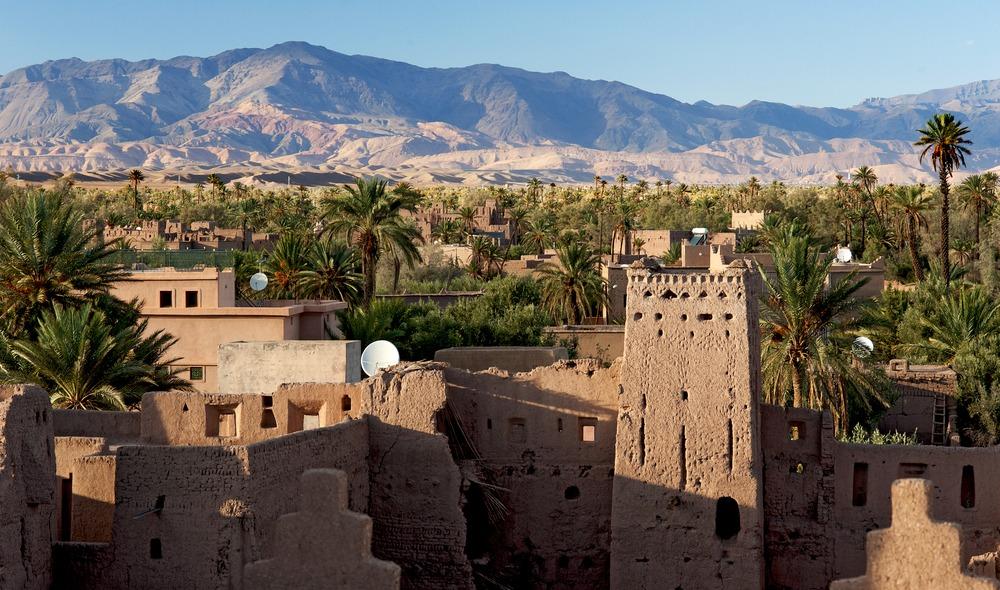
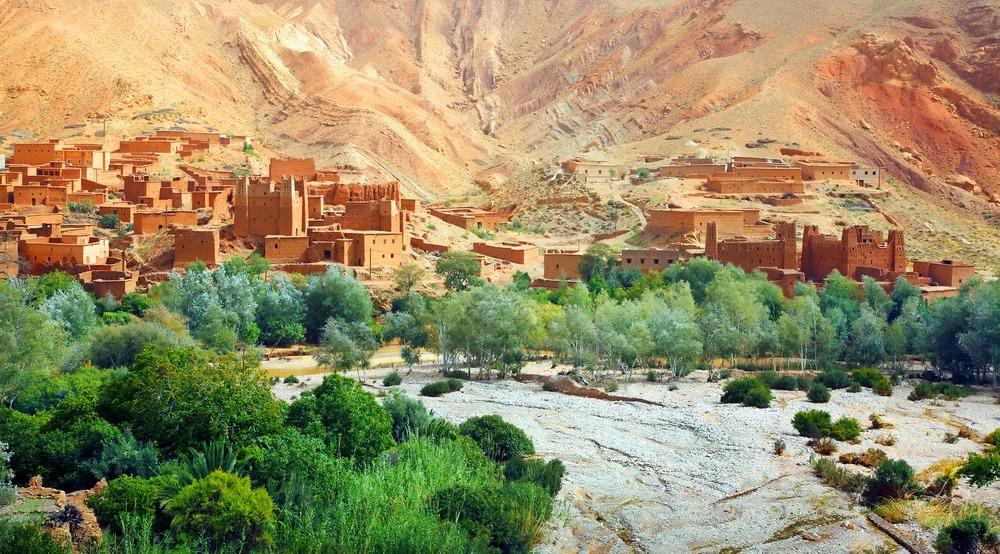
The landscapes of the Dadès valley are arguably the most stunning in Morocco. Over 170 kilometers, from Ouarzazate to Boulmane, mountains, valleys and oases unfold in succession. Between Jbel Sarho and the High Atlas massif, the Dadès river irrigates the desert valley and forms splendid oases. During your trek, you will walk along ochre-colored cliffs and visit magnificent kasbahs, fortified dwellings. The Dadès valley extends east of Ouarzazate: a valley of "a thousand kasbahs". To the north rises the High Atlas mountain and the Djebel Sarho ranges, further south, offer a desert landscape. The Skoura palm grove is an extraordinary natural spectacle.
The palm grove was founded in the 11th century by Yacoub el Mansour, under the Almohad dynasty; it owes its name to a Berber tribe of the era, called the Haskourene. This palm grove contains varied crops: almond trees, apricot trees, fig trees and magnificent roses.
It is here that the famous "rose water" is produced. In May, the Rose Festival takes place each year in the "valley of roses", a major event. Numerous folkloric celebrations occur, offering the chance to taste regional Moroccan specialties and discover the traditions of Berber peoples. The Skoura palm grove is located 42 kilometers from Ouarzazate. You will certainly stop here during your excursion in the Dadès valley. It is a place not to be missed. Thanks to the Dadès river, the valley and gorges of this Moroccan region remain perpetually verdant. The ideal time to trek in the Dadès region is spring, when trees are in bloom and flowers begin to blossom.
In the valley you will see many fruit trees, but also cereal crops such as maize, barley or wheat. As you wander through the aisles of various gardens, you will feel considerable emotion; these lands cultivated for millennia emanate a unique atmosphere. Fig trees and olive trees grow among the silver poplars, very typical of the region. The region's wealth rests primarily on the significant number of kasbahs.
These fortified houses were built to protect against attacks from rival tribes. They are large square structures. The walls are thick and flanked by four towers. Several families could live in a single building. Harvests were stored in a granary and livestock could also take refuge there. As you head toward Boulmane you will discover a town built on the heights, along the banks of the Dadès. The town's souk is very lively; do not hesitate to visit it.
The region narrows increasingly, and the Dadès gorges are not far. The area has interesting wildlife, many birds, small raptors, as well as game and wild sheep.
Ochre rocks eroded by time form a sublime landscape. Further along, caves lead into the mountains. Some cavities are still used as granaries, where you can admire stalactites and stalagmites. An excursion into the depths of a cave is undoubtedly exceptional; caves will appear along your route, so do not miss the opportunity to experience this.
In the region, nomads still inhabit the area. The most well-known tribe is that of Aït Sedrat, formerly nomadic peoples who have settled. The majority live from raising their livestock (sheep, camels, goats) and selling wool. Their living conditions are particularly difficult.
On your way to reach the Dadès gorges, you will not avoid El Kelaa M'Gouna, situated at 1,450 meters altitude. This large village is a mandatory stop before reaching the gorges. The place is recognized worldwide for rose cultivation. Flowering occurs between mid-April and mid-May; residents harvest nearly 4,000 tons of roses each year. The atmosphere in El Kelaa M'Gouna is particular, the red earth, the pink village—it is a perfumed place where tranquility reigns. The village souk is filled with rose-derived products: soap, oils, lotions for stomach ailments, rose water...
A few kilometers further on is a campsite: "les pattes de singe" (Monkey's Paws) where hikers enjoy stopping before beginning their excursion into the Dadès gorges. The mountain view there is striking. You may have the chance to hear the legend of the "monkey mountain" told by the campsite manager. You will be instantly immersed in another world...
A hike through the valley of roses is rather like breathing in the scents of authentic Morocco. Nomads still present in the region pass down their customs and traditions from generation to generation. You will walk in the footsteps of ancient Berber tribes. Gardens in bloom rising from the desert will be just as much a source of wonder as the subtle fragrance of the roses of El Kelaa M'Gouna.
Morocco Travel Tip
The Drâa valley in Morocco is also very lovely. Over 200 kilometers extends a vast oasis and dozens of palm groves. If you have the time and inclination, plan an itinerary in this Moroccan region: from Agdz to Zagora.
Frequently asked questions
The best period is spring, between mid-April and late May. Trees are in bloom, the roses of El Kelaa M'Gouna are in full flower and the Rose Festival unfolds in a festive atmosphere. Temperatures are mild and landscapes are verdant. Avoid summer (July-August) when heat can exceed 40°C in the gorges.
From Marrakech, the most common route passes through the Tichka pass to reach Ouarzazate (approximately 200 km), the starting point of the Dadès valley. From there, the valley extends 170 kilometers to Boulmane. You can rent a car, take a long-distance bus or opt for an organized tour with a local guide.
The Rose Festival takes place each year in May at El Kelaa M'Gouna, in the heart of the Valley of Roses. It is a major cultural event celebrating the rose harvest, with approximately 4,000 tons picked each year. The program includes folkloric parades, Berber music, local crafts and tasting of Moroccan specialties. Streets and souks are then filled with rose-based products (rose water, essential oils, soaps).
The Dadès valley offers hikes accessible to all levels. Walks in the valley bottom around palm groves and kasbahs are easy and suitable for families. Approaching the Dadès gorges requires somewhat more physical effort. For hikes at altitude in the High Atlas massif or Djebel Sarho, an intermediate to advanced level is recommended, ideally with a local guide.
The Dadès valley offers several accommodation options: Berber guesthouses and small riads in Skoura or Boulmane, mountain village gîtes, and campsites like the 'Monkey's Paws' near the Dadès gorges, very popular with hikers for its mountain view. It is recommended to book in advance in May, during the Rose Festival period.
A kasbah is a large square fortified structure with thick walls flanked by four towers, built to protect families and their harvests from attacks by rival tribes. The Dadès valley is dotted with them along its entire length, which earned it the nickname 'valley of a thousand kasbahs'. These ochre-colored earthen constructions, often adorned with Berber geometric patterns, constitute one of Morocco's most emblematic architectural heritages.