Erg Chebbi
Erg Chebbi
A massive dune field spanning 20 km in southeastern Morocco, Erg Chebbi is reached from Merzouga and offers desert camps, camel treks and starlit nights.
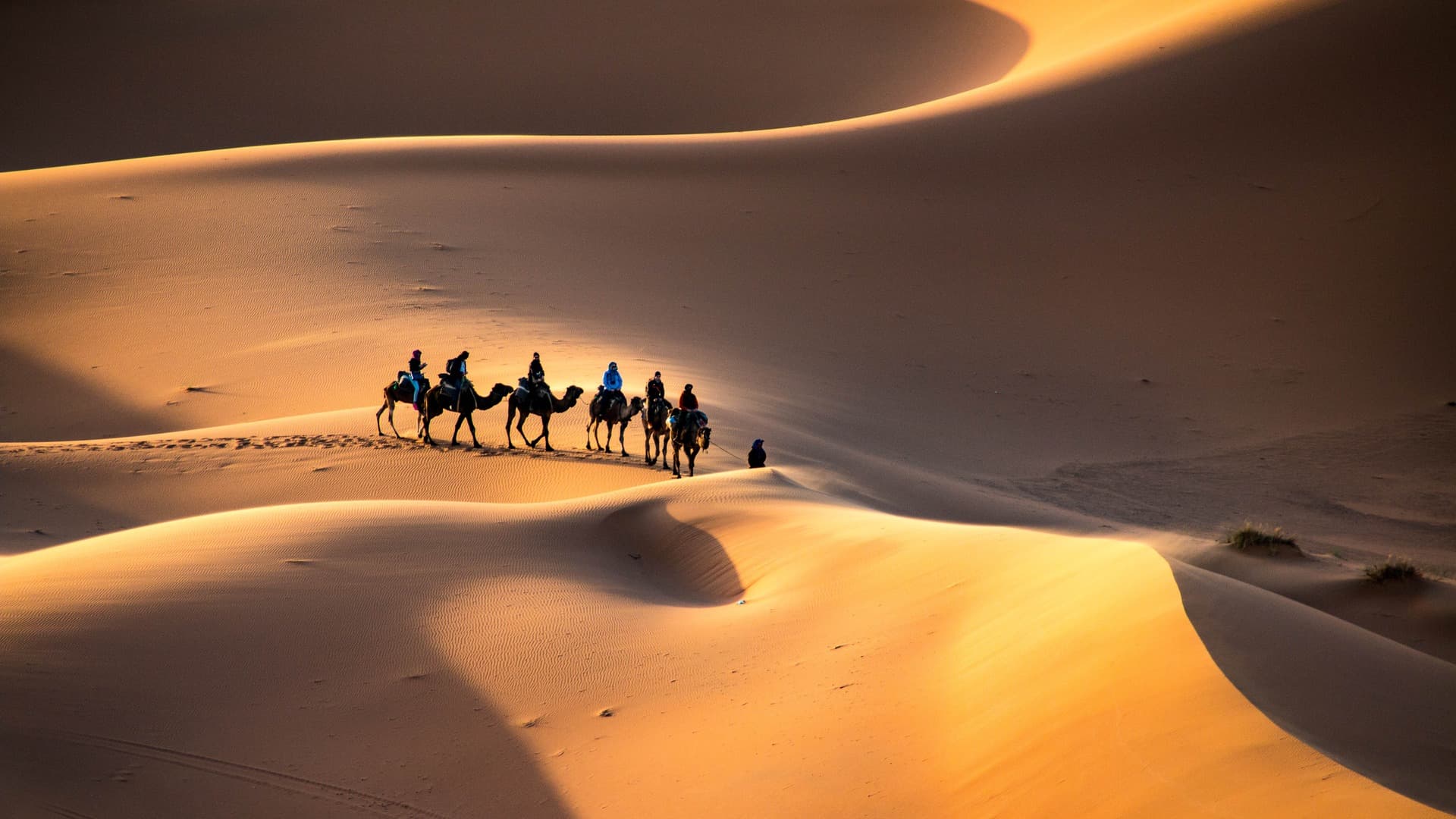
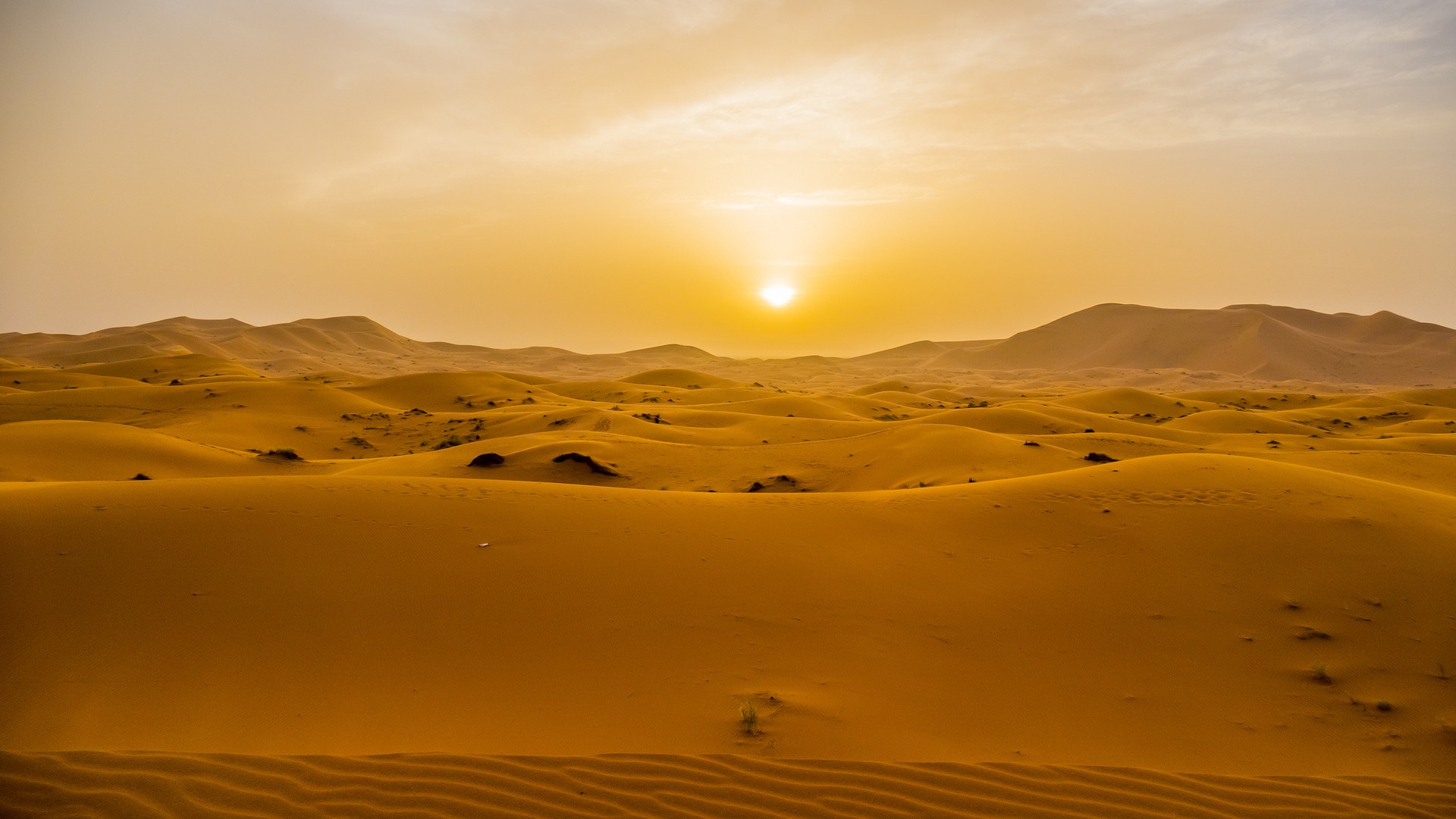
Erg Chebbi forms an expanse of orange sand dunes located in southeastern Morocco, near the village of Merzouga. Stretching 20 km long and 5 km wide, this dune massif ranks among the most accessible portions of the Moroccan Sahara when traveling inland. With dunes rising above 150 meters, it offers rewarding terrain for desert camps, camel treks and stargazing.
Why visit Erg Chebbi
Unlike other desert zones in Morocco characterized by regs (stony plains), Erg Chebbi showcases the sand dunes typically associated with the Sahara. Its proximity to a paved road makes it accessible even for short stays, without complex logistics.
The site appeals for three main reasons:
- A striking chromatic variation of the dunes depending on light, especially pronounced at sunrise and sunset
- The presence of Berber camps allowing for one or more nights on site
- A clear night sky, ideal for stargazing far from light pollution
History and cultural context
Erg Chebbi lies in the Tafilalet region of southeastern Morocco, near the Algerian border. This area has long been a passage for nomadic peoples and trade caravans connecting sub-Saharan Africa with northern imperial cities, notably Marrakech and Fès. Salt, spices and gold flowed along these routes.
Today, local populations are predominantly Berber, particularly from the Aït Atta confederation, and some families still maintain a semi-nomadic lifestyle. Tourism now forms a significant part of the local economy around Merzouga and neighboring villages.
What to see and do
Exploring the dunes
The main dunes concentrate north and east of Merzouga. An hour's walk is enough to gain elevation and take in panoramic views of the entire erg. For longer explorations, traveling with a local guide is advisable: visual landmarks resemble one another and orientation quickly becomes tricky.
Desert camp and overnight stay
Several camps are established at different points throughout the erg, ranging from basic to comfortable. Backcountry camping remains possible for self-sufficient travelers, though it requires equipment suited to the temperature swings.
Ways to explore
- On foot: for short walks around camps and climbing nearby dunes
- By camel: the most common option, typically a half-day or round trip to a camp
- By 4x4: suitable for reaching more remote sectors or circuits combining Erg Chebbi and Dayet Srji lake
- By quad or buggy: motorized option offered by several Merzouga providers
Dayet Srji Lake
West of the erg, this seasonal lake hosts flamingos and migratory birds when filled with water, typically after winter rains.
When to go
The March to October period is generally recommended, avoiding the height of summer (July-August) when daytime temperatures become challenging. The best months are:
- March to May: moderate daytime temperatures, cool nights
- September to November: similar conditions following summer heat
In winter (December-February), days remain sunny with around 28°C, but nights can drop to 0°C. Warm bedding is then essential for desert camps. Sand winds, more frequent in spring, can occasionally disrupt visits.
How to get there
Erg Chebbi is reached from the village of Merzouga, accessible by paved road. A sandy track, passable for most vehicles, then leads to camps on the dune margins.
- From Ouarzazate: approximately 360 km, about 5 hours' drive. Ouarzazate airport has connections from Europe, mainly seasonal.
- From Marrakech: approximately 560 km via the High Atlas and Drâa valley, plan for two days with a stop at Ouarzazate or the Dadès gorges.
- From Fès: approximately 470 km via Midelt and Erfoud, allow a full day of driving.
- From Erfoud: the nearest town, 40 km north, has small shops and filling stations.
Practical information
Some recommendations for planning a desert outing:
- Clothing: lightweight covering layers (trousers, long sleeves), fleece and windbreaker for the night
- Protection: sunglasses, hat or cheche scarf, high-SPF sunscreen
- Footwear: sneakers or lightweight closed shoes, more practical than sandals for walking in hot sand
- Water: bring a minimum of 2 liters per person for each half-day walk
- Backcountry camping: sleeping bag suitable for cool nights, headlamp, first aid kit
Mobile coverage works around Merzouga but becomes patchy inside the erg.
Nearby attractions
Erg Chebbi fits into a broader circuit through southeastern Morocco. The village of Merzouga serves as the departure point for most excursions and concentrates accommodation and service providers. Further west, the Drâa valley, Todra gorges and Dadès gorges complete a desert itinerary. Travelers heading southwest toward the Atlantic can reach sites like Fort Bou Jerif, a former military outpost on the desert edge. For urban heritage contrasts, the Ben Youssef medersa in Marrakech and the Bahia Palace showcase Moroccan-Andalusian art.
Frequently asked questions
One night in camp with a camel excursion at sunset and sunrise is the most common format. To appreciate the site more fully, two nights allow exploring different erg sectors without rushing.
For short walks around camps, it's not necessary. For any extended trek inside the erg, a local guide is recommended: dunes resemble each other and orientation is deceptive.
Erg Chebbi is more accessible (paved road to Merzouga) and its dunes are taller. Erg Chigaga, near M'Hamid, is more extensive and remote, but requires a 4x4 trek on track.
Yes, short camel excursions and desert camps suit families well. Simply avoid the hottest months and provide enhanced sun protection.
Yes, though conditions vary considerably. The most comfortable period spans March to May then September to November. Summer is very hot, winter offers nights near 0°C.
Planning your trip
Erg Chebbi fits easily into a larger circuit combining imperial cities, Atlas valleys and desert. To build a custom itinerary, explore our journeys in Morocco.
Interested in this visit?
We can include it in your personalised itinerary.