Sebkha Oum Dba
Sebkha Oum Dba
A vast salt depression in southern Maroc, Sebkha Oum Dba forms with Mont Gara and salt flats a Saharan landscape off the beaten path.
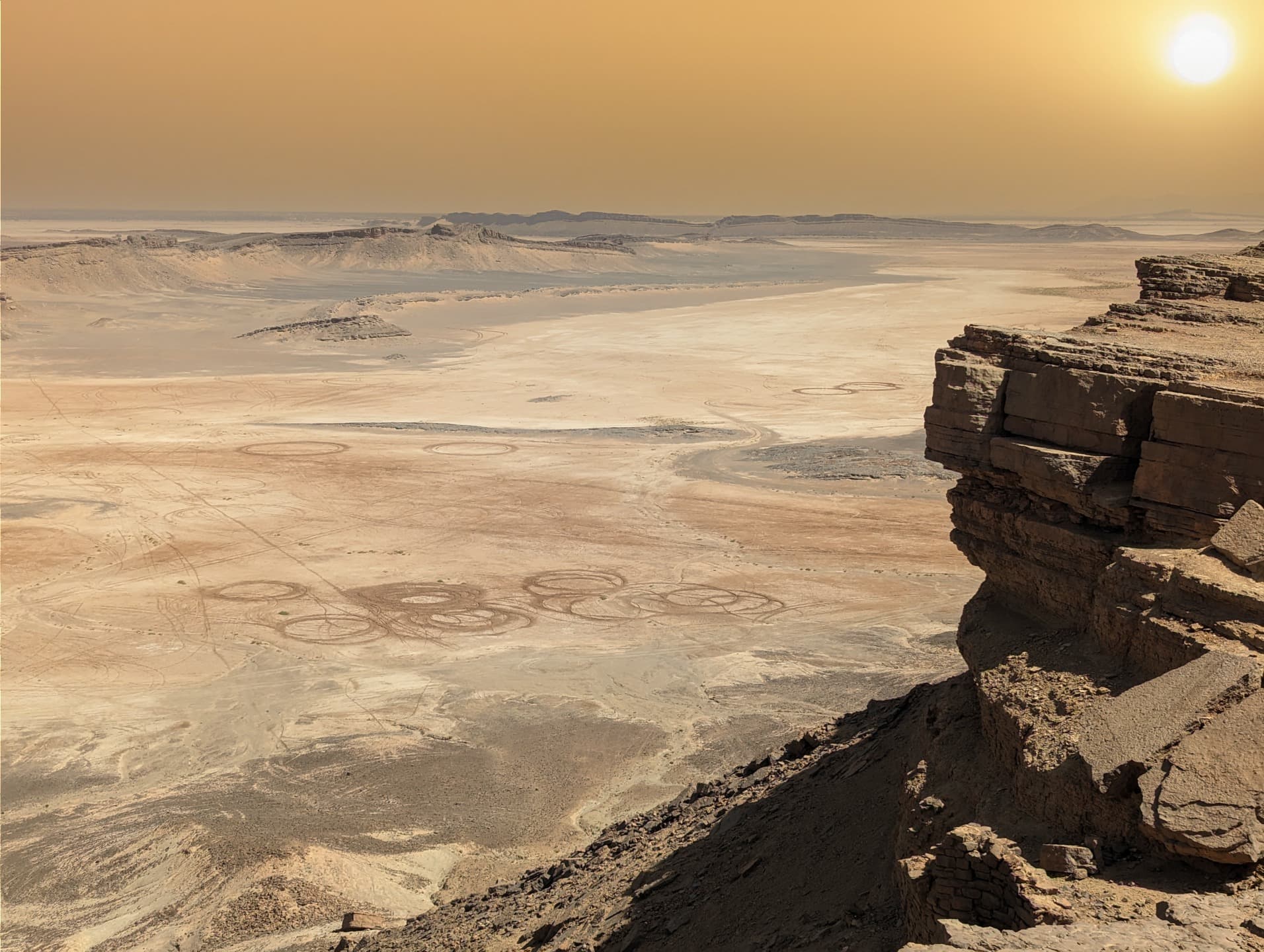
At the far south of Maroc, between Laâyoune and the Saharan border, Sebkha Oum Dba forms a vast salt depression framed by Mont Gara and a network of salt flats. The site, rarely visited, offers a striking glimpse of Saharan landscapes: white expanses encrusted with salt, dark reliefs in the background, open horizon.
Why visit Sebkha Oum Dba
Sebkha Oum Dba holds interest both for its geography and its off-the-beaten-path character. Located about ten kilometers from the village of Tah and close to the Bedouin Encampment, it fits into a still confidential Saharan itinerary, complementary to the better-known stops in southern Maroc.
The contrast between the salt crust, sand, and locally exploited salt flats creates rare visual planes across Maroc. The silence, absence of tourist infrastructure, and the desert's low-angle light strengthen the experience.
What is a sebkha?
A sebkha is a shallow depression filled with brackish or salt water, characteristic of desert and semi-desert regions. It forms by accumulation of rainwater that then evaporates, leaving behind deposits of salt and saline sediments.
The soils, highly saline, harbor halophilic crustaceans, capable of surviving in high-salinity environments. These zones also constitute stopovers and breeding grounds for numerous migratory birds, who benefit from temporary water points during the wet season.
What to see on site
The salt depression
Often dry, the sebkha stretches about thirty kilometers in length and sits approximately 60 meters above sea level. Depending on the season, the ground shifts from a cracked crust of brilliant white to a thin film of water that reflects the sky.
Central Mont Gara
This relief emerges in the middle of the depression and structures the landscape. It serves as a visual landmark and offers, from its vicinity, viewpoints over the entire sebkha and neighboring salt flats.
The salt flats
Traditional salt exploitation continues at the site's edge. Evaporation basins, salt heaps, and still-visible tools give insight into an ancient activity in the region.
Wildlife
Halophilic crustaceans, adapted insects, and, in season, migratory birds make up the observable life. Biodiversity remains discreet but specific to these saline environments.
Practical information
- Duration of visit: allow 1 to 2 hours on site, more if you combine with Mont Gara and the salt flats.
- Access: free, with no ticketing or reception facilities.
- Equipment: water in quantity, sun protection, closed-toe shoes, covering clothing. The salt soil can be abrasive.
- Safety: isolated desert zone, limited phone network. Favor an adapted vehicle and ideally the presence of a local guide.
When to go
The October to April period remains most comfortable, with moderate temperatures and favorable light in early and late day. After rare rainfall episodes, the sebkha may partially fill and offer striking mirror reflections. In summer, intense heat and salt glare make the visit challenging; it is better to go early in the morning.
How to get there
The site is reached from Laâyoune heading northeast, via the road connecting Tah. Laâyoune airport is about half an hour's drive from the neighboring Bedouin Encampment, which makes a good base for exploring the sebkha. A personal or rented vehicle is necessary; in the absence of direct public transport, calling on a driver or guide from Laâyoune remains the simplest solution.
Nearby
- Naïla Lagoon: wetland of ornithological interest, further north on the Atlantic coast.
- Fort Bou Jerif: former isolated colonial fort in southern Maroc, complementary stop on a Saharan itinerary.
- Cascades d'Attiq: to extend your discovery of Moroccan natural landscapes off the beaten path.
Extend your journey
Sebkha Oum Dba fits naturally into an itinerary in southern Saharan Maroc. To build a tailor-made trip including Laâyoune, its surroundings, and other regions of the country, consult our Maroc journeys.
Interested in this visit?
We can include it in your personalised itinerary.