Hassan Tower
Hassan Tower
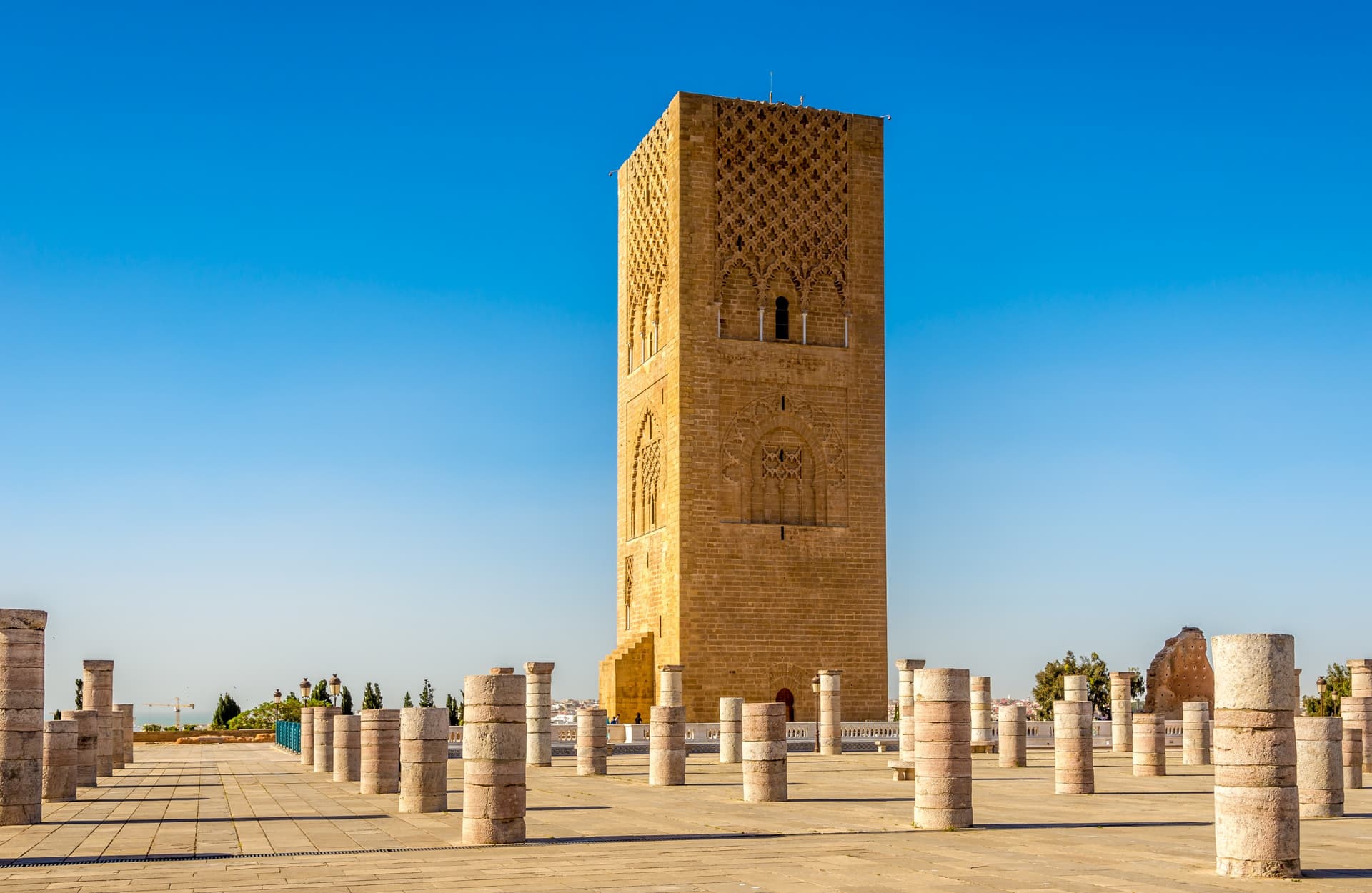
An unfinished Almohad minaret from the 12th century, Hassan Tower dominates the esplanade with truncated columns that also houses the Mausoleum of Mohammed V in Rabat.
Hassan Tower dominates the esplanade overlooking the Bouregreg in Rabat. This unfinished minaret, standing 44 meters high, bears witness to a pharaonic 12th-century project: to build the largest mosque in the Muslim world. Today, the esplanade with its truncated columns forms one of the most visited sites in the Moroccan capital, inseparable from the Mausoleum of Mohammed V which faces it.
Why visit Hassan Tower
- An Almohad minaret from the 12th century, contemporary with the Giralda in Seville and the Koutoubia in Marrakech
- A monumental esplanade punctuated by approximately 200 pink sandstone columns, remnants of a mosque never completed
- The Mausoleum of Mohammed V at its feet, one of the most significant royal buildings of modern Morocco
- A site classified as UNESCO World Heritage since 2012, within the ensemble of Rabat as a modern capital and historic city
- Free entry to the esplanade, in a neighbourhood easy to combine with the Kasbah of the Oudayas and the medina
The story of an interrupted construction site
At the end of the 12th century, the Almohad sultan Yacoub El Mansour launches the construction of a religious complex intended to become the largest mosque in the Muslim world. The project calls for a 60-meter minaret and a prayer hall capable of accommodating approximately 44,000 worshippers, spread over several hectares.
The construction abruptly stops upon the death of the sultan in 1199. The minaret reaches 44 meters, less than three-quarters of the planned height. Yacoub El Mansour's successors never resume the work, and the mosque remains in a monumental sketch. Over the centuries, the site deteriorates, is pillaged for its materials, and then suffers from the 1755 earthquake known as the Lisbon earthquake, which devastates many of the columns intended to support the roof.
The site experiences a second life in the 20th century, when it is chosen to house the Mausoleum of Mohammed V, completed in 1971. Hassan Tower becomes the architectural symbol of Rabat and a place of national memory.
What to see on the site
The minaret
The tower appears as a pink sandstone parallelepiped, each of its four faces bearing distinct sculptured decoration: geometric interlace, blind arcading, floral motifs. Inside, ascent is made not by stairs but by a series of inclined ramps. Tradition holds that they were designed to allow the muezzin to ride on horseback to the summit and call the faithful to prayer. The tower is generally not accessible to the public from the inside.
The esplanade and columns
In front of the minaret extends the former prayer hall, of which about 200 truncated columns remain, arranged in regular rows. The planned mosque included 14 gates and an oratory of 18 naves articulated around 312 pilasters and 44 columns. Surveying the site gives an idea of the dimensions of the original project.
The Mausoleum of Mohammed V
At the foot of the tower, the mausoleum houses the remains of King Mohammed V, his son Hassan II and Moulay Abdellah. The funeral chamber, open to non-Muslim visitors from an upper gallery, showcases zellige tilework, stucco and cedar wood representative of contemporary Moroccan craftsmanship. Uniformed royal guards stand at the entrances.
Practical information
- Location: Hassan Tower esplanade, on the plateau overlooking the Bouregreg river, approximately 15 minutes on foot from Rabat's medina.
- Access: on foot from the centre, by taxi, or by the Rabat-Salé tram (Hassan Tower stop).
- Fee: free entry to the esplanade and mausoleum.
- Hours: site open during the day. The mausoleum closes during prayer times; check local hours in advance.
- Dress code: smart casual recommended, particularly for entering the mausoleum (shoulders and knees covered).
- Visit duration: allow 45 minutes to 1.5 hours to explore the esplanade and mausoleum.
Nearby
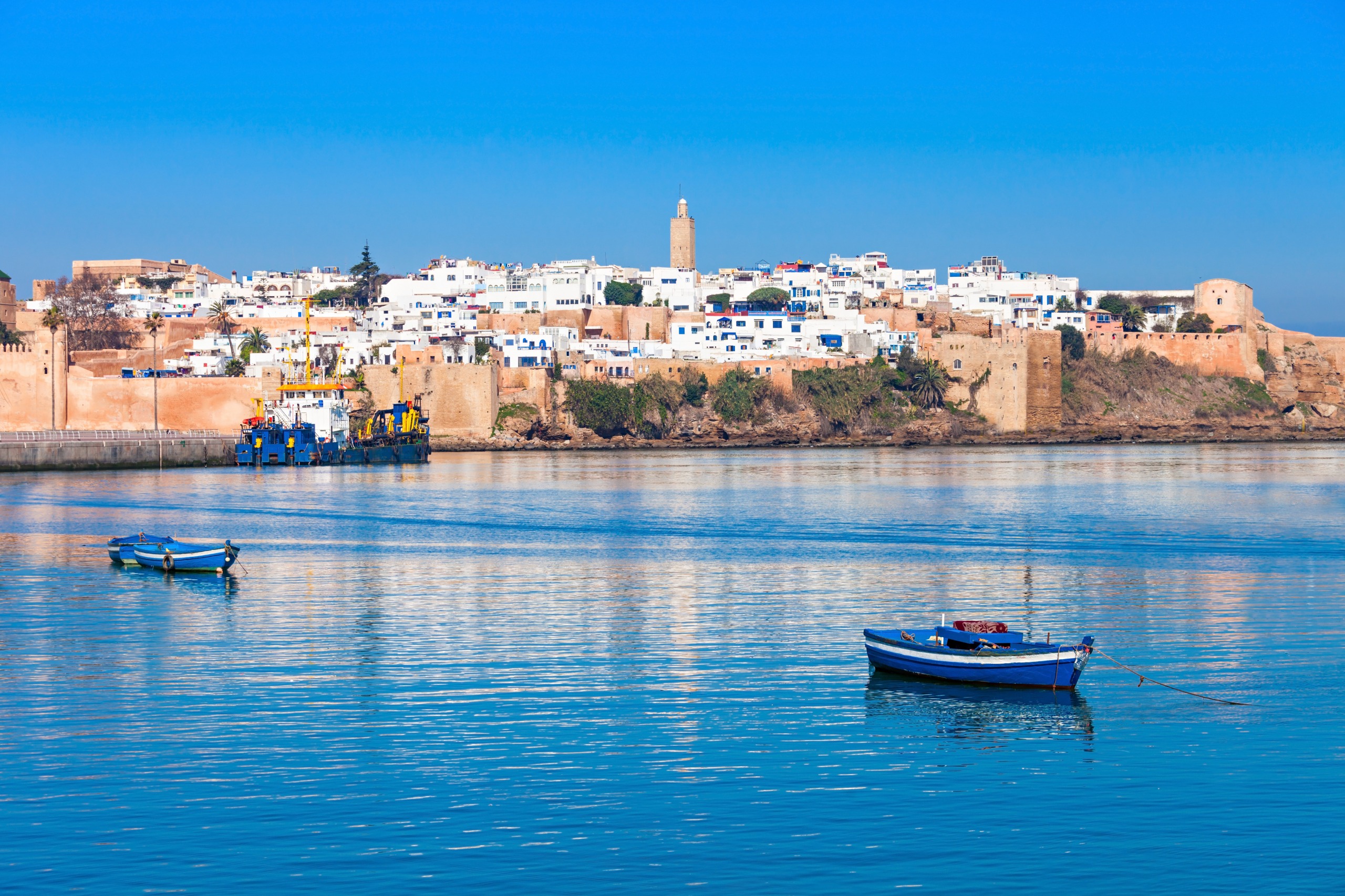
Hassan Tower fits easily into a day visit to Rabat. About a twenty-minute walk away, the Kasbah of the Oudayas and the Oudayas Museum allow you to explore the city's Andalusian history and offer a view of the Bouregreg estuary. The medina and its souk extend below. To broaden the itinerary to other imperial cities, the Bahia Palace in Marrakech and Jemaa el-Fna square are among the most relevant complementary stops.
Frequently asked questions
Frequently asked questions
Include Hassan Tower in your trip
Hassan Tower is generally visited as part of a stop in Rabat, often integrated into a circuit connecting the imperial cities. To build a tailor-made itinerary including Rabat, Fès, Meknès and Marrakech, consult our trips to Morocco.
Interested in this visit?
We can include it in your personalised itinerary.