Agdz
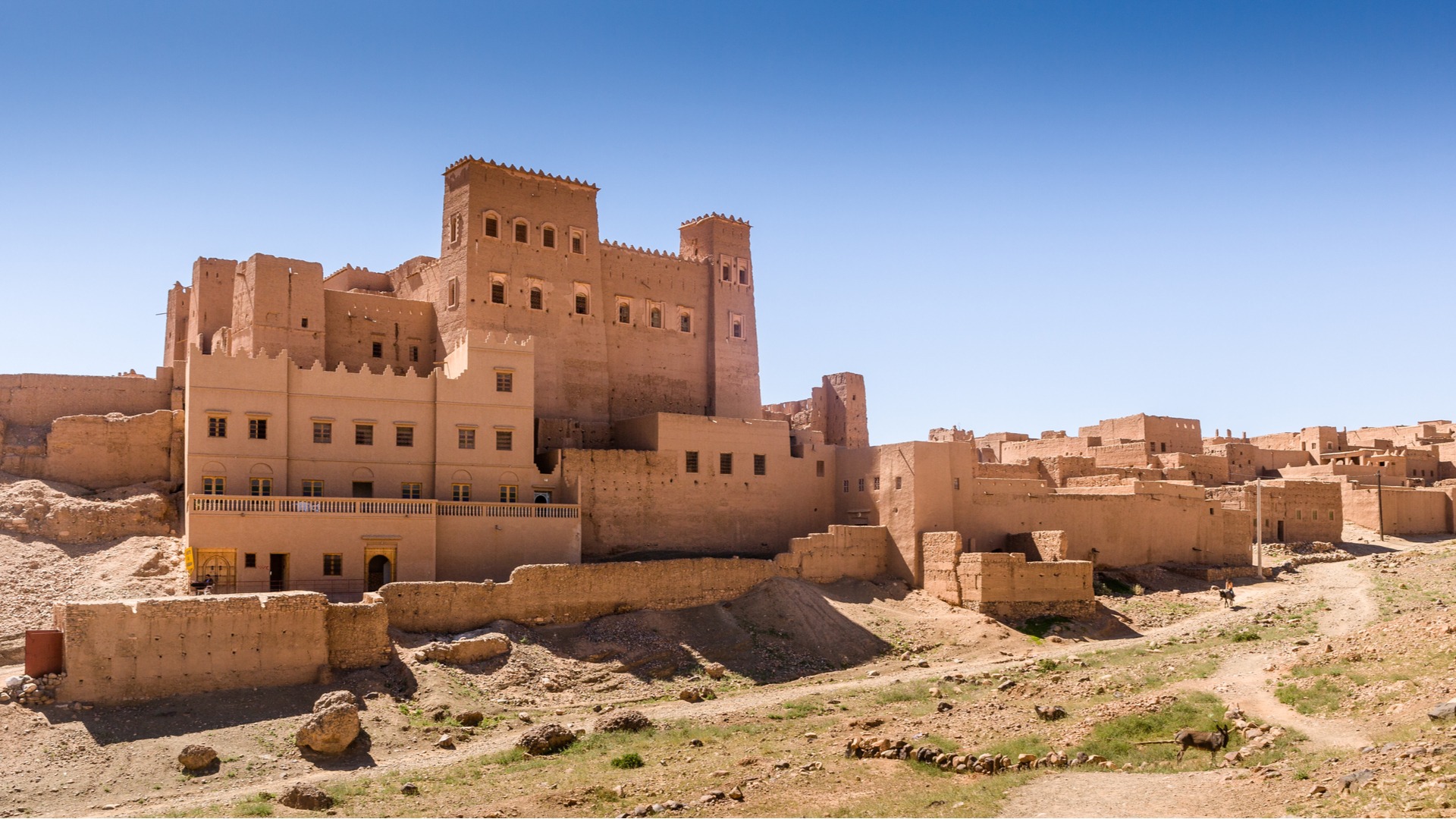
Agdz marks the entrance to the Drâa palmery, between Ouarzazate and Zagora. Rammed-earth ksour, palm groves and Djebel Kissane make up a typical oasis landscape of southern Morocco.
Agdz is a small stopping point in the Drâa Valley, south of Ouarzazate, at the foot of Djebel Kissane. A crossroads between the High Atlas and the desert, it marks the entrance to the Drâa palmery — one of Africa's longest — and brings together a series of ksour and ochre-coloured rammed-earth kasbahs. It's a natural starting point for exploring the valley before heading south towards Zagora.
Practical information at a glance
- Access: National Route N9 from Ouarzazate (approximately 70 km) or from Zagora (approximately 95 km).
- Transport: Buses and shared taxis connect Agdz to Ouarzazate and Zagora several times daily.
- Recommended duration: Half a day to a full day for the town and its immediate surroundings.
- Dress code: Modest attire recommended in the village and ksour.
What to see
Agdz's town centre is modest, but its surroundings hold most of the interest. The palmery runs along the Drâa wadi for several kilometres. Ksour (fortified villages) in rammed earth dot the riverbank, some still inhabited. Djebel Kissane, the flat-topped mountain towering above the town, provides a constant visual landmark.
History and context
For centuries, the Drâa Valley was a major caravan route linking sub-Saharan Morocco to the north. Agdz was one of its stops. The ksour surrounding it bear witness to a blend of Berber and Arab defensive architecture, built to protect agricultural communities and caravans. Some date back to the 17th-18th centuries.
Highlights of the visit
The Drâa palmery
The palmery extends on both sides of the wadi. A walk or bike ride among the date palms, vegetable gardens and seguias (irrigation canals) gives a concrete sense of traditional oasis agriculture.
Tamnougalt kasr
A few kilometres south of Agdz, Tamnougalt is one of the valley's best-preserved ksour. Its covered alleyways, corner towers and collective granaries (agadirs) merit a visit in their own right. Local guides offer guided tours.
Djebel Kissane
The table-top mountain overlooking Agdz is visible from afar. A hike to the top is rewarded with panoramic views of the palmery and valley. Check locally for trail conditions before setting out.
Photography tips
Morning and late afternoon light is ideal for photographing rammed-earth kasbahs: ochre tones stand out better in raking light. For the palmery, a vantage point from above — from the lower slopes of Djebel Kissane — allows you to capture the green expanse contrasting with the desert. Always ask permission from residents before photographing them.
Location and access
Agdz is located on the N9, the main axis of the Drâa Valley. Ouarzazate is approximately 70 km to the north; Zagora approximately 95 km to the south. Shared taxis and buses regularly serve both cities. The town is accessible by ordinary car; some tracks to surrounding ksour require a high-clearance vehicle.
Nearby attractions
- Tamnougalt kasr — rammed-earth kasr among the best preserved in the Drâa Valley, a few kilometres south.
- Ouarzazate — crossroads city of southern Morocco, with Taourirt kasbah and film studios.
- Zagora — gateway to the desert and starting point for Chegaga or Tinfou dunes.
- Drâa Valley — succession of ksour, palmeries and kasbahs over more than 200 km.
Frequently asked questions
Spring (March-May) and autumn (September-November) offer pleasant temperatures. Summer is very hot in the Drâa Valley; winter is mild during the day but nights can be cool.
It's not mandatory, but a local guide facilitates access to inhabited parts of the ksour and provides valuable historical context. Guides are available on site, particularly in Tamnougalt.
Yes, if you're travelling by car. The road between the two towns runs along the palmery and allows stops at several ksour. Plan a full day to avoid rushing through the stops.
Agdz has a few guesthouses and small hotels. The offering remains limited; it is advisable to book in advance, especially during peak season.
The climb requires good physical fitness and sturdy shoes. It is not suitable for people with reduced mobility. Check locally for trail conditions before setting out.
Want to discover this destination?
Our local advisors design your tailor-made trip.