Valley of the Roses
Valley of the Roses
The nickname for the Dadès valley between Kelâat M'Gouna and Bou Tharar, the Valley of the Roses is best visited in spring, during the harvest and the Festival of Roses.
The nickname given to the Dadès valley between Kelâat M'Gouna and the village of Bou Tharar, the Valley of the Roses stretches at the foot of the High Atlas, in southeastern Morocco. Each spring, the hedgerows of rose bushes that border the grain fields burst into bloom and feed a local industry focused on rose water and perfumery.
Why visit the Valley of the Roses
The valley combines three rather rare assets in Morocco: an irrigated oasis agricultural landscape watered by the M'Goun wadi, a specialized flower culture — the Damask rose — and a festive calendar built around the harvest. Unlike the neighboring Dadès and Toudgha gorges, the area remains largely untouched by mass tourism. You encounter mainly adobe hamlets, fields of corn, barley and potatoes, and women busy with the harvest at dawn.
The main appeal lies in its seasonality: for six to eight weeks in spring, the valley takes on a rosy hue and the air fills with the fragrance of flowers. Out of season, the landscape remains mineral and peaceful, perfect for hiking.
History and the rose tradition
The Damask rose (Rosa damascena) is said to have been introduced to the region in the 10th century by pilgrims returning from Mecca, according to local oral tradition. Villagers first planted it as hedgerows to protect fields from goats; over the centuries, the flower became a full-fledged crop.
Today, local production serves several markets: rose water for domestic consumption and cosmetics, concrete and essential oil for the perfume industry. Processing facilities are concentrated in Kalaat M'Gouna, which has made the rose its emblem — the town is even organized around a floral silhouette visible at the entrance to the city.
What to see and do
The valley route
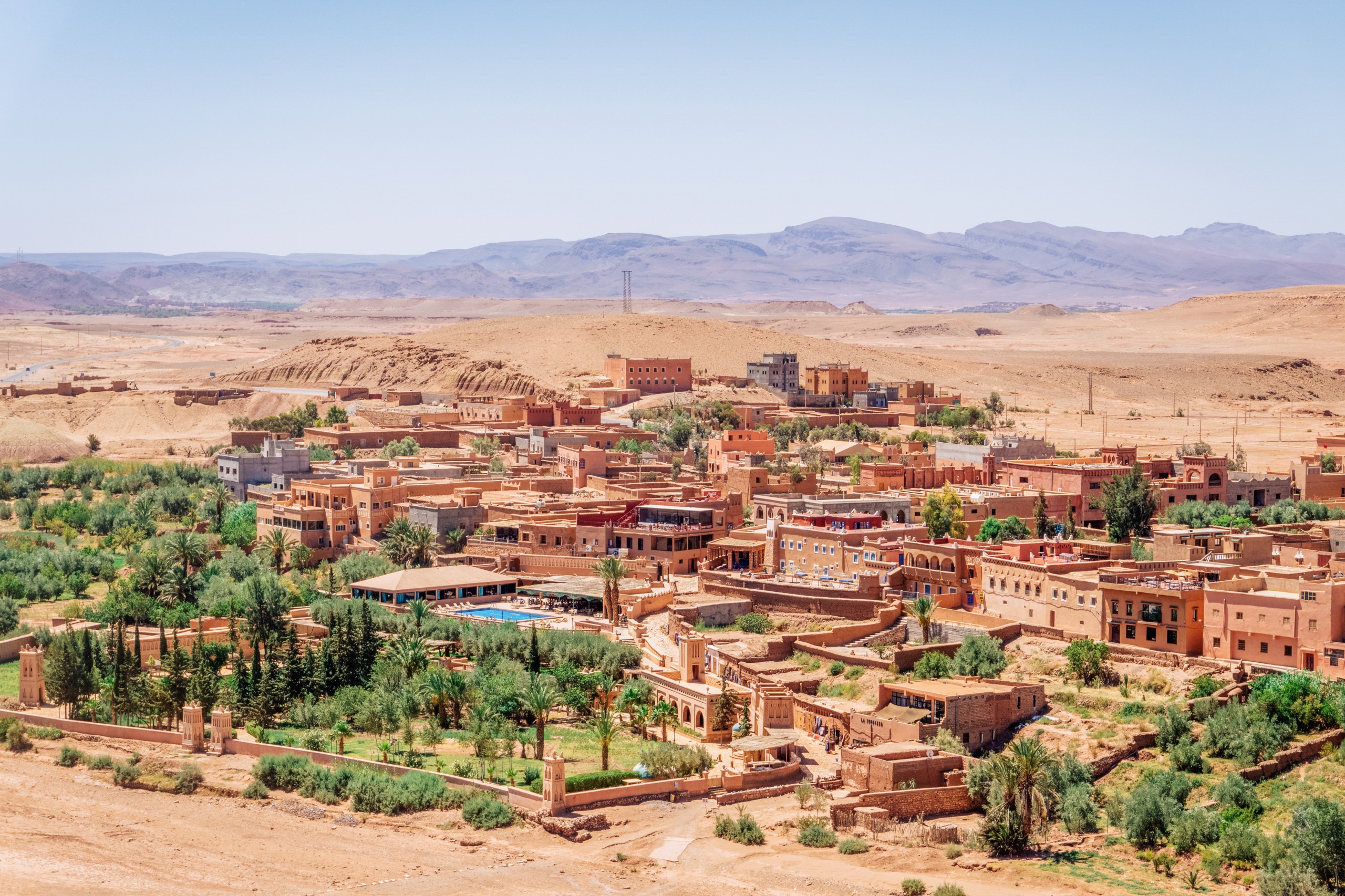
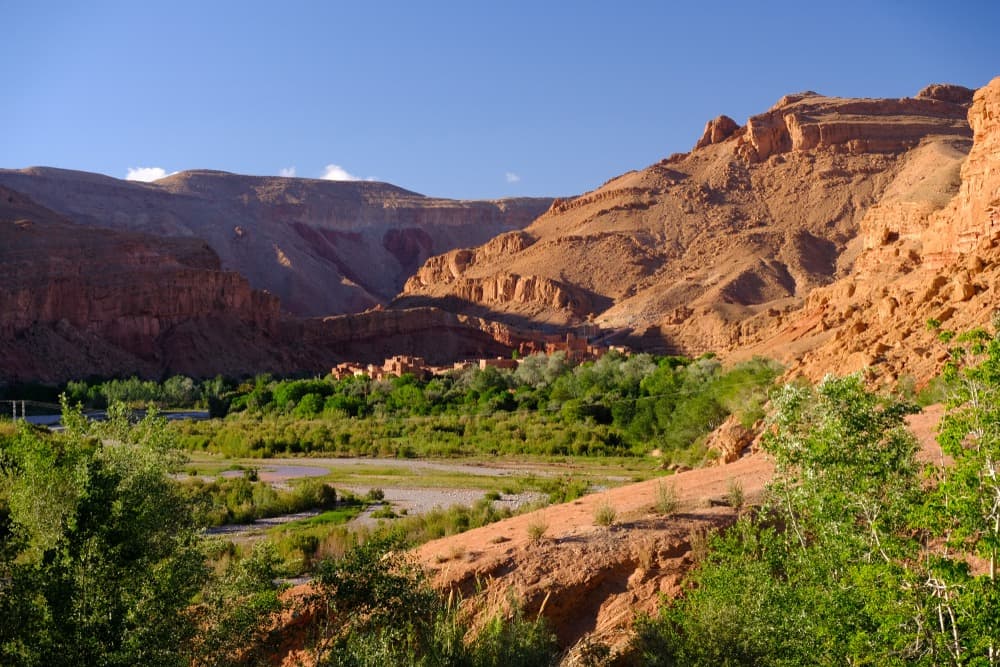
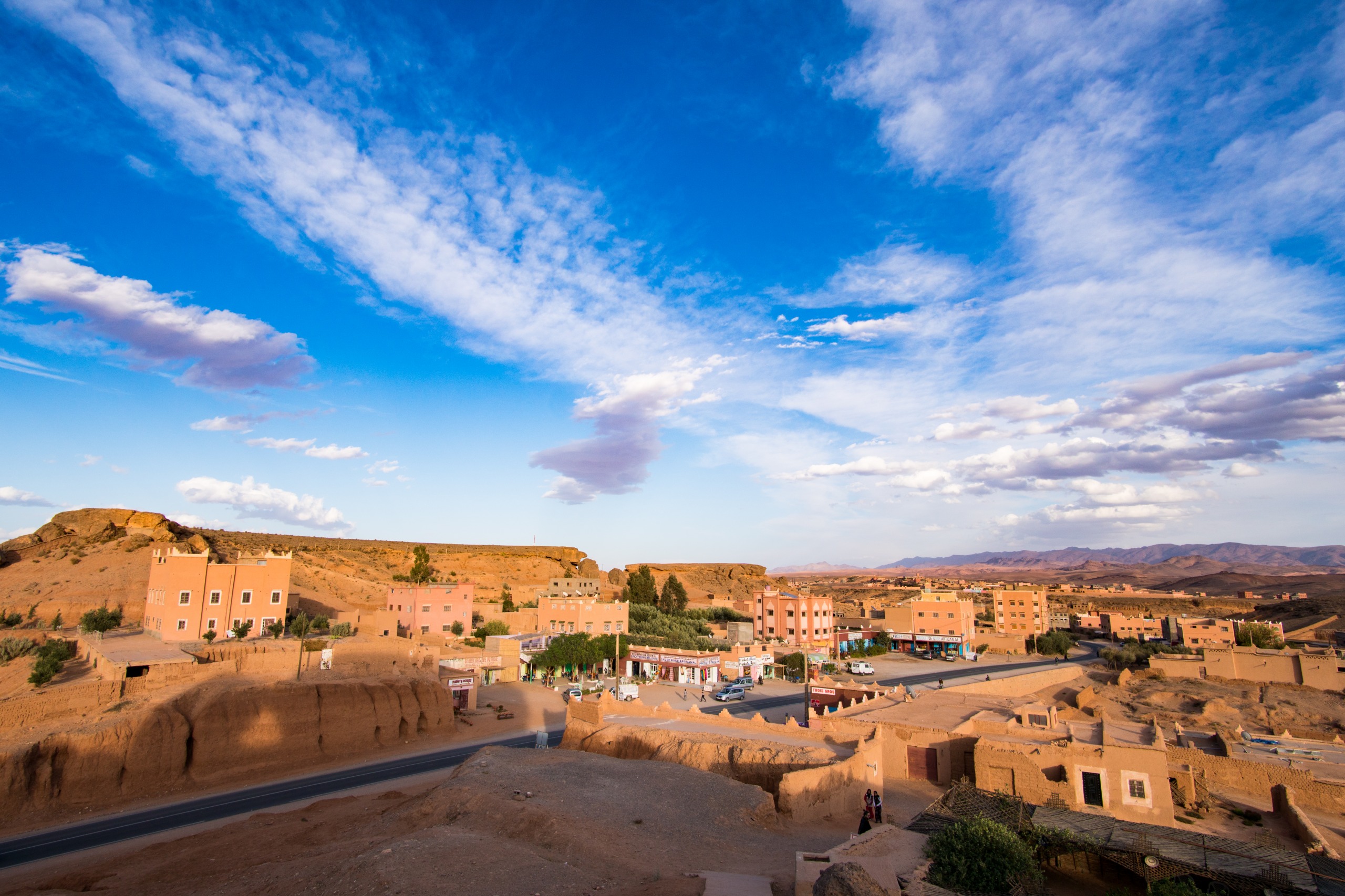
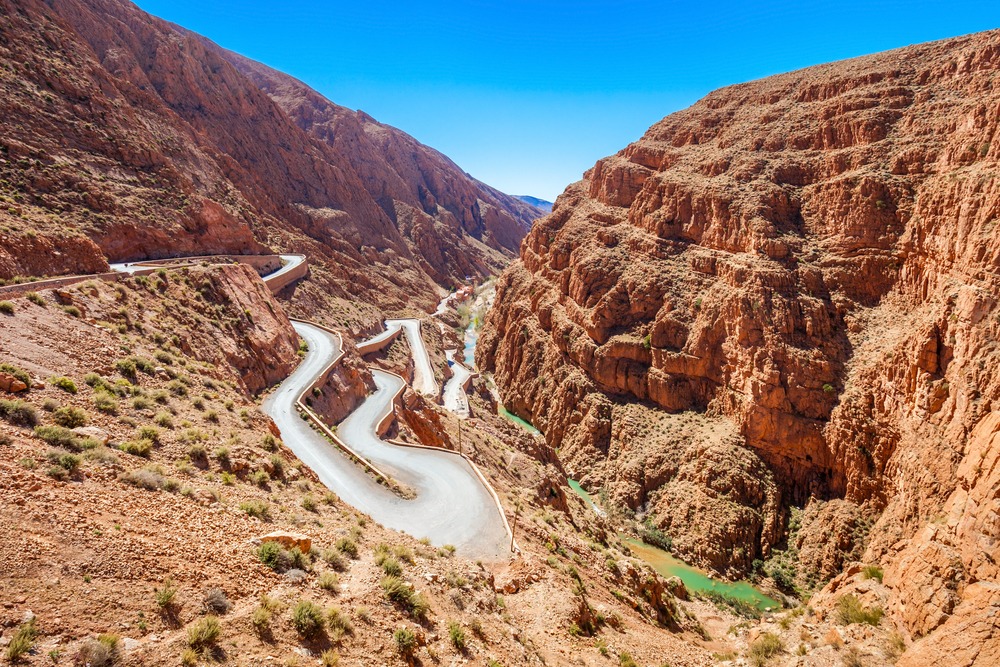
Entry is typically through Imassine, recognizable by its large rounded rock formations that seem precariously balanced. From there, a paved road of about thirty kilometers follows the M'Goun wadi to the outskirts of Bou Tharar, passing through a succession of small earthen villages. The landscapes alternate between red cliffs, palm groves and terraced cultivated plots.
The rose harvest
The picking takes place in April and May, mainly at dawn before the heat reduces aromatic yield. The petals then head to the distilleries in Kalaat M'Gouna. Expect approximately 4 tonnes of flowers to produce 1 litre of essential oil, which explains the high price of the finished product on the international market.
Rosa Bio Shop
On the main road east of Kalaat M'Gouna, the Rosa Bio shop offers a selection of derived products (rose water, soaps, oils, cosmetics). The managers are happy to explain the distillation process and can, depending on availability, give tours of their workshop.
The Festival of Roses
The Festival of Roses of the Dadès Valley takes place in Kalaat M'Gouna just after the harvest, usually in early May. Festivities span three days and bring together valley residents and visitors from other provinces. On the program: bee dance, sword dance, parades, markets for rose-based cosmetic and culinary products, and the election of Miss Roses presented on a flower-adorned float.
When to go
The optimal window falls from early April to late May, with peak intensity during the first week of May, just before or during the Festival. This is when the fields are most colorful and harvest activity is most visible.
A second interesting window opens from mid-September to mid-October: temperatures become more bearable after summer, the light is beautiful, but naturally there are no flowers. Summer should be avoided for the heat, winter remains practicable but without blooms.
Practical information
The valley can be visited in half a day to two days depending on your pace. Plan for 1 to 2 hours to drive the route from Kalaat M'Gouna to Bou Tharar with a few stops. Hikers often continue toward M'Goun over several days.
- Bring water and a hat; shade is rare outside the oases.
- Buy directly from cooperatives or identified shops rather than roadside resellers.
- Ask permission before photographing women harvesting.
- During the Festival, book accommodation in Kalaat M'Gouna several weeks in advance.
How to get there
The valley is served by the main road between Tinghir and Ouarzazate, which is paved and accessible to all vehicles.
- Tinghir → Kalaat M'Gouna: 75 km, approximately 1 hour 15 minutes.
- Ouarzazate → Kalaat M'Gouna: 95 km, approximately 1 hour 30 minutes, via Skoura.
- Kalaat M'Gouna → Bou Tharar: 30 km, approximately 45 minutes.
Without a car, buses and shared taxis run daily between Ouarzazate and Tinghir passing through Skoura, Kalaat M'Gouna and Boumalne Dadès. To explore the route along the M'Goun wadi, you then need to rent a taxi for the day from Kalaat M'Gouna or join a local 4x4 excursion.
Nearby attractions
- Toudgha Gorges: spectacular cliffs about 1 hour 15 minutes to the east, accessible from Tinghir.
- Dadès Gorges: winding road and rock formations known as "monkey fingers", north of Boumalne Dadès.
- Skoura Palm Grove: oasis and kasbahs on the route toward Ouarzazate.
- Ouarzazate: Taourirt kasbah, film studios and gateway to the Drâa.
FAQ
Frequently asked questions
Blooming extends from April through late May, with a peak generally occurring in the first week of May. Picking takes place at dawn.
It is the nickname given to the section of the Dadès valley between Kelâat M'Gouna and the village of Bou Tharar, in southeastern Morocco, at the foot of the High Atlas.
The festival takes place in Kalaat M'Gouna just after the harvest, most often in early May. Festivities last three days: traditional dances, parades, markets and the election of Miss Roses.
Yes, up to Kalaat M'Gouna thanks to buses and shared taxis on the Ouarzazate–Tinghir route. To explore the 30 km road along the M'Goun wadi, you then need to rent a taxi for the day or book a local excursion.
Half a day is enough to drive through the valley with a few stops. Allow two days if you want to visit a distillery, attend the Festival or hike toward the M'Goun massif.
To incorporate the Valley of the Roses into a broader itinerary combining Atlas, oases and desert, check out our trips to Morocco.
Interested in this visit?
We can include it in your personalised itinerary.