Berber Cuisine
Berber Cuisine
It's hard to imagine a trip to Morocco without tasting Berber cuisine! Couscous, harira, tagine, mint tea, and more. The specialties of Amazigh tribes are at the heart of Moroccan traditions and daily life.
It's hard to imagine a trip to Morocco without tasting Berber cuisine! Couscous, harira, tagine, mint tea, and more. The specialties of Amazigh tribes are at the heart of Moroccan traditions and daily life, whether in major cities like Marrakech or in remote villages of the Atlas.
Not to be confused with Moroccan cuisine, Berber cuisine is an ancestral traditional cuisine of North Africa. Moroccan cuisine naturally incorporates Berber dishes but also dishes with Arab and Jewish influences.
History
Unlike many cuisines around the world, including Moroccan cuisine which blend multiple influences to create delicious dishes, Berber cuisine has remained authentic and has not drawn inspiration from other communities. The Berbers were a nomadic people who lived in remote and difficult-to-reach regions, isolated from the wider world. Their cuisine was born from their own recipes, made from simple ingredients they could find and cultivate.
With the introduction of sugar and tea, the Berbers developed a social ritual around their consumption. Drinking tea became a true moment of sharing and gathering. The two ingredients were so highly sought after that nomads used them as a medium of exchange.
Discovering Berber Cuisine
Berber cuisine in its truest form is simple and is based primarily on wheat, barley, corn, sheep and goat milk, butter, honey, and meat. It naturally differs between the regions of the Maghreb, depending on agricultural resources.
Traditional Moroccan cuisine draws its main inspiration from the communities of the Atlas Mountains and the Amazigh tribes of the North. The dishes distinguish themselves from one another based on their land of origin, both in terms of identity and function. Some recipes date back over a thousand years.
Berber cuisine is a common foundation for many Maghrebi cuisines such as those of Algeria and Tunisia.
Breads and Flatbreads
Small breads like Aghroum hold an important place in Berber gastronomy. They are generally present at all meals, as a simple accompaniment to the dish or stuffed with meat. Breads and flatbreads are made from flour or semolina. They are kneaded and shaped by hand before being cooked in traditional Berber earthenware ovens or on tagines.
Couscous, a Tradition Inscribed in UNESCO World Heritage
Couscous is one of the pillars of Maghrebi culture. Moroccans eat it daily, but also at major events such as births, weddings, circumcisions, religious ceremonies, offerings, and funerals… It is the essential dish for Eid al-Adha, also called the "Day of Sacrifice" or "Great Festival".
Moreover, couscous symbolizes sharing and solidarity. Maghrebis serve couscous to show hospitality to guests or to strengthen friendships and alliances. The traditions of couscous were inscribed in UNESCO's Intangible Cultural Heritage in December 2020.
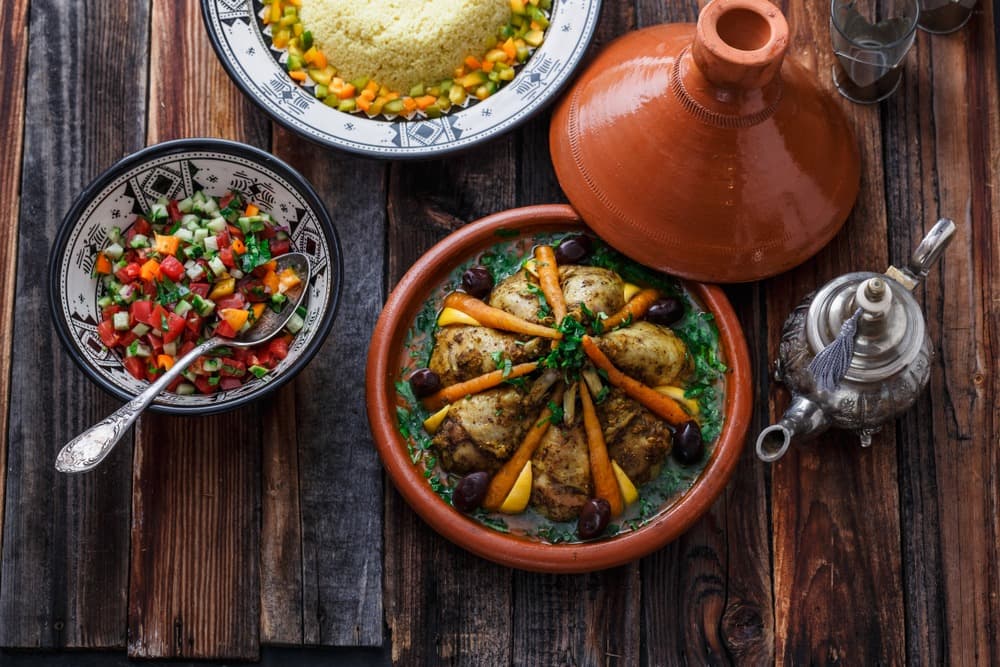
In Morocco, traditional couscous is prepared with tomatoes, chickpeas, turnips, and zucchini. It is usually served with wheat semolina and beef, lamb, or chicken. Spices vary by region. In Marrakech, residents typically use turnips and broad beans, while in the Rif, carrots and prunes are the main ingredients. On the Atlantic coast, couscous is made with fish and cilantro. Finally, in the Atlas Mountains, you will have the pleasure of tasting belboula couscous, made with barley semolina.
Tagine, the Stew of Nomads
Tagine refers both to the stew and the earthenware pot in which ingredients are slowly cooked in their own steam. On the Moroccan coast, tagine is most often prepared with fish, while in the interior, chicken and lamb are preferred. Accompaniments differ by region, ranging from preserved lemons to prunes, ginger and cinnamon, almonds and honey.
One dish deserves your particular attention: "tanjia marrakchia" which you will find, as its name suggests, in Marrakech.
Like couscous, tagine has made its way abroad. In Europe, it is highly prized at large gatherings for its convivial nature. Its richness in aromas and flavors, thanks to the spices, offers a true culinary journey.
In Morocco, there are certain codes to follow when serving tagine. For example, the best morsels are reserved for the most important guests. Then, everyone serves themselves directly from the dish with a flatbread, taking care not to touch the pot with their fingers.
Harira, Morocco's Most Important Soup
Harira is a traditional Berber soup that Moroccan women prepare for the breaking of the fast. During Ramadan, the faithful spend their day without eating or drinking, until the sound of cannons and the call to prayer ring out to announce the end of the fast. One then indulges in a few dates, sometimes buttered, a sign of sweetness, as well as a glass of milk, a symbol of purity. Then it is time to savor traditional harira with a wooden citron spoon. The soup is a saving moment, reminding us that "food is not a right, but a gift from Allah." Harira can also be served on other important occasions, such as the birth of a child, a circumcision, or a wedding.
The Moroccan harira recipe generally includes meat, lentils, chickpeas, and a whole array of spices. A bit more seasoned, bissara soup is made with broad beans. During harsh winters in the Atlas Mountains, this type of preparation warms the body and comforts the spirit.
Mint Tea, the "Berber Whiskey"
Mint tea is a tradition among peoples of arid regions. It is not only essential for quenching thirst, but also constitutes a mark of hospitality to guests and passing travelers. The beverage is usually presented in beautiful typical teapots. Once, the containers were made of silver or brass; today, stainless steel utensils are used.
In Berber tradition, tea is served three times, taking care to preserve the tea and mint leaves in the pot. The taste evolves with each serving. According to a Tuareg proverb: "The first glass is as sweet as life. The second is as strong as love. The third is as bitter as death."
A unique culinary experience
Discover the local food scene with our advisors.