Craftsmanship in Maroc
Craftsmanship is part of Maroc's historical heritage. It is also a vital pillar of the Moroccan economy. Indeed, without this craftsmanship, many families would find themselves condemned to poverty, with all the consequences that entails.
Craftsmanship is part of Maroc's historical heritage. It is also a vital pillar of the Moroccan economy. Indeed, without this craftsmanship, many families would find themselves condemned to poverty, with all the consequences that entails. The region's past, migrations, and traditions have enabled Maroc to acquire considerable renown in the manufacturing and creation of crafts linked to this art. More than seventy trades stem from Moroccan craftsmanship. It continues to grow steadily, responding to the needs of the local population, the export of products to foreign countries, and the satisfaction of the many tourists who visit this beautiful country each year.
The first inhabitants to introduce craftsmanship to Maroc were the Berbers. They began working with wool to create carpets, shaping iron and silver for jewelry, and working with clay for pottery to craft various household items. Later, other artisanal trades emerged. Moroccans began manufacturing copper tableware and ornaments, while also working with woods such as acacia, esparto grass, and sorrel. Craftsmanship is present throughout Maroc, and each region has its own specialties. If you venture toward Fès, you will discover numerous small shops and stalls in the souks displaying leather objects such as belts and bags, copper dishes and decorative pieces, silver and gold jewelry, and various handwoven fabrics embroidered with golden threads.
In Marrakech, craftsmanship focuses on leather work, copper work, and wool for carpets. In Essaouira, it centers on wood, carpets, and silver. Rabat stands as the artisanal hub for pottery. Only the city of Meknès practices damascene work. Artisans practice the art of steel engraving to create vases, jewelry, and engravings on various pottery pieces, ceramics, jewelry, and more. This is meticulous work requiring great patience and skillful mastery. This trade is passed down through generations. Certain crafts are more suited to women, such as embroidery and textile work. In Maroc, craftsmanship is a trade passed from father to son.
Ceramics, a Moroccan Specialty
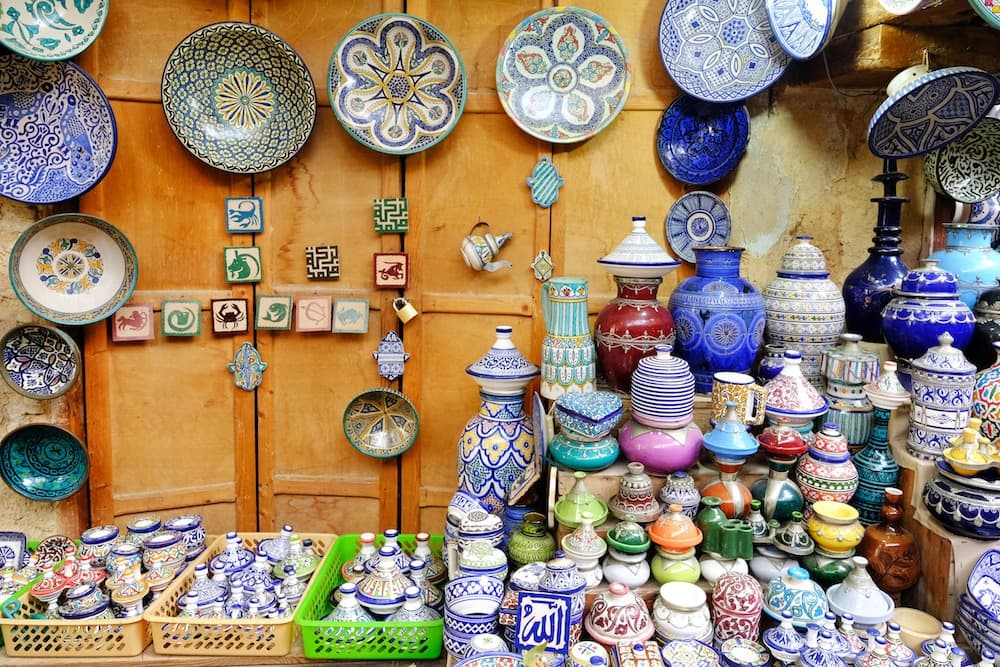
The most important specialty of craftsmanship in Maroc is ceramics. It demands a certain technical expertise. It can adorn objects and furniture, tables, and is then referred to as aesthetic ceramics. Enamels and glazes form part of decorative and architectural ceramics, used to embellish mosques or hotels, for example. Artisans practice the double-firing method. In numerous cities throughout Maroc, you can watch artisans create certain objects in their small shops in the town center. In all markets throughout Maroc, in the souks, in narrow alleys lined with small workshops, you will always find a souvenir to bring home from the multitude of artisanal products on offer, or simply purchase jewelry or clothing for your pleasure.
Craftsmanship in Maroc is one of the principal family activities. The materials worked include wood, wool, leather, silver, metal, clay, textiles, ceramics, earthenware, stone, and doum palm. Throughout the world and in our homes, often without truly realizing it, we encounter the work of Moroccan artisans. Who has not attempted to prepare tajines, and for that you need a specific vessel that, of course, comes from the Maghreb. Maroc would not be what it represents without the vibrant atmosphere in the souks, which gives tourists an impression of intoxication and a feeling of diving into the depths of Moroccan culture.
