The History of Maroc
The History of Maroc begins in prehistory. Evidence suggests that humans already inhabited the region, living by gathering and hunting with tools such as pebbles. P
The History of Maroc begins in prehistory. Evidence suggests that humans already inhabited the region, living by gathering and hunting with tools such as pebbles. The Mousterian period followed, marked by evolving tools. The Paleolithic era saw the arrival of homo sapiens, with tools discovered in Oujda. This population was eventually displaced by the ancestors of present-day Berber peoples—the Capsians, arriving from the east. During the Neolithic period, societies transitioned to settled living and the birth of agriculture.
Antiquity in Maroc
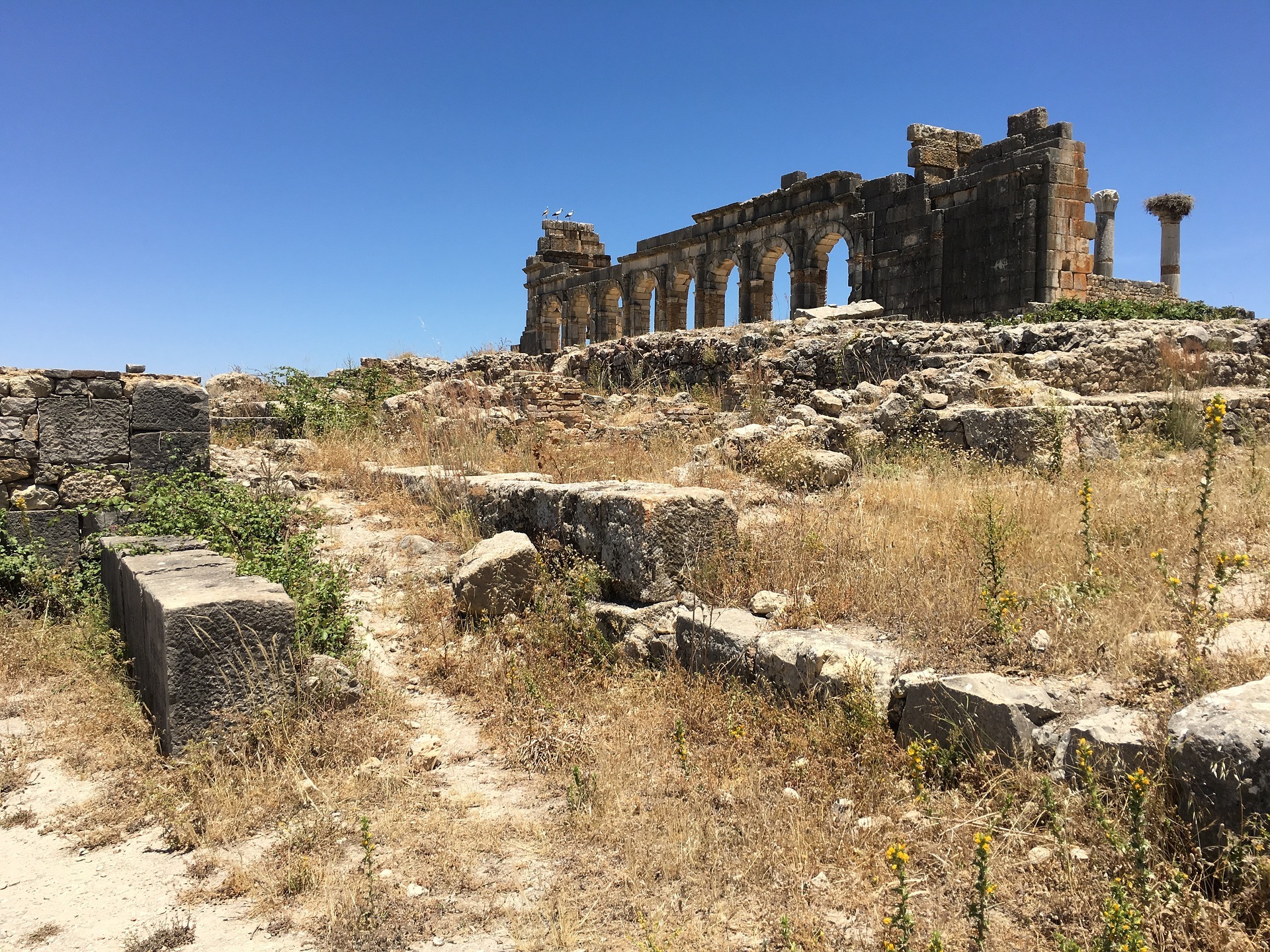
During antiquity, the Phoenicians established the first settlements along the coasts and founded trading posts such as Tangier. From Antiquity until 638, various powers sought to conquer Maroc. It would be called the Kingdom of Mauretania in the north, and later Mauretania Tingitana. The Romans attempted to settle there, but without lasting success. They began constructing monuments and exploiting the land. At the end of the Antique period, the kingdom fell under Byzantine control.
In 649, the Arabs reached the Maghreb and sought to displace the Berbers, though resistance was fierce. During this period, Islam became the dominant religion. History in this era was punctuated by revolts between Berbers and Arabs. Maroc fell under Umayyad domination, but this was overturned by the Abbasids. Total chaos ensued.
The Creation of the Moroccan Nation
The foundation of Maroc was achieved with the help of the Idrisids, who rallied several tribes, but it was the Almoravids who gave Maroc its name by establishing Marrakech as the capital. As Maroc took its place on the world stage, the rest of the Maghreb fragmented into independent territories. Disagreements emerged and foreign powers sought to seize the country. In 1911, Maroc was divided between France and Spain.
From 758 to 1664, Maroc's history underwent upheaval through successive kingdoms and dynasties: the Kingdom of Sijilmassa, the Kingdom of the Berghouata, the Idrisid Dynasty, the Umayyads of Córdoba and the Fatimids, the Meknassa and Maghraoua, the Ifrenides, the Almoravids, the Almohad Dynasty, the Merinid Dynasty, the Wattassides. The arrival of Andalusian refugees and Moriscos left their mark through architecture and fortifications, followed finally by the Saadian dynasty.
Maroc then began to assert itself under the Alaouite Sultans, the greatest being Sultan Moulay Ismaïl. This Sultan maintained cordial relations with France. However, France signed agreements with Spain, which displeased the Sultan, leading him to sever ties with France. From 1727 to 1909, numerous Sultans and battles with various countries followed. During the 19th century, Maroc became prey to foreign powers—France, Spain, and the United Kingdom—all seeking to seize the country for economic reasons. Sultan Moulay Hassan fought to preserve his nation, but upon his death, his successor Abd Al-Aziz plunged the country into grave crisis. In 1904, a cordial agreement was reached among the three powers, with Maroc reverting to French control and northern Maroc to Spain. Abd al-Aziz chose to rebel, triggering the Tangier Crisis. In 1911, the Agadir Incident provoked a military confrontation, sparked by Germany. From 1912 to 1956, Maroc existed under Spanish and French protectorate. The First World War inflicted damage on French troops stationed in Maroc. The Rif War in 1921 pitted Berber insurgents against the Spanish; despite Spain's substantial military force, it was decimated. Maroc was touched by the Second World War, and in 1942, Americans landed on Moroccan shores.
Moroccan Independence
From 1930 to 1955, efforts intensified to grant Maroc its independence. These years were filled with meetings, treaty signings, and negotiations with Spain to secure its withdrawal. In 1956, France accepted the principle of Moroccan independence, and an agreement was finally reached between Mohammed V and the Spanish king, ending Spanish occupation. Maroc became an independent nation at last, with Tangier fully integrated into the country. In 1963, the Sand War erupted between Maroc and Algeria over border disputes, but it ended quickly with borders remaining unchanged. From 1975 until 1991, Maroc fought to recover Western Sahara. Tensions continued to flare between Algeria and Maroc until 1988. That same year, Algeria and Maroc officially reconciled, each retaining its territory with borders restored. In 1989, Moroccan history took a positive turn when, in Marrakech, a meeting of five Maghrebi heads of state resulted in the creation of the Arab Maghreb Union, comprising Algeria, Libya, Tunisia, Mauritania, and Maroc.
The History of Maroc from 1991 to Today:
Maroc distinguished itself with Western nations through assistance during the Gulf War. The regime became somewhat more liberal under Hassan II. In 1999, Mohamed VI succeeded Hassan II. At the dawn of the 21st century, Maroc faced a series of crises, including the Perejil Island dispute with Spain, bombings in Casablanca in May 2003 and in Marrakech on April 28, 2011, alongside social upheavals in 2008. In 2011, King Mohamed VI called for a constitutional revision linked to the issues raised by the Arab Spring. Multiple proposals were put forward, including equal rights for women, official status for the Berber language, and expanded powers for governments. Following a public vote, the proposal was accepted and took effect in 2012.