A Week on the Roads of the Anti-Atlas
Located in the Souss-Massa region, southeast of Agadir, the Anti-Atlas is the last mountain range before the Sahara.
Located in the Souss-Massa region, southeast of Agadir, the Anti-Atlas is the last mountain range before the Sahara. It is an authentic and wild land, among the least frequented places in Morocco.
Home to the Chleuhs tribe, the Anti-Atlas overflows with surprising landscapes. Desert plateaus, mountain cirques, perched villages, canyons and palm groves—the scenery never ceases to astound with its remarkable diversity.
Discovering Taliouine and the surroundings of Tafraout is an excellent introduction to this preserved region.
Taliouine, the Saffron Capital

The Taliouine region is renowned throughout the country for saffron cultivation. It produces over 90% of Morocco's saffron and sustains the livelihoods of numerous producer families.
In the small village of Taliouine, you can visit the Souktana Saffron Cooperative, the oldest in the region, which will reveal all the secrets of this spice's production. The village is surrounded by folded desert mountains where the ochre of the earth blends seamlessly with that of the village's traditional houses.
The Tislit Gorges, located some thirty kilometers from Taliouine, are among the Anti-Atlas's natural treasures. They boast an impressive conglomerate of volcanic rocks in unusual forms, nestled in a mineral landscape. A grandiose setting that reaches its full splendor when the wadi is swollen with water, offering a sumptuous play of reflections.
The Aït Baha Road, the Most Beautiful Road in the Anti-Atlas
To fully appreciate the beauty of the Anti-Atlas landscape, head to route R105, which departs from Inezgane toward Tafraout. A majestic road where the scenery constantly changes and guarantees numerous stops along the way. The road, winding and clinging to the mountainside, offers a remarkable landscape with mountains dotted with argan trees, another treasure of the Anti-Atlas.
Along the way, stop at Imchguiguilne to visit its magnificent « agadir », a fortified granary built in dry stone, which is none other than the ancestor of the Moroccan bank. Inhabitants once preserved their grain reserves here, as well as all their precious possessions. A witness to life in bygone times that the guardian of the place will be delighted to show you.
The Tizourgane kasbah, a magnificent fortified village perched on a rocky outcrop, is also among the wonders to discover on the Aït Baha road. With the Anti-Atlas peaks as a backdrop, the setting is simply enchanting. The kasbah is today a charming guesthouse.
Tafraout, the Jewel of the Anti-Atlas
Tafraout is a must-see stop when traveling the Anti-Atlas roads. Nestled at 1,000 meters altitude, the town sits within a cirque of pink and red granite, offering a singular, lunar landscape.
The Tafraout surroundings can easily be explored on foot or by bike. You can visit the village of Adaï and its superb red mosque, a few kilometers from Tafraout on the road to Tiznit. The rocky chaos surrounding it offers beautiful hiking for those who enjoy scrambling.
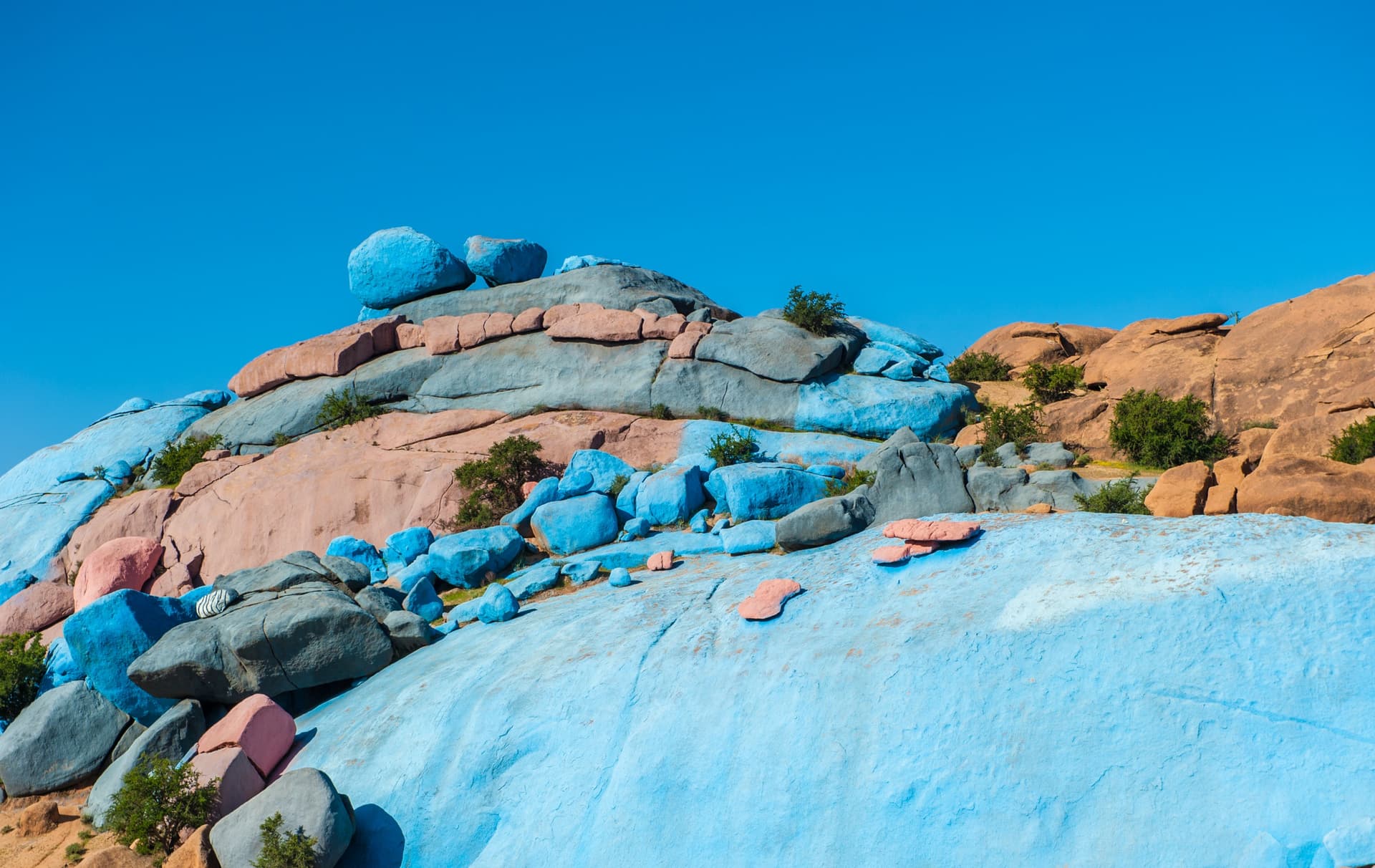
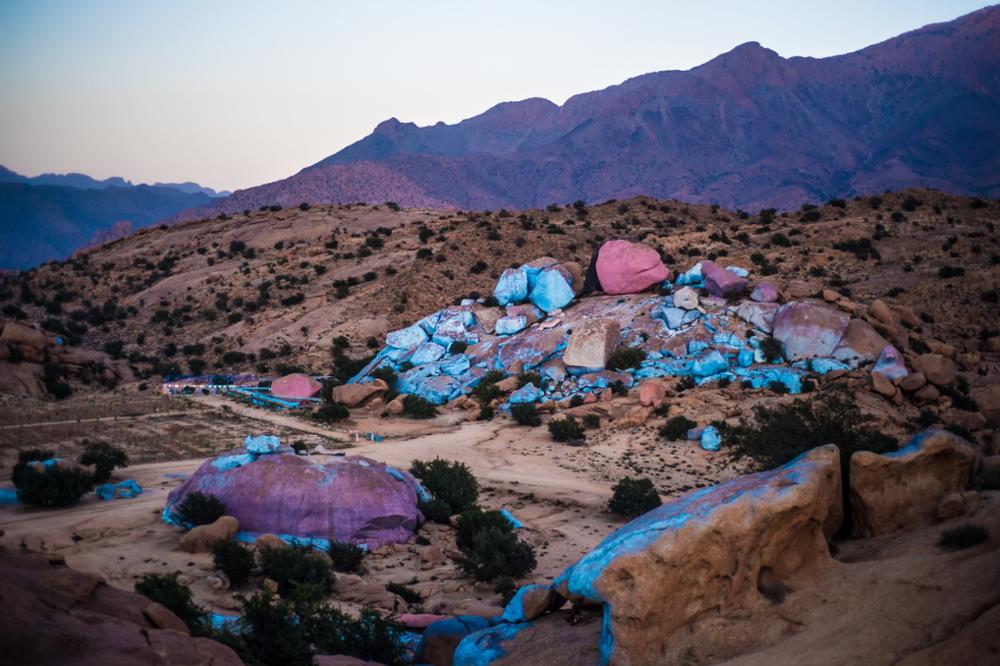
The village of Aguerd-Oudad, 3 kilometers south of Tafraout, is not to be missed for admiring its rocky pyramid overlooking the village, called Napoleon's Hat by locals. The sunrise here is simply magical. A few kilometers from the village, a track leads to the Painted Rocks, a Land Art site created by Belgian artist Jean Vérame in the 1980s. An unusual place where the artist painted enormous rounded boulders with vibrant colors.
The Aït Mansour Gorges
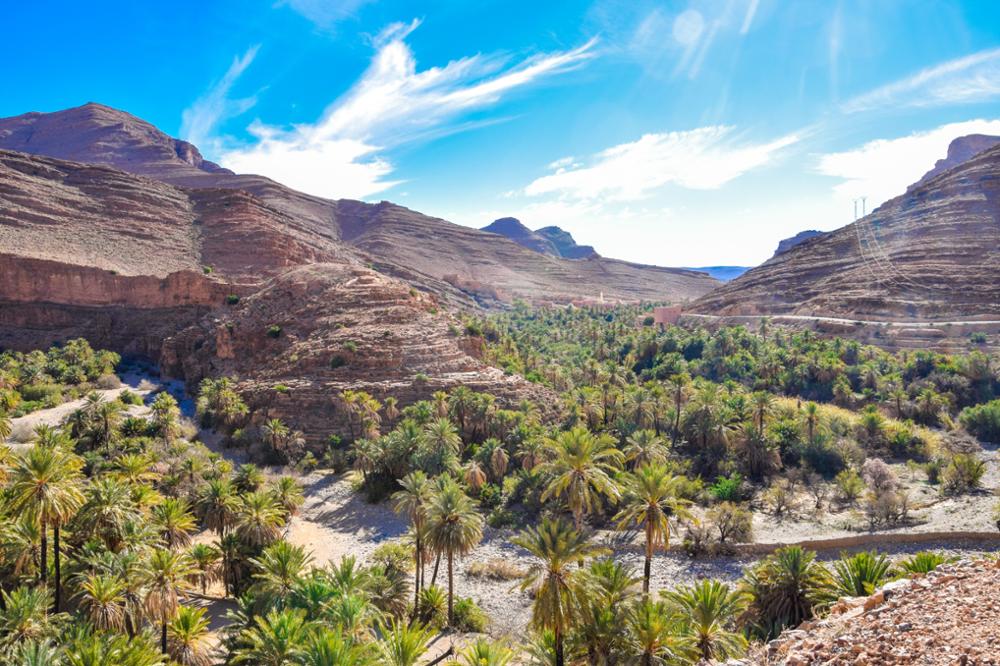
The Aït Mansour Gorges are one of the natural wonders to see in the Anti-Atlas. Located about thirty kilometers south of Tafraout, they are discovered after taking an abrupt road that descends in spectacular switchbacks to the bottom of a canyon. Around a bend in the road suddenly appears a magnificent palm grove where the green of the palms blends beautifully with the intense red of the canyon's rock walls.
The gorges can be explored on foot, by bike, or by car—they stretch for 8 kilometers—with authentic villages along the way and a few small cafés where you can stop to eat or have a cup of tea.
The Ammeln Valley
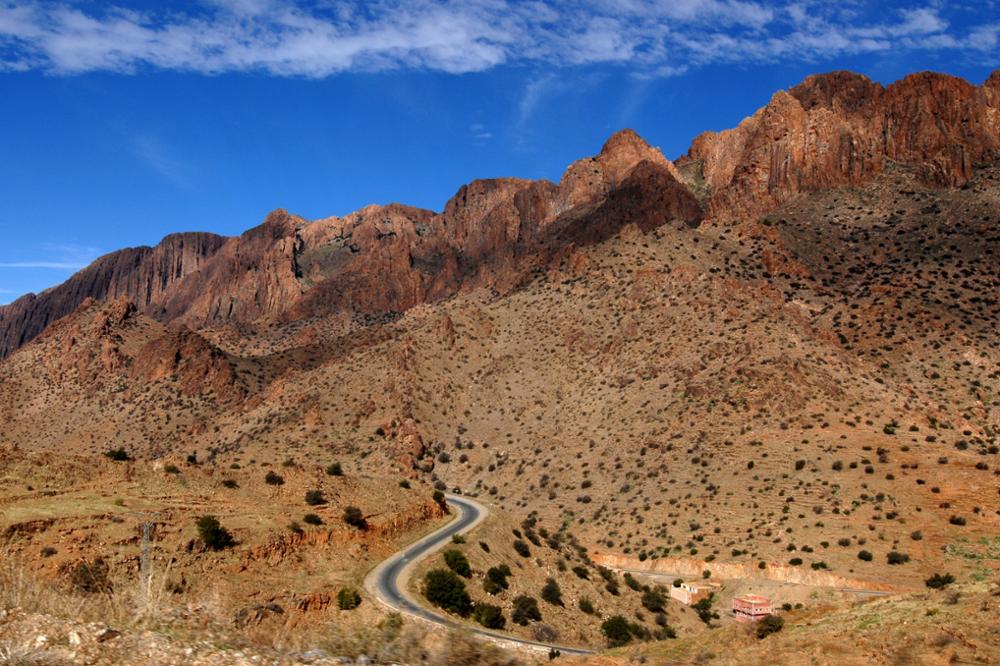
The green Ammeln Valley, dominated by the majestic Djebel Lekst peak (2,374 meters), is a true oasis stretching over 40 kilometers. It comprises 26 villages, most perched on mountainsides, with lush vegetation of argan trees, almond trees, and olive groves.
To discover the lifestyle of the valley's inhabitants, don't hesitate to visit the Traditional House of Oumesnate. A 400-year-old house turned museum where the owner will be delighted to explain the traditional way of life of the residents, punctuated by numerous family anecdotes.
Hiking opportunities abound in the Ammeln Valley, with multi-day itineraries crossing through villages. For a magnificent trek in the Anti-Atlas, take the narrow track leading to the village of Tagdicht, where the trailhead for climbing Djebel Lekst is located.
Frequently asked questions
Spring (March-April) and autumn (October-November) are the best times to explore the Anti-Atlas. In February, the almond blossoms around Tafraout offer a spectacular display. In October-November, saffron harvest season arrives in Taliouine—the perfect time to visit the cooperative and witness the harvests.
A standard car is sufficient for the main roads such as R105 between Inezgane and Tafraout or for the Aït Mansour Gorges. However, a 4x4 vehicle is recommended for certain secondary tracks, particularly those leading to the village of Tagdicht and the starting point for climbing Djebel Lekst (2,374 m).
Tafraout is about 180 km southeast of Agadir. The drive takes approximately 3.5 hours via route R105 through Inezgane and Aït Baha. CTM buses and shared taxis also connect Agadir to Tafraout from the Inezgane bus station, with regular departures.
In a week in the Anti-Atlas, don't miss: the saffron cooperative in Taliouine, the Tislit Gorges, the Tizourgane kasbah on the Aït Baha road, the town of Tafraout and its pink granite cirque, the Painted Rocks by Jean Vérame, the Aït Mansour Gorges and their palm grove, and finally the Ammeln Valley with its 26 villages.
Yes, the Anti-Atlas offers numerous hiking possibilities for all levels. The Ammeln Valley offers multi-day itineraries through its 26 villages. For experienced hikers, climbing Djebel Lekst (2,374 m) from the village of Tagdicht is an unforgettable experience. The Aït Mansour Gorges (8 km) can also be easily walked.