Discovering the Souks of Marrakech: Our Complete Guide
A stay in Marrakech is unimaginable without visiting its emblematic souks. True gateways to Moroccan culture, the souks each tell their own story.
A stay in Marrakech is unimaginable without visiting its emblematic souks. True gateways to Moroccan culture, the souks each tell their own story. Above all, they offer the opportunity for a sensory journey and a chance to meet the locals and discover their artisanal craftsmanship. Let us take you on a journey through the souks of Marrakech.
What is a Souk?
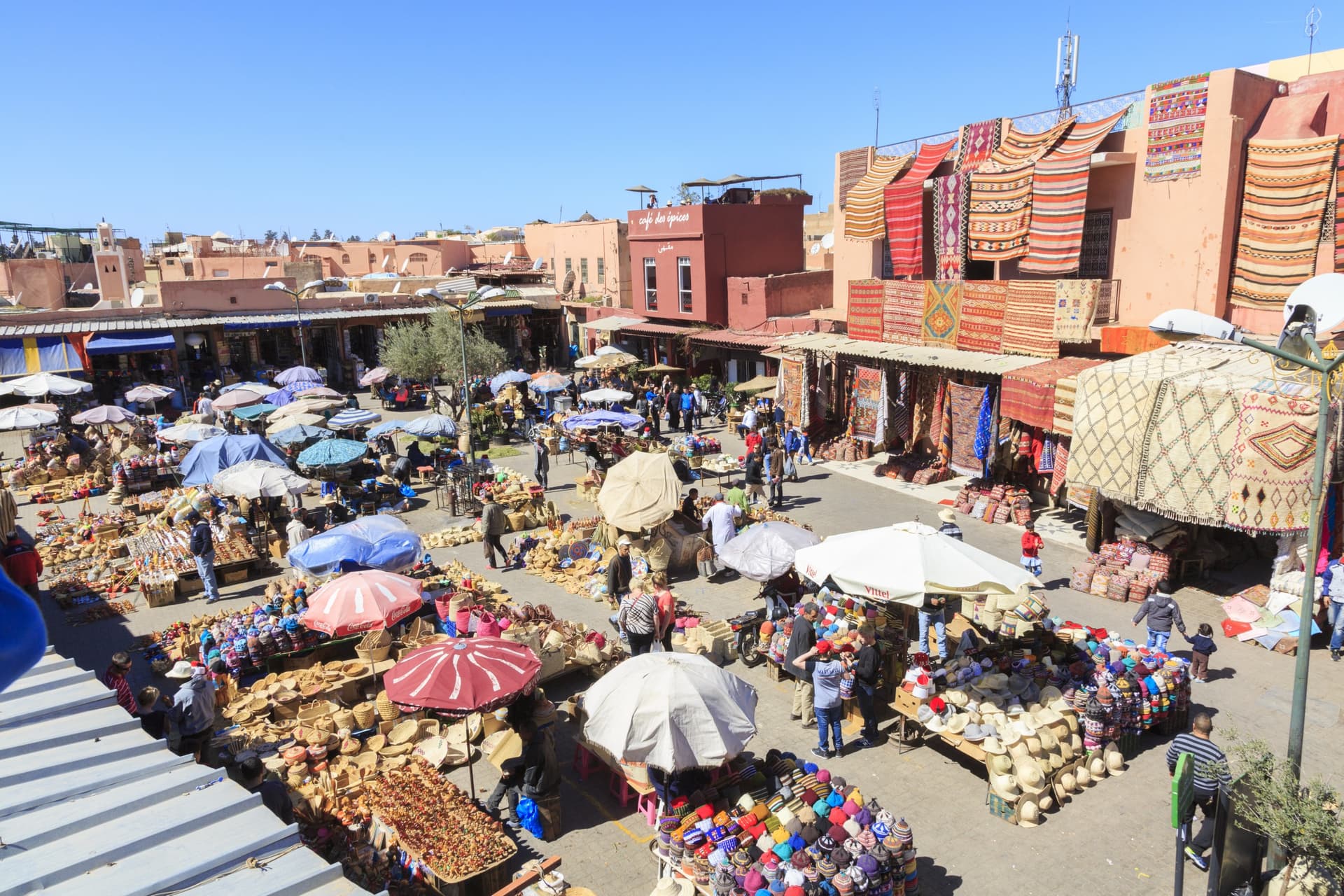
A souk simply refers to an indoor or outdoor market in North Africa and the Middle East. Originally, the souk referred to a place where locals could obtain all the necessities and essentials of daily life. Today, you can find a bit of everything there. It's worth noting that most souks are organized by type of product or at least by sector of activity.
The History of Marrakech's Souks in a Nutshell
The history of Marrakech's souks dates back over 8 centuries. Indeed, they came into being shortly after the city of Marrakech was founded in 1062.
With the help of the Almoravid dynasty, the city rapidly became a major commercial center. To supply the inhabitants of the desert and to sell their goods, the locals created small markets: this was the birth of Marrakech's souks. These markets also served as important stops for caravan traders on the trans-Saharan route.
Over time, as the city evolved, many souks came into being and developed along the streets of the medina. More than mere resupply points, the souks were (and still are) a meeting place and gathering spot for residents. It was THE weekly must-see destination.
Even today, Marrakech's souk remains one of the largest souks in Maroc. A true pillar of local commerce, these small markets are among the city's major tourist attractions.
The Main Souks of Marrakech
The majority of Marrakech's souks are located within the medina, the historic center of the Red City. Spread out north of Jemaa el-Fnaa square, the souks are arranged as professional guilds. Moreover, each souk specializes in one or more types of products. It's worth noting that most souks take their names from the products sold there.
Marrakech's Medina has a total of 18 souks (or more if you count souks that are subdivided into several areas). Here are the main souks to visit in Marrakech:
Souk Ableuh, the Souk of Preserved Fruits and Olives
Souk Ableuh is the area where you can find Marrakech's emblematic preserved fruits and olives, as well as pickles, peppers, and other dried herbs.
Souk Kchacha, the Souk of Dried Fruits and Nuts
If you're looking for dried fruits (dates, figs, apricots...) and nuts (walnuts, almonds, cashews...), Souk Kchacha is where you'll find what you're after.
Souk Semmarine, the Souk of Textiles and Pastries
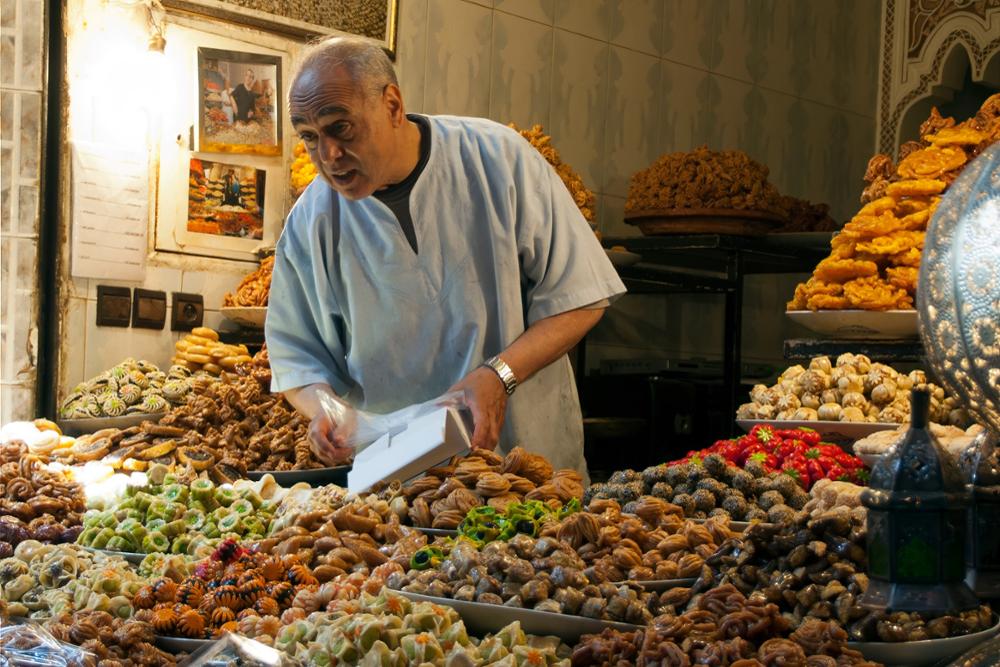
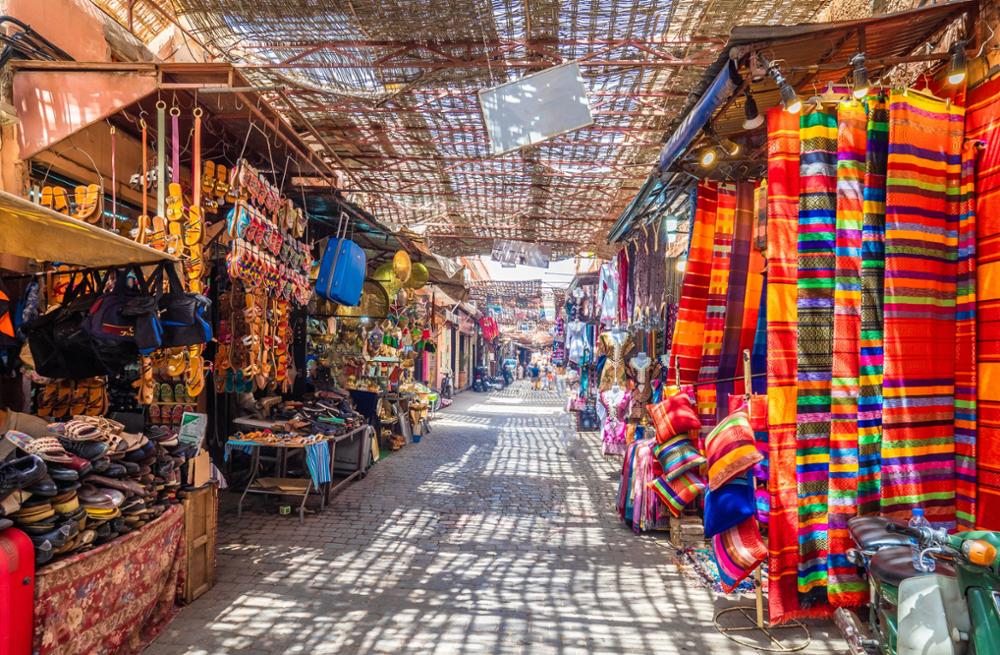
Souk Semmarine is considered the central artery of the souks. It's one of the most frequently visited souks by tourists in Marrakech. Although it's primarily focused on textiles and pastries, you can find a bit of everything there today.
Souk Laghzal, the Souk of Wool
Souk Laghzal is dedicated to wool products. It's located behind a restaurant on Rahba Kédima, the spice square. For a sobering bit of history, the slave market was held on this square until 1912.
Souk of Apothecaries, the Souk of Medicinal Herbs
Still in the Rahba Kédima area (at the southwest entrance to the square), you'll find the Souk of Apothecaries. Those sometimes nicknamed the "Berber chemists" sell all manner of unusual products such as medicinal potions, magic-related objects, artisanal cosmetics claiming to ensure eternal youth... One thing is certain, this souk is worth the detour as you'll see some strange things.
Souk Joutia Zrabi or Rabia, the Souk of Carpets
Don't leave the spice square without entering the kingdom of carpets: Souk Joutia Zrabi. Here you'll find millions of carpets in all styles (Boucharaouite, Beni Ourain, Kilims…), every color, and with varied patterns.
Good to know: if you're visiting in the afternoon, don't miss the "Berber auction," a sale by auction that takes place every day (except Friday) at 4 p.m.
Souk El Kebir, the Souk of Leather Goods
Leaving the square in the direction of Souk Semmarine, you can discover Souk El Kebir, a souk dedicated to leather goods. You'll find belts, bags, wallets...
Souk Attarine, the Souk of Spices and Coppersmiths
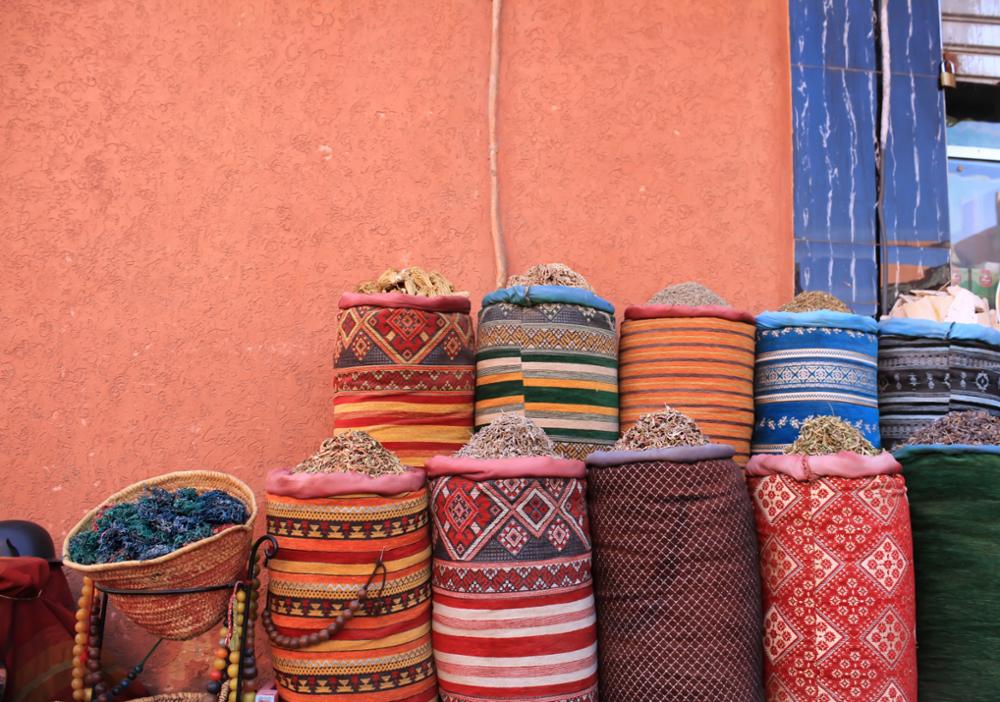
If you're looking for the famous bags and piles of Moroccan spices, Souk Attarine is where you need to go. An opportunity to buy saffron or even Ras El Hanout.
Worth noting: while Souk Attarine was originally reserved for spice merchants, it also now welcomes coppersmiths. You'll find products made of brass, silver, and other metals such as trays, teapots, lanterns...
Souk Dhabia, the Souk of Jewelry
Close to Souk El Kebir stands Souk Djabia, an area dedicated to the sale of jewelry. A true Aladdin's cave, you'll find all sorts of jewelry (silver, gold, precious stones...). It's also an opportunity to acquire the splendid traditional Berber jewelry.
Souk Kissarias, the Souk of Textiles and Fabrics
In the same area, you'll find Souk Kissarias. This covered souk is characterized by a series of galleries offering the finest textiles and fabric items.
Souk Cherratine, the Souk of Leather
A little further on, Souk Cherratine brings together all the leather craftsmen. You'll find notably bags, belts, coats, boots, poufs, and other leather items made from tanned hides from the tanners' quarter (Bab Debbagh).
Souk Smata, the Souk of Babouches
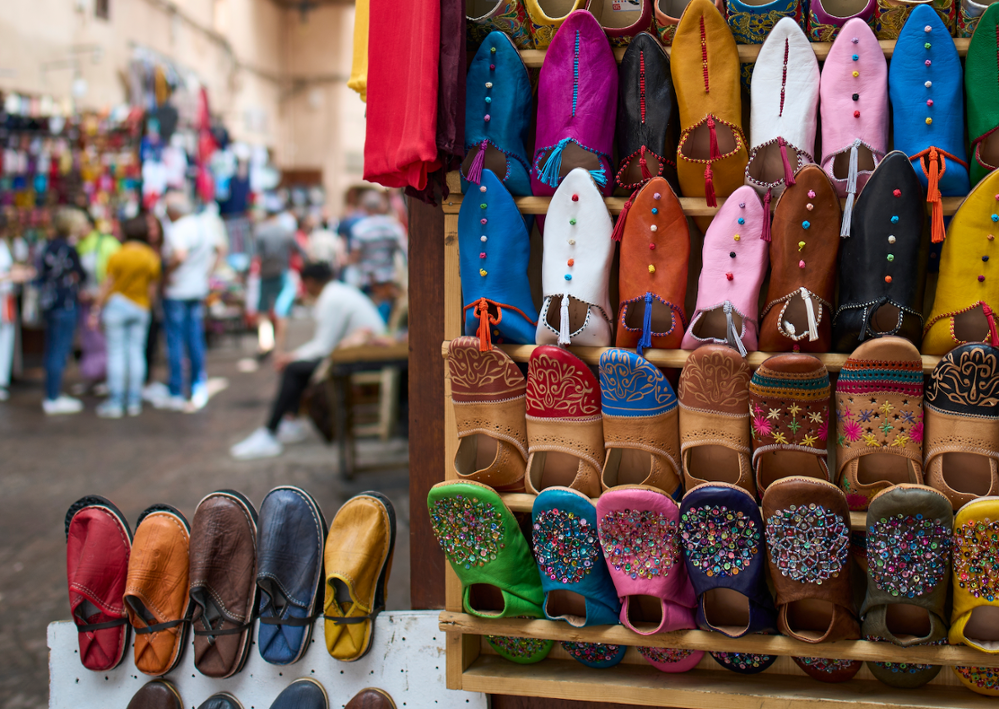
Souk Smata is among the must-see souks when visiting Marrakech. The reason for its success? You'll find traditional Moroccan slippers there: babouches! You'll find them in every color, from simple models to the most fanciful with sequins or embroidery.
Good to know: pointed-toe babouches are traditionally worn in the city, while round-toe babouches are more associated with Berber tribes.
Souk Kimakhine, the Souk of Musical Instruments
Translated as "Souk of Musicians," Souk Kimakhine brings together craftsmen making traditional Maghrebi musical instruments. Among them, you'll find ouds (lutes), rababs (violins), qanuns (zithers), darbukas (drums), watars (a type of acoustic guitar), taarijas (tambourines), qraqeb (Moroccan castanets)...
Souk Chouari, the Souk of Basketry and Woodwork
At Souk Chouari, you'll find all manner of unimaginable basketry items. Baskets, hampers, hats, mats... These items are hand-woven according to traditions spanning millennia.
In parallel, Souk Chouari is home to wood craftsmen. You'll find all sorts of items (kitchen utensils, boxes, tables, sculptures, kitchen implements...) crafted from different types of wood (pine, walnut, cedar, lemon wood, thuya...).
Souk Seffarine, the Souk of Coppersmiths
Souk Seffarine is the noisiest souk in Marrakech. And for good reason—it's the souk of coppersmiths where craftsmen have worked copper for generations. You can watch them in action as they strike metal with hammers.
Souk Sebbaghine, the Souk of Dyers
Souk Sebaghine is the souk of dyers. It's one of the most popular souks and one of the most sought-after by photographers. Indeed, you can see craftsmen plunging fabrics (wool, silk...) into massive cauldrons to color them. Once dyed, the fabrics are hung in the sun to dry.
Souk Fekharine, the Souk of Pottery
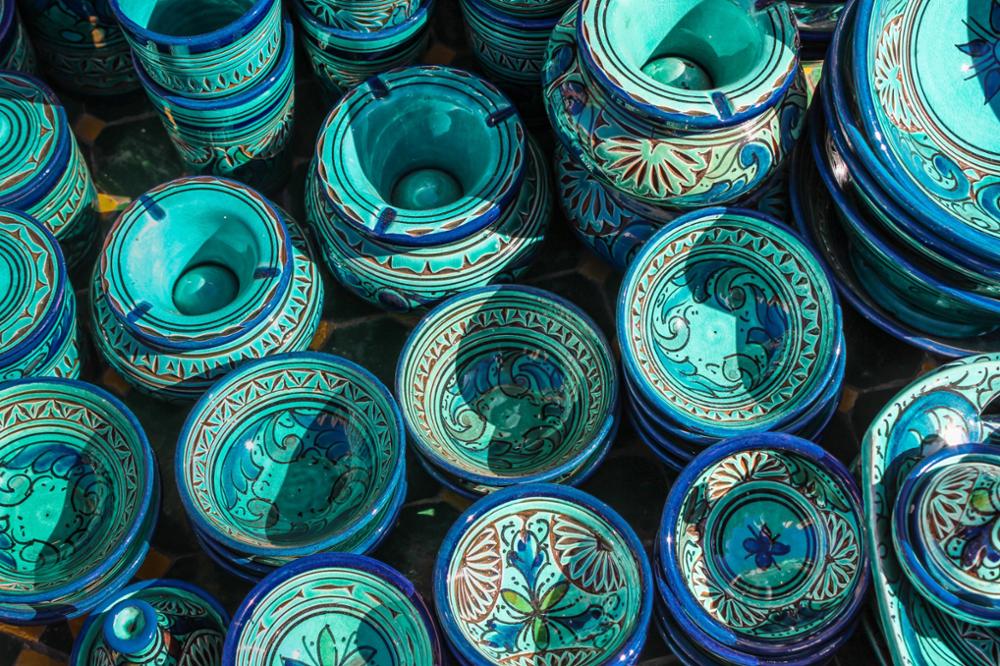
Looking for pottery dinnerware? Head to Souk Fekharine where you're sure to find what you're after! Plates, bowls, salad dishes, cups, tajine dishes... All the pottery is handcrafted by potters.
Good to know: you'll also find some pottery items at Souk Bab Khemis.
Souk Haddadine, the Souk of Blacksmiths and Ironworkers
If you're searching for the sublime pierced-metal lanterns typical of Maroc, don't overlook Souk Haddadine. It's the souk of blacksmiths and ironworkers where you'll find all manner of wrought iron items (trays, candlesticks, holders...). You can also watch the craftsmen at work. Watch out for your ears—Souk Haddadine rivals the coppersmiths' souk in terms of noise!
Now that you know what to expect, rediscover our practical guide for exploring Marrakech's souks and all our tips for mastering the art of negotiation !
Frequently asked questions
Marrakech's medina has a total of 18 official souks, or more if you count souks subdivided into multiple areas. Each souk is generally specialized in one type of product or craft: spices, carpets, babouches, pottery, jewelry, musical instruments, etc.
Among the must-sees, don't miss Souk Semmarine (the central artery), the Souk of Apothecaries for its unusual products, Souk Joutia Zrabi for its carpets with the Berber auction at 4 p.m., Souk Smata for babouches, and Souk Sebbaghine for its dyers with spectacular colors, highly sought after by photographers.
The majority of Marrakech's souks are located in the medina, the historic center of the city. They are primarily grouped north of the famous Jemaa el-Fnaa square, organized as professional guilds around Souk Semmarine which forms the central artery.
Most souks are open every day, but certain activities like the Berber auction at the carpet souk take place at 4 p.m. Monday through Thursday and Saturday (not Friday). Weekday mornings are generally the best time to avoid the tourist crowds and enjoy a more authentic atmosphere.
Yes, negotiation is an essential cultural practice in Marrakech's souks. It's entirely expected to haggle over the posted price, particularly for carpets, jewelry, babouches, and artisanal items. An unofficial rule is to propose about half the announced price and find an agreement between the two parties.
Marrakech's souks have over 8 centuries of history, having come into being shortly after the city's foundation in 1062 under the Almoravid dynasty. Initially created to supply residents and serve as stops for caravan traders on the trans-Saharan route, they evolved over time to become the commercial and social heart of the medina.