Visiting Fès: the must-see attractions of Morocco's cultural capital
Founded in 789 AD, the city of Fès is Morocco's first Islamic city.
Founded in 789 AD, the city of Fès is Morocco's first Islamic city. Counted among the four imperial cities, it has long been regarded as the country's cultural and spiritual capital. Here you'll find Morocco's oldest medina, renowned for its souks, tanneries, palaces, fondouks, and madrasas that have welcomed countless scholars, philosophers, and intellectuals. Discover everything there is to do and see during a stay in Fès.
The best things to do and see in Fès, Morocco
Here are the must-do activities during a stay in Fès:
Getting lost in the winding streets of Morocco's oldest medina
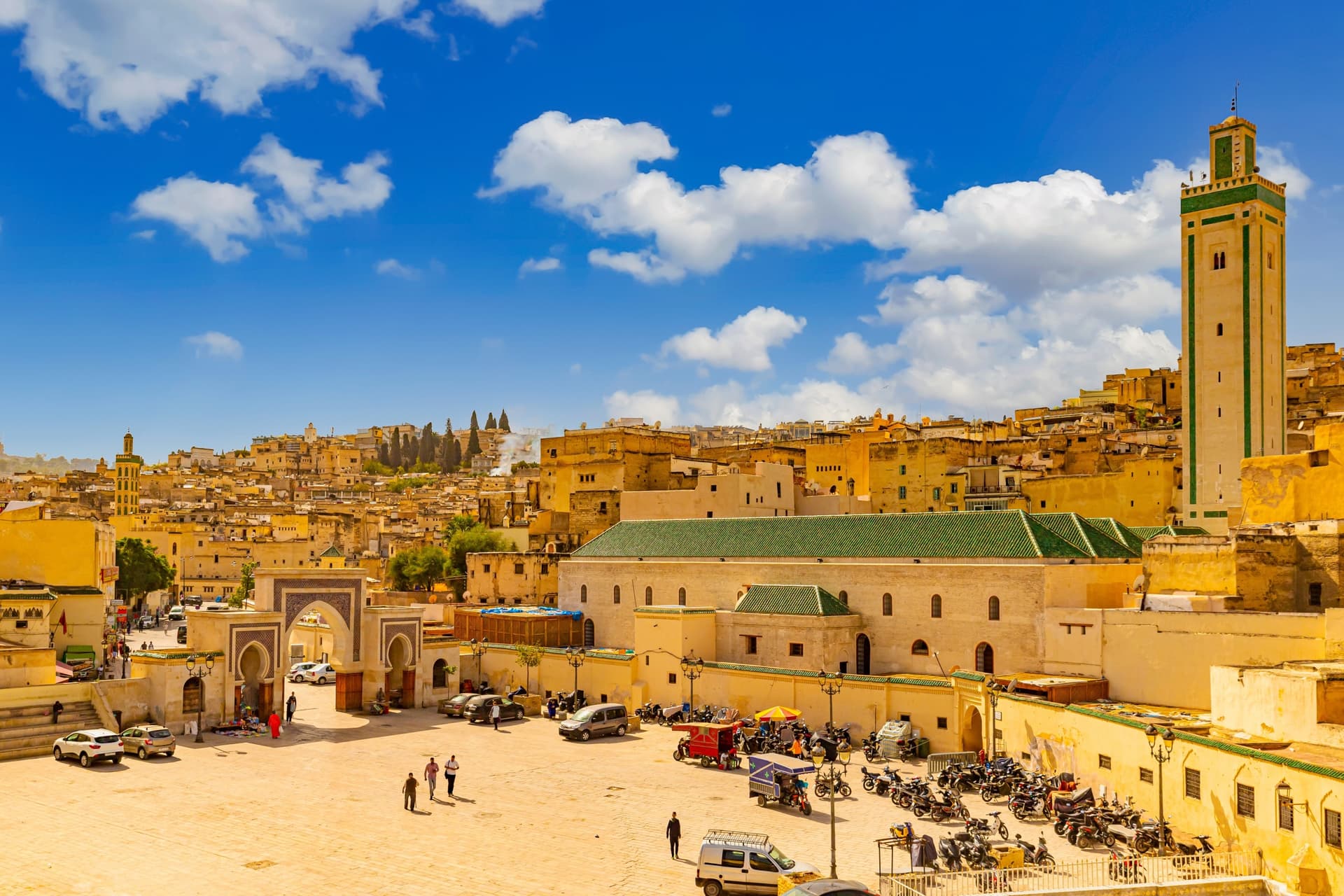
Founded between 789 and 808 by the Idrisids and then expanded in 1276 with the arrival of the Merinids, the medina of Fès is not only Morocco's oldest medina but also the largest in the world. It is here that the majority of important historical monuments are concentrated. It's also through this labyrinth of winding streets, where everything has remained virtually unchanged for millennia, that you can immerse yourself in the past and discover Moroccan traditions.
You can begin your visit by entering through Bab Boujloud, one of the 14 gates providing access to the medina. Also called Bab Bou Jeloud and more commonly known as the Blue Gate, this sublime entrance distinguishes itself with stunning blue and green mosaics. It serves as the main entrance and the ideal starting point for exploring Fès medina. From there, it's simply a matter of wandering through the old quarter discovering the souks, artisan workshops, and magnificent palaces, fountains, mosques...
Wandering through the souks of Fès

A visit to Fès medina is an opportunity to immerse yourself in the world of Moroccan souks where each street and each stall seems to tell a story... It's the perfect place to discover local craftsmanship, watch artisans at work, do some shopping, purchase travel souvenirs, and interact with the local population.
Like elsewhere in the country, the souks of Fès are organized by product type or sector. You'll find, for example:
Souk el Henna specializing in traditional beauty products like the famous henna;
Souk Attarine (or spice market) dedicated to aromatic spices and medicinal herbs...;
Souk Seffarine devoted to metal products (teapots, trays, lanterns...);
Souk Nejjjarine considered the carpenters' and cabinetmakers' souk with its many finely carved wooden objects;
Souk Chouara, one of the most famous, focusing on tanners' products (see next section);
Souk Serrajine, known for its authentic babouche slippers;
Souk Jeld, specializing in leather goods;
Souk Chemainne where you'll find many local dried fruits (dates, walnuts, hazelnuts...)...
Our advice: We recommend visiting Fès souks with a local guide. This will allow you to learn more about the history of different squares and markets, and to explore with confidence without risking getting lost or being overcharged. Feel free to contact us if you'd like to arrange a guided tour. |
Discovering Fès's traditional tanneries
The tanners' souks are among the must-sees of any stay in Fès. There are four traditional tanneries in the Fès medina, with the Chouara tannery being the oldest, largest, and most popular. Here, goat, sheep, cattle, and camel hides are treated using ancestral methods before being dried in the sun and transformed into leather goods (bags, shoes, wallets...).
Upon arrival, you'll discover a large number of stone vats filled with various liquids (such as purification treatments and natural dyes) where men work under the blazing sun treating and coloring hides. Beyond discovering the stages of leather production and the thousand-year-old craftsmanship of artisans, the scenes of the tanners offer a unique visual experience.
You can observe them and take beautiful photographs from one of the terraces of surrounding shops. Note that due to the unpleasant odors emanating from the tanneries (artisans sometimes use lime and animal excrement to treat hides), you'll likely be offered mint leaves during your visit. Take them without hesitation and hold them to your nose to mitigate the strong smells!
Visiting Dar Batha Museum
The Dar Batha Museum is among the best museums in Fès. It's a museum dedicated to traditional Moroccan arts. It houses a collection of 6,500 historical and archaeological art objects, some dating back to the Idrisid era in the 8th and 9th centuries.
You can notably admire the remains of the 19th-century minbar from the Andalusian Mosque, as well as the 14th-century minbar from Bou Inania madrasa, not to mention historic Qurans, astrolabes, musical instruments, carpets, jewelry, and a collection of local ceramics...
Installed in a sublime palace, the building itself is worth the visit. It was originally an audience hall and summer residence built in the late 19th century by Sultan Moulay Hassan I.
Visiting the Nejjarrine Museum of wood arts and crafts

Let's stay with the theme of Moroccan craftsmanship and visit the Nejjarrine Museum of wood arts and crafts. Located in a former fondouk in the heart of the medina, the site once served as a place of commerce and storage before being transformed into a museum. The visit is worthwhile just for the history of the building.
Today it houses a collection of finely crafted wooden objects. You can see furniture, musical instruments, weapons, tools, prayer beads... To finish your visit on a high note, don't miss the roof terrace of the building where you'll find a café and enjoy a panoramic view over the medina and the Fès region.
Discovering Al Quaraouiyine University, the world's first university

Close to the Nejjarrine Museum, don't miss the Karaouiyne Mosque and University (or Al Quaraouiyine). Founded in 859 at the instigation of Fatima Al-Fihri, the mosque was enlarged and transformed over time. It is considered the world's oldest university still in operation and one of the great spiritual centers of Islam. Theology is still taught here, but other subjects have been added to the curriculum since its founding, such as philosophy and mathematics.
While the interior is not accessible to non-Muslims, we still recommend taking a look to admire its façade. Visitors can also access the library.
Visiting the madrasas of Fès, the ancient Quranic schools
In the city of Fès there are two madrasas (Muslim religious educational institutions) that can be visited:
The Attarine Madrasa
Located in the heart of the medina, the Attarine Madrasa is an ancient Quranic school built between 1323 and 1325. Its name translates to "the perfumers" because of its location at the entrance to a souk where spices are sold. Visiting it, you'll be dazzled by its architecture and can discover the different student rooms that once housed pupils before it closed in the early 20th century.
The Bou Inania Madrasa
Near El Hedime Square, you can discover the Bou Inania Madrasa. Created by Sultan Abou Inan between 1351 and 1358, it is the only madrasa in Fès to have been given a minaret. It served both as an educational center and mosque before higher education was centralized at Karaouiyne University. While prayer rooms are off-limits to non-believers, you can still admire the Merinid architecture and visit the residential quarters where students once lodged.
Admiring the bronze doors of the Royal Palace
Built in the 13th century, Fès's Royal Palace ranks among Morocco's most important palaces. Extending over more than 80 hectares outside the medina, it was the residence of Morocco's rulers for many years. Today it is still occasionally used by the current king. The complex comprises a royal palace, mosque, madrasa, military square, and numerous courtyards and gardens.
Unfortunately, Fès's Royal Palace is not open to the public, but you can view its façade, notably its emblematic bronze doors and blue mosaics. To do this, head to Alaouites Square.
Exploring Mellah in Fès, the old Jewish quarter
If you pass by the Royal Palace, take the opportunity to explore the Mellah neighborhood. This is Fès's former Jewish quarter, established in the 16th century under Sultan Moulay Abdallah's reign. You can wander through its narrow streets and admire the houses with wooden balconies that contrast with the architecture of homes in the rest of the city.
Among the must-see visits in the neighborhood, don't miss the Ibn Danan Synagogue, one of the country's oldest and best-preserved, as well as the large Jewish cemetery with its white semi-cylindrical tombs that testify to the history and memory of Fez's Jewish communities.
Taking a break at Jnan Sbil Garden (or Bou Jeloud Gardens)
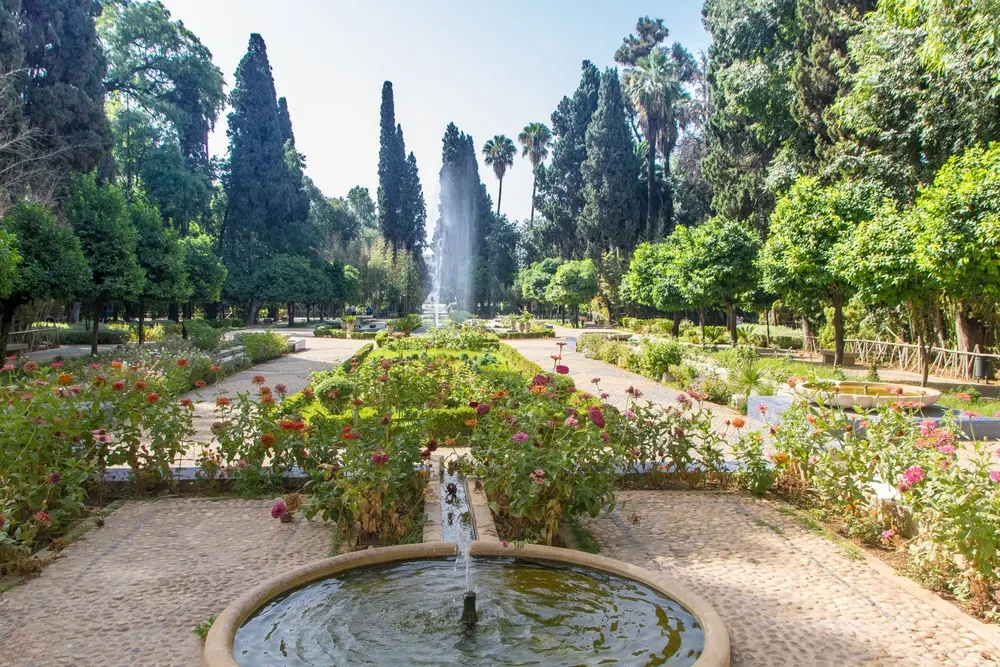
Located between the Fès el-Bali and Fès el-Jdid neighborhoods, Jnan Sbil Garden (or Bou Jeloud Gardens) is the ideal place to take a break from urban hustle and bustle. It's Fès's oldest public garden and one of the rare green open spaces in the city. Built in the 18th century before being abandoned and redesigned in an Arabo-Andalusian style, the park is surrounded by high walls.
Covering approximately 7 hectares, the park is home to over 3,000 plant species from every continent. You can stroll along the paths, see beautiful fountains, and watch locals taking family walks.
Gaining elevation at Borj Nord Fortress
Located on the outskirts of Fès, on a hill overlooking the city, Borj Nord is a historic fortress built in the 16th century, inspired by Portuguese fortress architecture of the same period. It was built by Saadian Sultan Ahmed al-Mansour to protect the city from invaders.
In addition to its role as a fortress, Borj Nord also served as a barracks and then as a prison during French protectorate times before being transformed into a Museum of Weapons in 1963. You'll discover notably an impressive collection of weapons and armor from the Middle Ages to today. Enough to learn more about the city's history as well as Morocco's military history.
Take advantage of your visits to stroll through the fortress gardens where you can enjoy a superb view over Fès medina. We'd even recommend going in the late afternoon to enjoy the panorama at sunset...
Discovering the Tombs of the Merinids
Head to El Qolla Hill, north of Fès medina, to discover a landmark site of the region: the Tombs of the Merinids.
Built in the 14th century, these royal mausoleums are believed to house the remains of the Merinid dynasty, which ruled Morocco for several centuries. Note that the exact identities of those buried here are unknown, but it's assumed to be the last Merinid sultans (the first of them being buried at the Chellah necropolis in Rabat).
Unfortunately, the tombs are in ruins and have lost virtually all their original ornaments. Nevertheless, the site is worth visiting because of the view it offers over the city. For many, it's even the best vantage point over Fès, with the Atlas Mountains as a backdrop...
What to do around Fès?
The city of Fès is full of attractions. You could spend several days here with so many discoveries to make. But if you've already seen the must-sees and want to venture off the beaten path to explore the surroundings, you can always explore the region.
Among things to do and see around Fès, we recommend:
Bhalil
Located 24 km from Fès, this traditional and lesser-known village will charm you with its authentic atmosphere and troglodyte dwellings located in the medina. For an unusual experience, you can even book a night in one of them!
Meknès
Located approximately 60 km from Fès is one of the region's jewels: one of Morocco's four imperial cities. Nicknamed the "Moroccan Versailles," the city of Meknès is home to many gold palaces and mosaics. It's also known for housing the Mausoleum of Moulay Ismaïl, a sultan who marked the origins of modern Morocco.
Volubilis
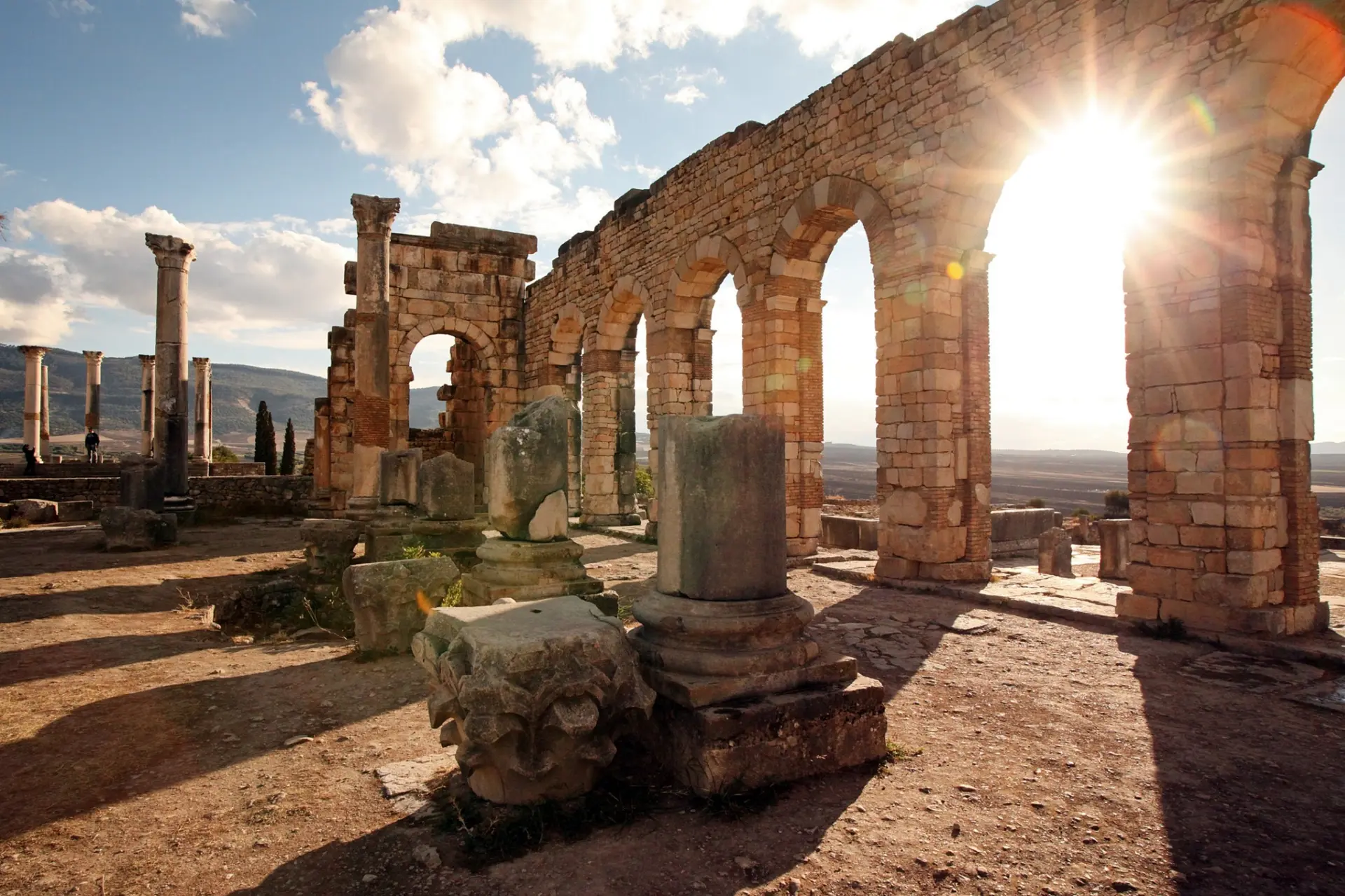
Located 70 km from Fès, this ancient Roman city is considered Morocco's most important archaeological site. You'll find remains of basilicas, triumphal arches, and mosaics... Located about sixty kilometers from Fès, Volubilis is one of North Africa's best-preserved Roman sites;
Moulay Idriss
This city owes its name to Moulay Idriss I, a descendant of the Prophet Muhammad who founded the Idrisid dynasty. It's one of Morocco's most celebrated pilgrimage sites. The city is located about sixty kilometers from Fès.
The Middle Atlas
The city of Fès can be the starting point for exploring the jewels of the Middle Atlas, such as the Ifrane National Park renowned for its hiking trails where you can see the famous Barbary macaques. We can also arrange a stay with local hosts in one of the region's Berber villages.
Practical information
What is the best time to visit Fès?
With a continental climate, the city of Fès experiences extreme variations between seasons with very cold, humid winters and hot, dry summers. Given this context, the best times to visit Fès are spring and autumn when temperatures are milder.
Good to know: Every year, at the end of May or during June, the Fès Festival of Sacred Music takes place for several days. A symbol of tolerance, the festival brings together a diversity of cultures with different religious traditions and showcases different sacred music from around the world. An event not to miss if you're passing through Fès in late spring. |
How to get to Fès in Morocco?
It's possible to reach Fès by plane from Europe or various cities in Morocco thanks to the presence of Fès-Saïss International Airport. If you're already in the country, you can take a train or bus from nearby cities or major Moroccan cities. It's also possible to rent a car or hire a private driver.
How much time should you plan to visit the city of Fès?
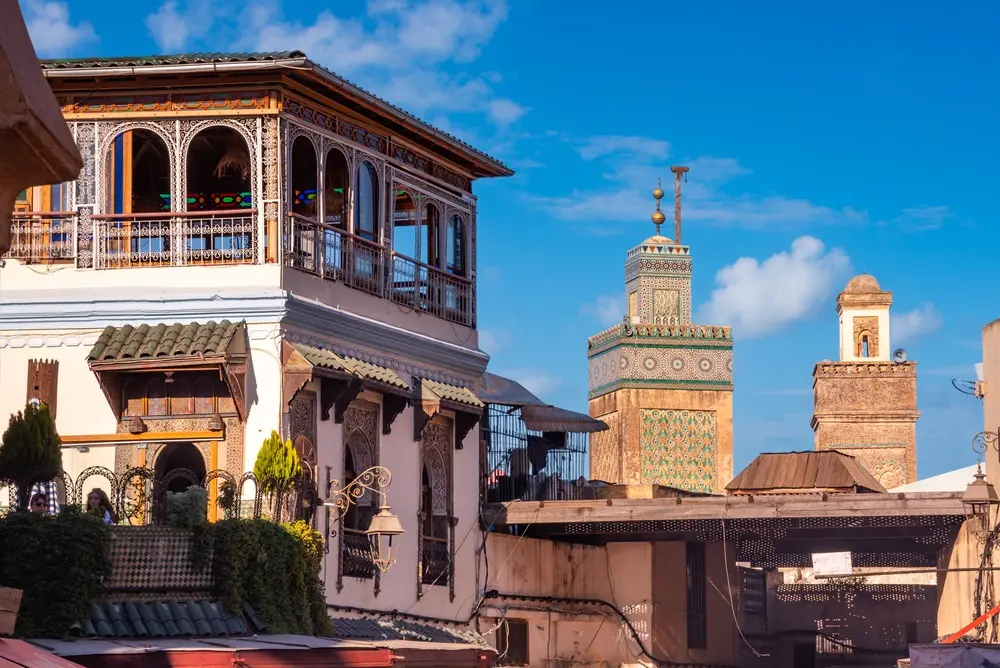
We recommend a stay of at least two to three days to discover all of Fès's must-sees. The medina alone will take a full day if you want to soak up the atmosphere of the place. A four to five-day stay will allow you to discover sites of interest in the surrounding area such as the cities of Meknès and Volubilis or even take an excursion to Ifrane National Park in the Middle Atlas.
Need help planning your stay in Fès? Feel free to contact us to help you plan your visit! Guided tours, transport and accommodation reservations, excursion planning, organization of unique experiences (night in a riad, stay with local hosts...)... We'll be happy to help you create your dream trip based on your wishes and budget!
Frequently asked questions
It's recommended to plan a minimum of 2 to 3 days to discover Fès's must-sees, with a full day dedicated to the medina. A 4 to 5-day stay will also allow you to explore the surroundings, notably Meknès, Volubilis, and Ifrane National Park in the Middle Atlas.
The best times to visit Fès are spring (March to May) and autumn (September to November), when temperatures are mild and pleasant. Summers are very hot and dry, while winters can be cold and rainy. If you visit in late May or June, you can also attend the famous Festival of Sacred Music.
Yes, Fès's tanneries are accessible to tourists. The Chouara tannery, the oldest and most famous, can be observed from the terraces of surrounding leather goods shops. It's advisable to bring mint leaves (usually provided at the entrance) to mitigate the strong odors coming from the dye vats.
A local guide is not mandatory, but it's strongly recommended to visit Fès medina. The maze of streets can quickly disorient visitors unfamiliar with the area. A guide will allow you to better understand the history of the places, discover hidden spots, and avoid the frequent scams in the souks.
No, the interior of Fès's Royal Palace is not open to the public as it is still occasionally used by Morocco's king. However, you can visit Alaouites Square to admire its majestic façade, its emblematic gilded bronze doors, and its blue mosaics.
Fès is served by Fès-Saïss International Airport, with direct flights from several European cities. Once in Morocco, you can also reach Fès by train or bus from Casablanca, Marrakech, Rabat, or Meknès. Car rental or hiring a private driver are other practical options.