Traditional and Modern Dances in Morocco
Numerous and diverse, dances in Morocco vary by city and region. In the Rif mountains, the traditional dance is called reggada. It draws directly from ancient warrior rites.
Numerous and diverse, the dances of Maroc vary by city and region. In the mountains of the Rif, the traditional dance is called reggada. It draws directly from ancient warrior rites, with dancers performing multiple shoulder movements, striking the ground with their feet or with a stick—a way of declaring to their enemies: "This land belongs to me."
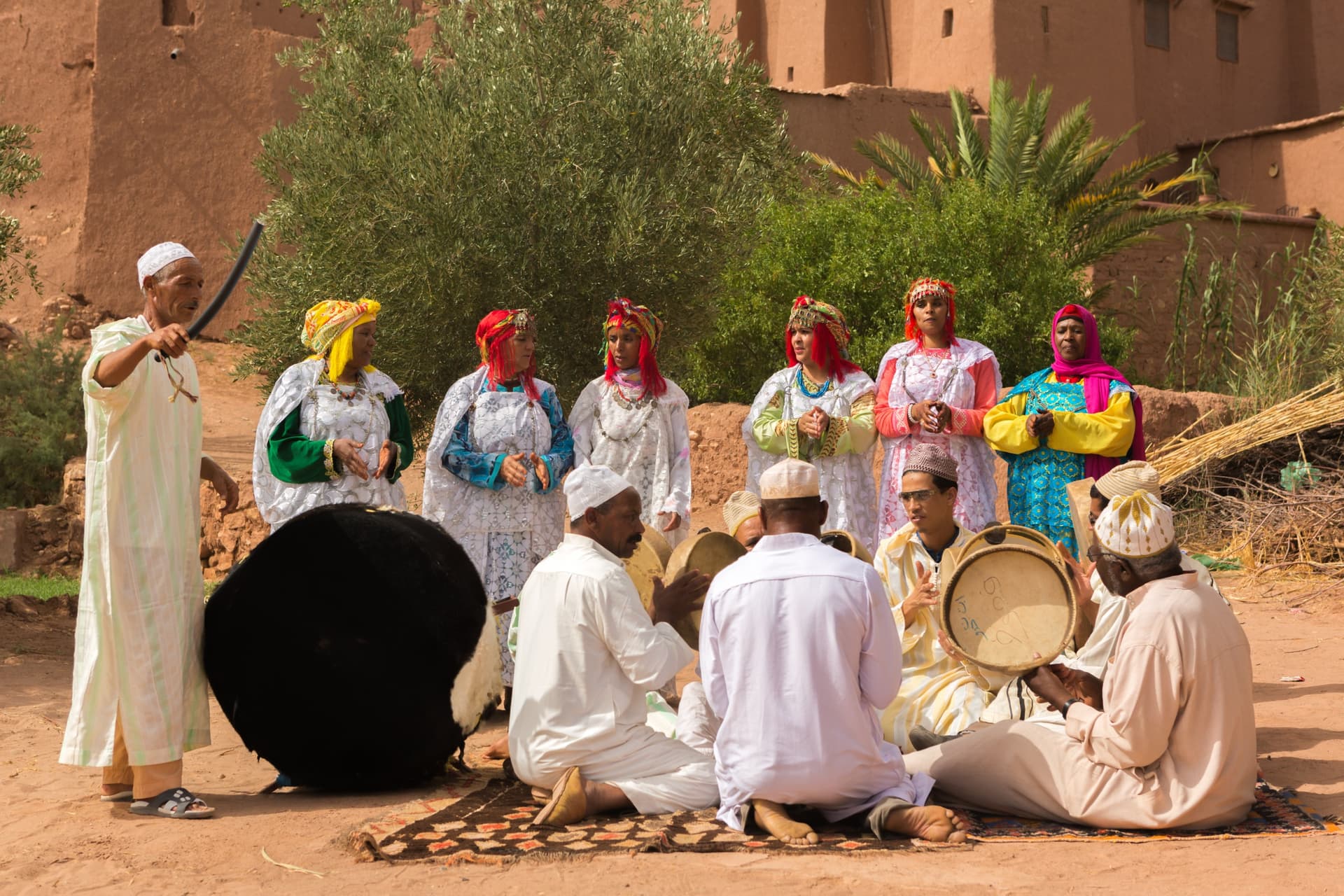
A celebration dance performed during major family events or to mark the end of the harvest, ahidous is a tradition brought by Berber tribes from the Moyen-Atlas. The dancers, men and women alike, gather in circles, semicircles, or in two rows, moving to the rhythm of the bendir (tambourine) while stamping the ground in cadence. They stand very close to one another.
Another dance born in the Moyen-Atlas: the guedra. A woman dressed in blue moves among the singers, performing rather sensual movements. Very different and originating in the Souss basin, the ahouach is performed in the evening around a fire. The women, wearing their finest clothes and silver jewelry, form a circle. They create arabesques with their hands. Aesthetic and technically demanding, this dance begins in a vertical position, motionless, with all movement flowing vertically upward.
Less well-known yet equally spectacular, Taskiwine is a warrior dance performed by men. Armed with their powder horns, they make their shoulders vibrate in rhythm. And there's the dagger dance, called tissint, performed south of Agadir. Today all these Moroccan traditional dances are showcased in beautiful performances and hold a place of honor at major international dance festivals, such as the one in Asilah, in Maroc.
Belly dancing, by contrast, is not a standalone Moroccan tradition. That said, it's customary in many restaurants to feature performances of this Oriental dance late in the evening.
Contemporary dance, meanwhile, is less well-known. Yet specialized schools, performance troupes—notably the companies Nawal and Anania—and events like the "Rencontres chorégraphiques de Marrakech" (Marrakech Choreographic Encounters) are slowly driving change. Today, only about twenty Moroccan dancers create ballets, and only three companies exist. The government, particularly through the Ministry of Culture, is beginning to recognize the importance of this art form and is now willing to provide grants to support contemporary dance.
