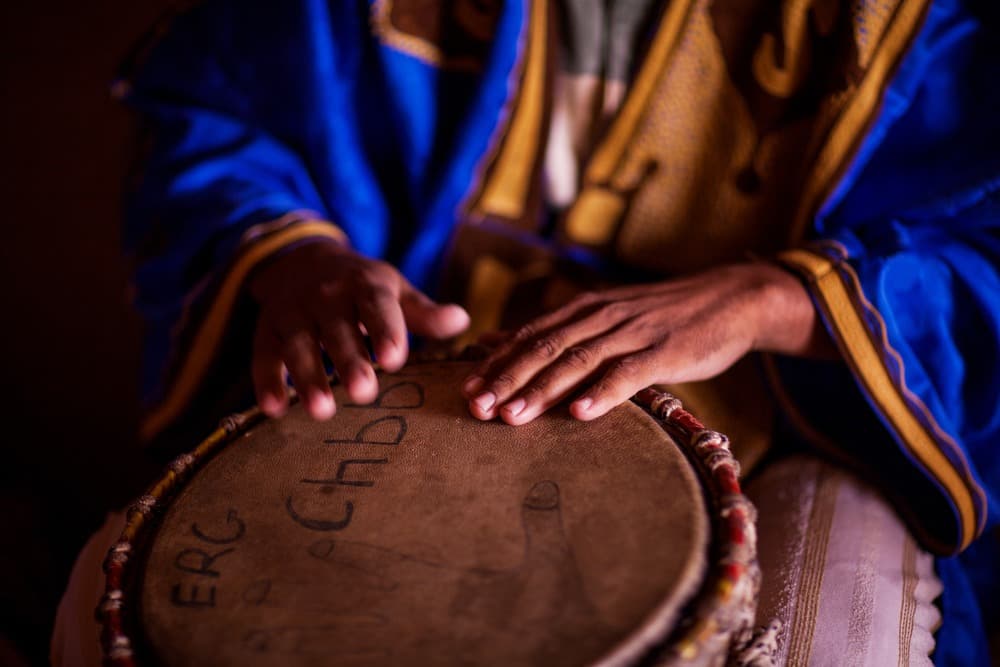
Music in Morocco
Visiting a country is a way to immerse yourself in the daily life of its inhabitants. Music is one such custom, and in Morocco, it is omnipresent, yet remarkably diverse.
Visiting a country is a way to immerse yourself in the daily life of its inhabitants. Music is one such custom, and in Morocco, it is omnipresent, yet remarkably diverse.
Moroccan Culture
Discovering Morocco means embracing its culture and traditions, and music is woven into the fabric of both. Musical expression in Morocco is multifaceted, yet certain threads connect the different regional forms.
Moroccans, as a rule, embrace all forms of musical expression, which explains this musical multiculturalism. When a musical style from Algeria arrived in the first half of the twentieth century—one that recited laments and hopes over energetic Oriental rhythms—Morocco embraced this new form wholeheartedly. Today, the country is recognised for the calibre of its artists working in this distinctive style: Raï.
Yet when you visit Casablanca, you'll discover that music transcends any single genre, opening itself to all musical forms. This openness comes to life each July with the Casablanca Festival. It's no coincidence that Morocco was among the first countries to adopt France's Music Day celebration.
Venture beyond Morocco's major cities and explore the country's 16 regions, and you'll encounter as many musical forms as regions visited.
One Music or Many
As you travel deeper into the South, you'll feel the Andalusian influence in the rhythms and instruments cherished throughout Morocco. Around a bend in the road, you may encounter genuine poems set to music. Though the lyrics may escape you, they're as melodic as their musical accompaniment. You're listening to Al Malhoune, an ancestral poetic art form unique to Morocco.
Your journey through the country will also introduce you to another beloved Moroccan musical form: chaabi. Originally reserved for the many moussems scattered across Morocco, as well as wedding celebrations and popular festivals, chaabi has now spread throughout the country. It's not uncommon to hear performing troupes singing it spontaneously on street corners.
If you hear chaabi performed in the Berber language, you may have the privilege—if tradition is respected—of witnessing choral ensembles of men and women led by a Raiss. Always dressed in a white caftan, he typically wears a traditional dagger at his side. This folk tradition is as integral to Morocco's music as the dances that have evolved around these popular musical forms.
