The Mosques of Morocco
Mosques are places of devotion where Muslims gather for religious practices. They are the principal institutions of Islam.
Mosques are places of devotion where Muslims gather for religious practices. They are the principal institutions of Islam. The architecture of Arab mosques is based on the same concept, a more or less spiritual model. The layout is identical for all buildings. It is called "hypostyle," which means the space is enclosed and the ceiling is supported by columns. Mosques are rectangular or square in form. They are equipped with a porticoed courtyard and a prayer hall.
Mosques consist of a minaret, which is generally quite tall, and which towers above all other buildings so it can be seen from everywhere. It serves as a call to prayer, which can be made by loudspeakers. They can be cylindrical, square, spiral, octagonal, massive, or slender. The domes are cylindrical and cover the entire prayer area. The dome is generally decorated, and some are truly of great beauty. The prayer hall must be austere. It contains no images or sculptures. Men stand in front of women for prayer. However, in many countries, men and women are separated. Carpets are placed on the floor facing Mecca. The mihrab, which is a lectern or seat, is most often dedicated to Friday prayer. It is forbidden to speak in a mosque. You must remove your shoes before entering to respect the sanctity of the place. Non-Muslims are not permitted to enter these places of worship.
Mosques in Morocco
In Morocco, there are numerous mosques and it would be difficult to list them all. To help you, we provide a list of the most beautiful and well-known ones, though the list is lengthy. The Bab Berdieyinne Mosque is located in Meknes. It was built by Alaouite Sultan Moulay Ismail. Its area is 620 m². Its minaret is very tall and square, it is ochre in color, very austere, yet nonetheless superb. The El Mouassine Mosque is a religious building located in Marrakech. It serves not only as a place of prayer but also as a place of culture. You will find a library, a hammam, a medersa—that is, a secular or religious school, but it can also be a theological university—and a public fountain.
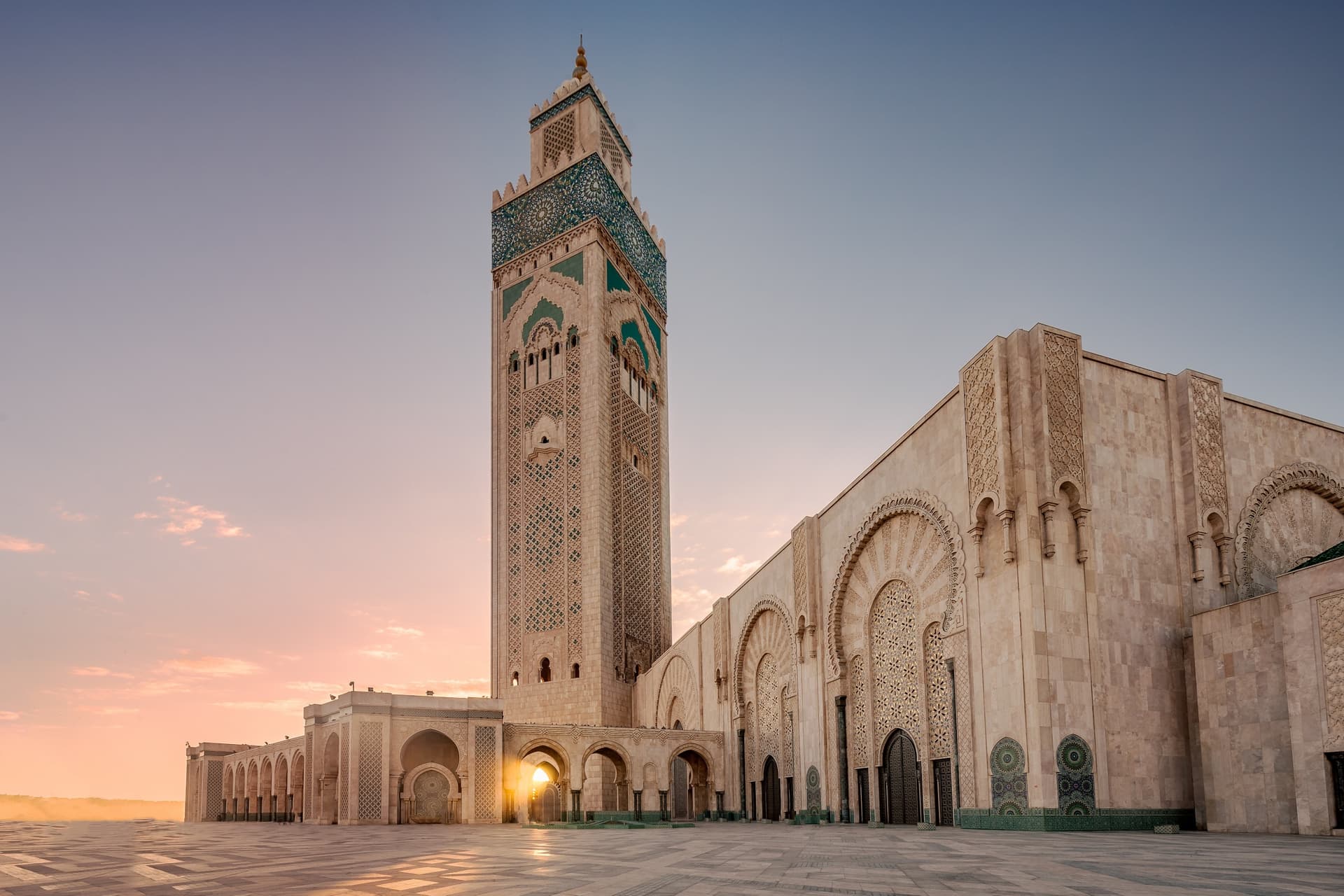
The Hassan II Mosque in Casablanca is partly built over the sea. Its minaret is approximately 200 meters high, the mosque is white in color and its roof is green. It is not simply a place of prayer, but also a place of culture and social life. Indeed, it sits on a surface of 9 hectares and you can find within it a library room, a museum that recounts its history, a school where the Quran is studied, baths, an ablution hall. It has a retractable roof and its prayer hall can accommodate up to 25,000 worshippers. It is the third largest mosque in the world.
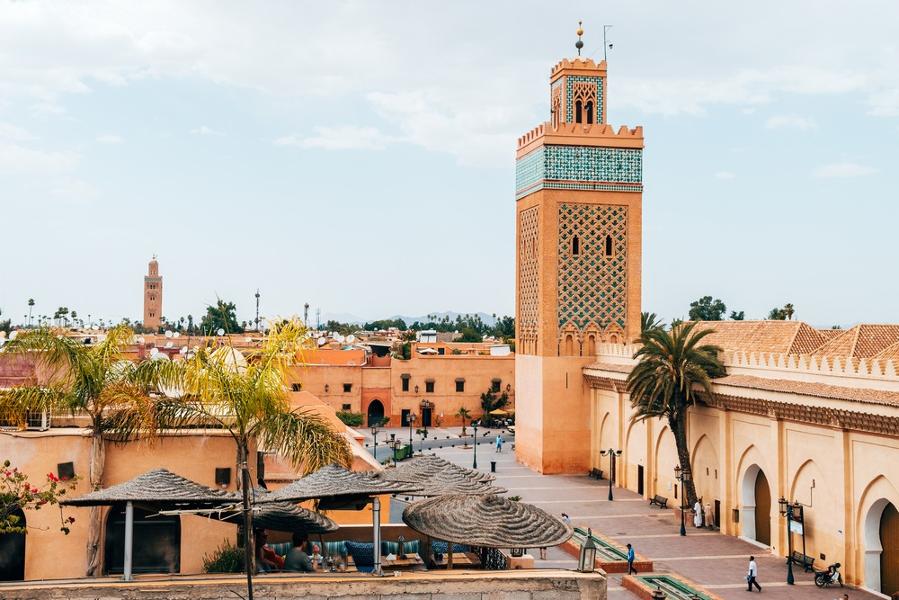
The Mosques in Morocco all have their own particularities. The Koutoubia Mosque is located in Marrakech. It is also called the "Mosque of Booksellers." It is surrounded by lush vegetation, and you can stroll to admire its garden. It is organized in a T-shape. It is entirely typical of the Arab hypostyle plan. It comprises 17 naves, supported by white columns, and it has a prayer hall that can accommodate up to 20,000 people. The architecture is austere, yet it radiates a moving beauty.
The Andalous Mosque is located in Fès. It was built in the year 859 and was restored by the Alaouites. To reach the ornate portal, with its beautifully carved awning, a minaret decorated with green faience, you must climb a few steps. It has a courtyard, a fountain, and a library. The University of Al Quaraouiyine in Fès is a former mosque that was transformed into a public university. It is magnificently decorated, T-shaped, white in color with a green roof. Its main door is covered with wood, and at the center, an interior courtyard and a fountain complete the decor. From a place of worship, it became a place of culture and learning. In the 12th century, it was one of the first universities in the world. The Mosque of the Golden Apples and the Hassan Tower Mosque are also very beautiful religious buildings to visit.
The Mosques in Morocco are numerous, ranging from the smallest to the largest. Some are in poor condition, especially in small remote villages, but they all have their importance and remain the place most frequented by the faithful. They are magnificent in their sometimes original architecture, their carefully considered decoration, or their austerity. Each has its own appeal and attracts many tourists through their local curiosity. Mosques are not simply places of prayer, but some are also places where Muslim culture is learned, others are spaces where a part of social life holds importance, always with reverence, respect for others, and cleanliness. Some of these mosques are places of learning, and a few have become universities. It is an entire world to discover, a different way of living, and a profound belief in their religion.
Frequently asked questions
Most mosques in Morocco are reserved for Muslim worshippers. However, some are exceptions: the Hassan II Mosque in Casablanca is open to non-Muslim visitors and offers paid guided tours. It is advisable to inquire beforehand and always respect dress codes (cover shoulders and knees, remove shoes).
The Hassan II Mosque in Casablanca is the largest mosque in Morocco and the third largest mosque in the world. It can accommodate up to 25,000 worshippers in its prayer hall. Its minaret, standing at approximately 200 meters high, is also the tallest in the world.
The Koutoubia Mosque is the most iconic in Marrakech. Nicknamed the 'Mosque of Booksellers,' it is surrounded by a beautiful garden and is a symbol of the city. Its silhouette is visible from many points throughout Marrakech. Note that the interior is reserved for Muslims, but the exterior and garden are accessible to all.
The University of Al Quaraouiyine in Fès is a former mosque transformed into a public university. Founded in the 9th century, it is considered one of the oldest universities in the world still in operation. Magnificently decorated, it combines religious heritage and academic excellence, and testifies to Fès's intellectual influence across the centuries.
When visiting a mosque in Morocco, it is imperative to remove your shoes before entering, dress modestly (shoulders and knees covered, headscarf recommended for women), not speak loudly, and avoid visits during prayer times. Respect for the place of worship and the worshippers is paramount.