Moroccan Tajines
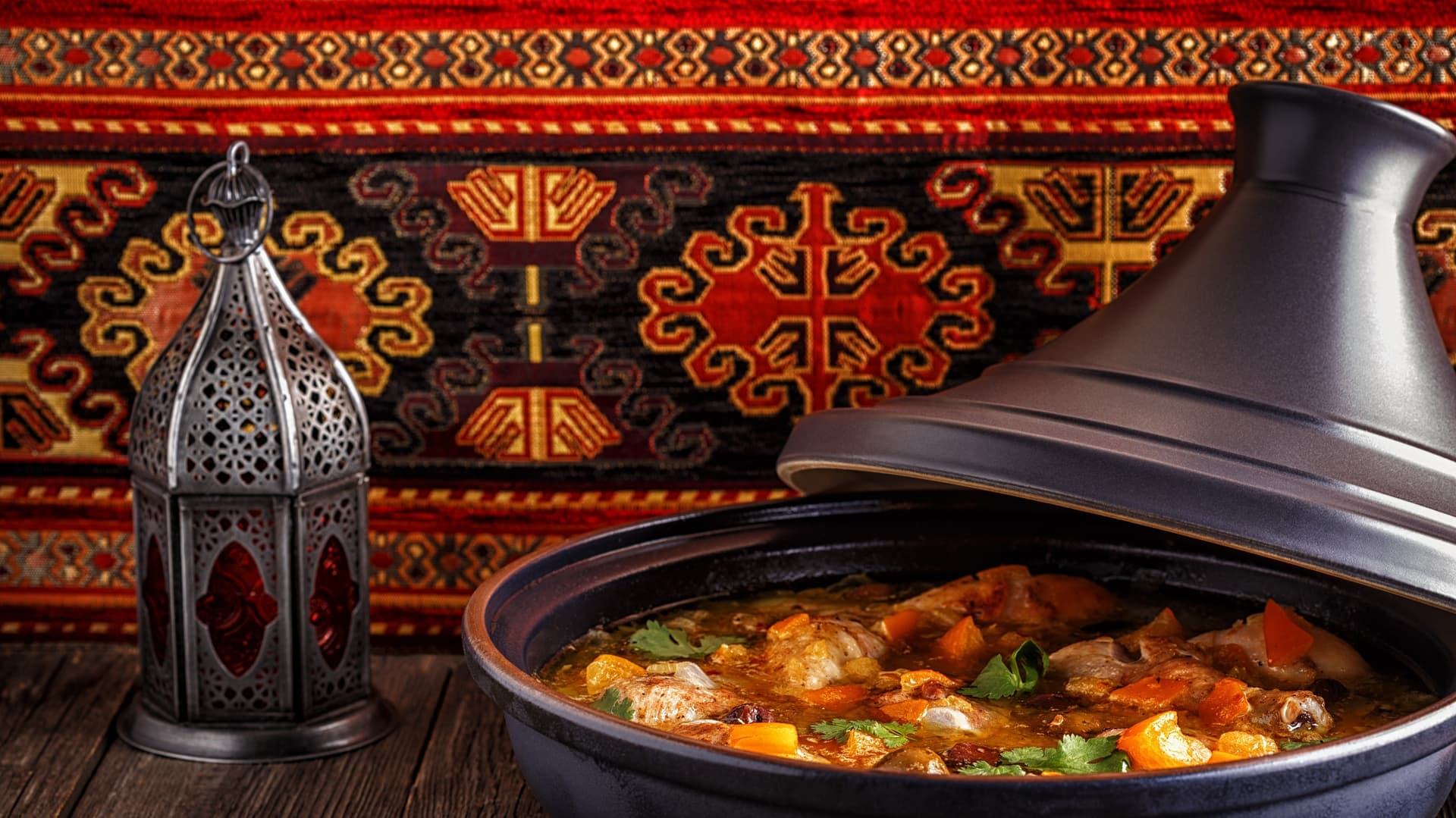
The Tajine could well be Morocco's emblem, such is its undisputed popularity. A dish for the people on every occasion, the tajine comes in countless forms, inviting you to explore Moroccan cuisine.
The Tajine could well be Morocco's emblem, such is its undisputed popularity. A dish for the people on every occasion, the tajine comes in countless forms, inviting you to explore Moroccan gastronomy.
A Traditional Dish
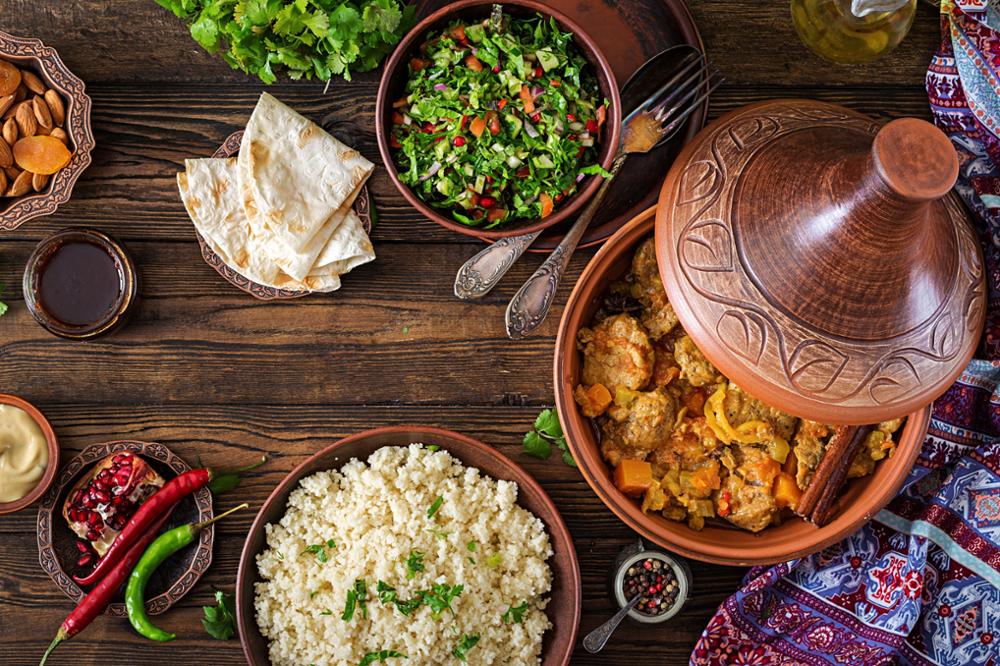
While couscous typically characterizes North African countries, the Tajine remains specific and traditional to Maroc. As you wander through the country's cities and remote villages, you'll see this distinctive earthenware vessel in which Tajine cooks slowly. The name of this dish is, of course, the Tajine. Exploring the country will allow you to witness these fires, upon which the Tajine rests, where ingredients simmer very slowly.
For before it became a culinary specialty, the Tajine remained Morocco's popular dish. It's a rustic stew that adapts to whatever the market offers (depending on the season) and to the cook's mood and desires of the moment. Combined with vegetables and fruit, the chosen meat or fish creates that subtle balance of sweet and savory. Dates, apricots, and other prunes characterize Moroccan cuisine, and the Tajine can be economical for everyday Moroccan life, or more festive for special occasions.
You could spend weeks in Maroc, eating a different tajine every day, though it's advisable to discover the full breadth of Moroccan gastronomy. Traditionally, and in keeping with the precepts of the Quran, the Tajine is enjoyed with cool, alcohol-free beverages (water, fruit juice, soft drinks, etc.)
Lamb Tajine, a Classic and a Must
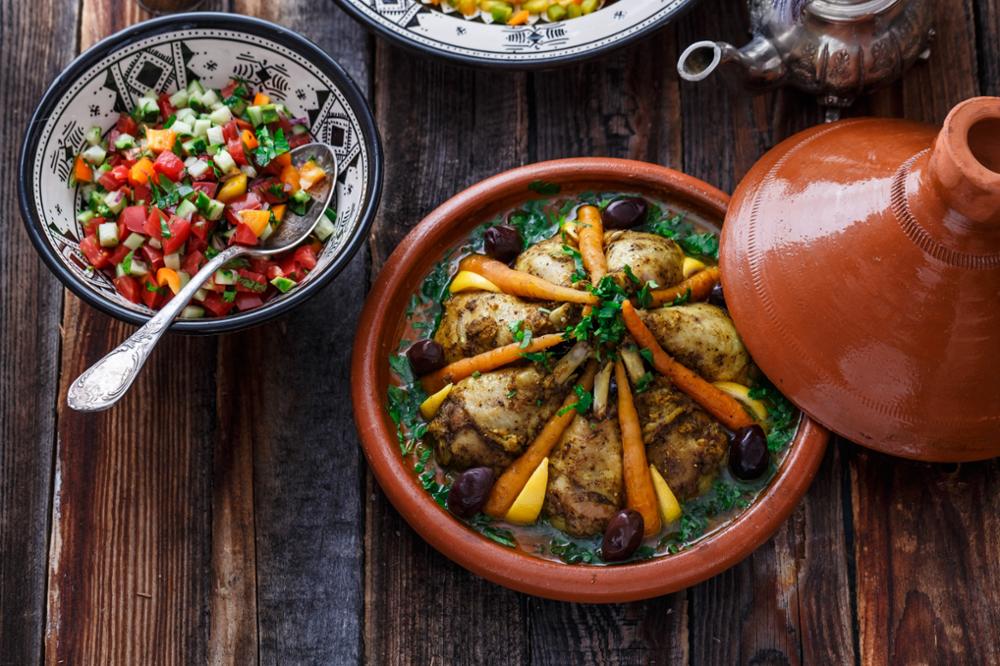
The Tajine of lamb, traditional to Maroc, remains one of the most widespread variations of the Tajine around the world. It allows you to discover the country's gastronomy without immediately blending all the flavors together. You'll be able to recreate it upon your return from vacation.
Ingredients
• Leg of lamb, cut into chunks (approximately 1.5 kilos)
• Prunes: 600 gr.
• Onions: 2
• Peeled almonds: 100 gr.
• Cinnamon: 1 teaspoon
• Ginger: 1 teaspoon
• Saffron
• Sugar: 4 tablespoons
• Oil: 10 cl
• Salt, pepper
Begin by soaking the prunes in hot water. Then, in a pot, brown the meat and thinly sliced onions in oil, before adding the cinnamon, ginger, saffron, salt, and pepper. Cover this preparation with a liter of water, and let it cook for one hour.
In a saucepan, cook the drained prunes in meat sauce, to which you'll add the sugar and a little cinnamon. Continue cooking for approximately 15 minutes, uncovered.
Toast the almonds in oil, and arrange the meat on a serving dish, decorated with prunes and almonds. Everything is then coated with sauce. Your Tajine is ready to be enjoyed.
Frequently asked questions
Couscous is a dish made from wheat semolina common to several North African countries, while the tajine is specifically Moroccan. The tajine designates both the conical earthenware dish used for cooking and the slow-simmered stew prepared within it. Its slow braised cooking gives it uniquely concentrated flavors.
A traditional tajine combines meat (lamb, chicken, or fish), seasonal vegetables, spices (ginger, saffron, cinnamon, cumin), and often dried fruits such as prunes, apricots, or dates. This sweet-and-savory marriage is one of the signatures of Moroccan cuisine.
Yes, it is entirely possible to prepare a tajine in a cast-iron casserole or a heavy-bottomed pot. The key is to maintain slow, low-heat cooking so the ingredients simmer and develop their aromas. The earthenware dish remains ideal for authentic cooking, however.
The tajine is enjoyed throughout Maroc, from street markets to the riads of Marrakech and Fès. For an authentic experience, seek out small local restaurants (called 'gargotes') in the medinas, or guesthouses that offer traditional family cooking.
The lamb and prune tajine recipe requires approximately 1 hour 15 minutes to 1 hour 30 minutes of total cooking time: one hour for the meat and spices, then an additional 15 minutes for cooking the prunes with the sauce. Allow 15 to 20 minutes of prep time beforehand.