The ritual of green tea in Morocco
It is the national drink. Wherever visitors go in the cities of Morocco, they are welcomed with a glass of mint tea.
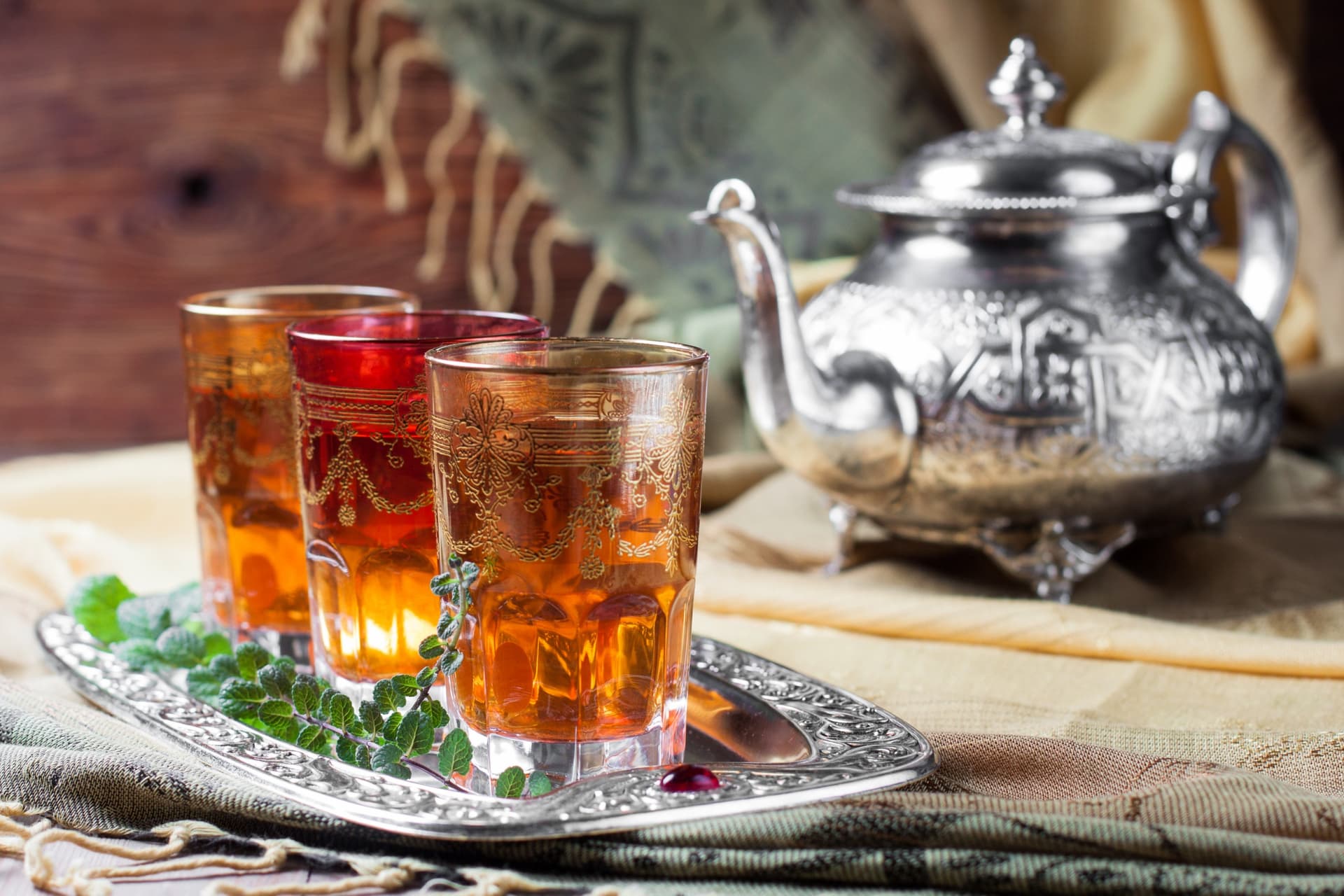
It is the national drink. Wherever visitors go in the cities of Morocco, they are welcomed with a glass of mint tea. Whether in a souk shop, before the art of bargaining begins, or as a gesture of hospitality when receiving guests in a home, on café terraces, during a meal, or beneath a Bedouin tent in the heart of the desert—mint tea is served everywhere as a sign of welcome. It is a drink with no social boundaries; everyone drinks it throughout the day, whether rich or poor.
Each family, in fact, has its own tea master, usually a man, an expert in the subtle art of preparing this beverage. Before him are placed the teapot and all the necessary ingredients for tea preparation (green tea, sugar, fresh mint leaves, and water) at every meal. It is a sign of recognition of his talent. The expert conducts his ritual calmly, without haste, while continuing to converse.
The origins of green tea enthusiasm
This popularity of mint tea in Morocco, and more broadly throughout the Maghreb, is actually quite recent. It dates back to the 19th century, when the English began importing tea into North Africa through the ports of Tangier and Mogador. Moroccans, already accustomed to herbal infusions, quickly adopted this green tea, to which they added traditional mint leaves for their digestive and refreshing properties. Today, the kingdom is the world's leading importer of green tea, with more than 60,000 tonnes per year.
Regional variations
The taste of mint tea varies somewhat by region. In the south, it is less sweet than in the north of the country. Furthermore, some even add pine nuts to the tea glasses. Always served very sweet and piping hot, mint tea is presented in transparent tea glasses. The service is always somewhat spectacular, as the teapot is held high to produce a little foam, also called the "turban." Another ritual: the tea is served three times in succession, becoming progressively sweeter with each serving.
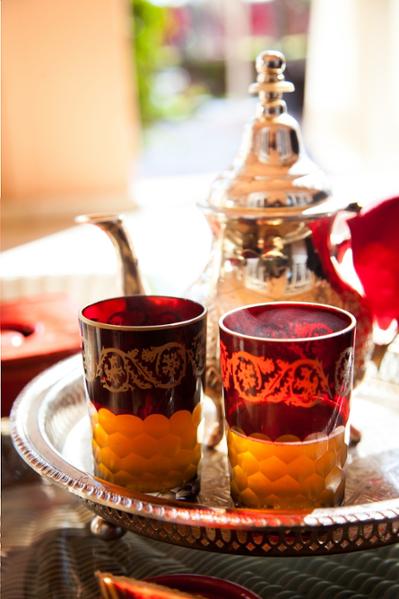
Among the many gifts one can bring back from Morocco, many are related to the world of tea. In the souks and shops, you will find all manner of finely carved teapots and delicately crafted transparent and colored tea glasses.
Frequently asked questions
The popularity of mint tea in Morocco dates back to the 19th century, when English merchants began importing green tea into North Africa via the ports of Tangier and Mogador. Moroccans, already accustomed to herbal infusions, quickly adopted green tea, adding fresh mint for its digestive and refreshing properties.
The preparation of Moroccan tea is a true ritual. Green tea (often gunpowder variety), fresh mint, generously measured sugar, and hot water are used. The teapot is held high when pouring to create a foam called the 'turban'. The tea is then served three times in succession, each serving slightly sweeter than the last.
Morocco is the world's leading importer of green tea, with more than 60,000 tonnes per year. This massive consumption is explained by the central place of tea in Moroccan culture: it is served at all hours, in every household and across all social classes, as a sign of hospitality and conviviality.
No, there are regional variations. In southern Morocco, tea is generally less sweet than in the north. Some regions also add pine nuts to the tea glasses to provide a distinctive flavor.
Moroccan markets (souks) and shops are filled with tea-related souvenirs: finely carved metal teapots, delicately crafted transparent and colored tea glasses, decorative trays, and tea boxes. These artisanal objects are among the most appreciated gifts one can bring back from Morocco.